Physical Address
304 North Cardinal St.
Dorchester Center, MA 02124
Physical Address
304 North Cardinal St.
Dorchester Center, MA 02124
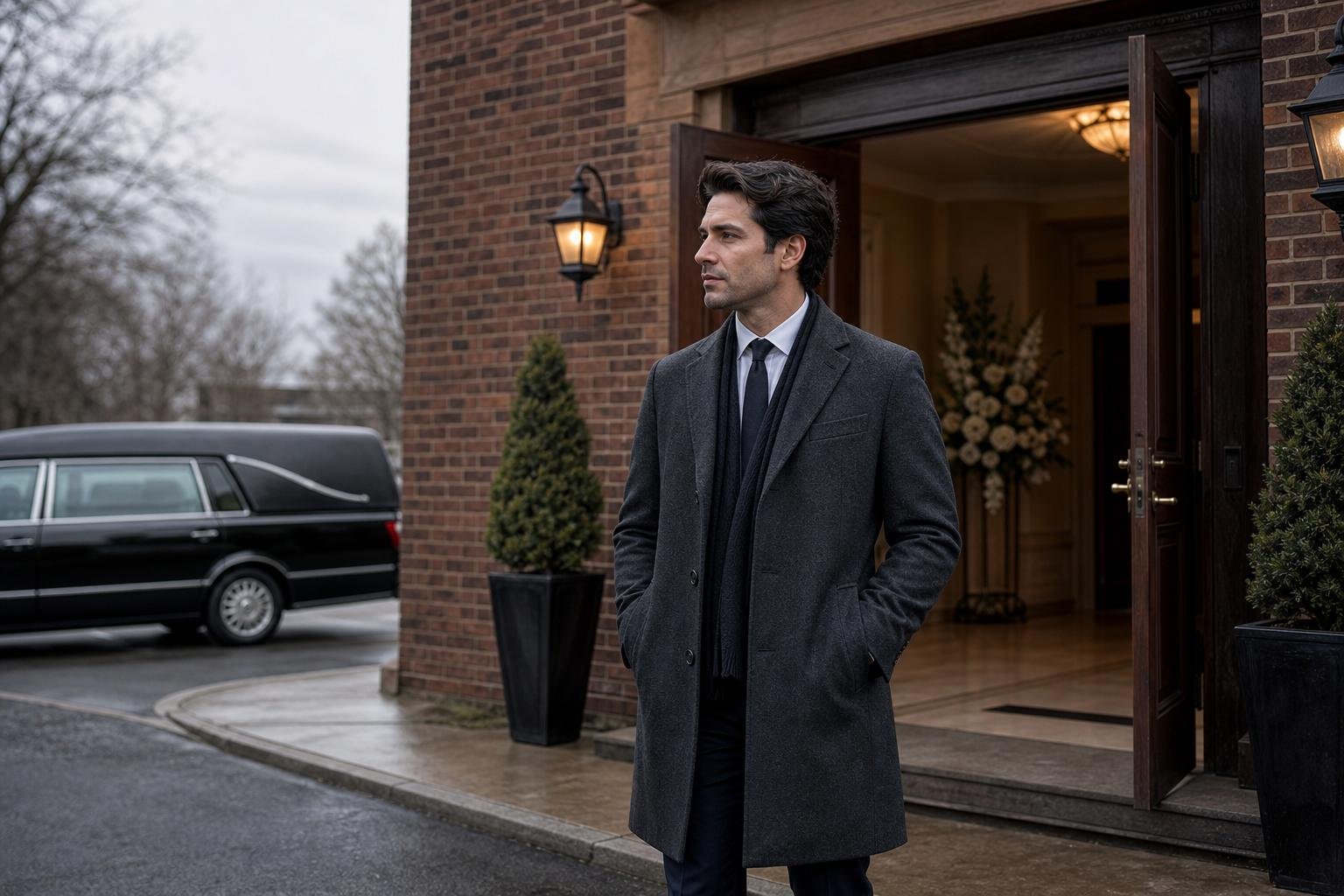
A practical guide to choosing a respectful funeral outfit, from appropriate colors and silhouettes to footwear, accessories, and cultural considerations.
A funeral is an occasion to dress with care, restraint, and respect for the person being remembered and the people gathering to mourn. Knowing what to wear to a funeral does not require buying an entirely new outfit. In most cases, clean, understated clothing in subdued colors is the right starting point.
The best choice also depends on the family’s wishes, the location, the weather, and any cultural or religious traditions involved. When details are available, follow them. If they are not, choose an outfit that feels polished, modest, and intentionally low-key.
Funeral attire is less about adhering to one rigid uniform than avoiding clothing that pulls focus. Traditionally, black has been common in the United States, but dark navy, charcoal, deep brown, muted green, and other quiet neutrals are generally suitable as well.
Choose clothing that is clean, pressed, and in good repair. A simple silhouette will usually feel more appropriate than a trend-led or statement-making look. Think tailored trousers, a modest dress, a skirt with a blouse, or a suit in a dark neutral.
If you are unsure what to wear to a funeral, aim slightly more polished than your everyday office attire. The goal is to look considerate without appearing overly formal, flashy, or costume-like.
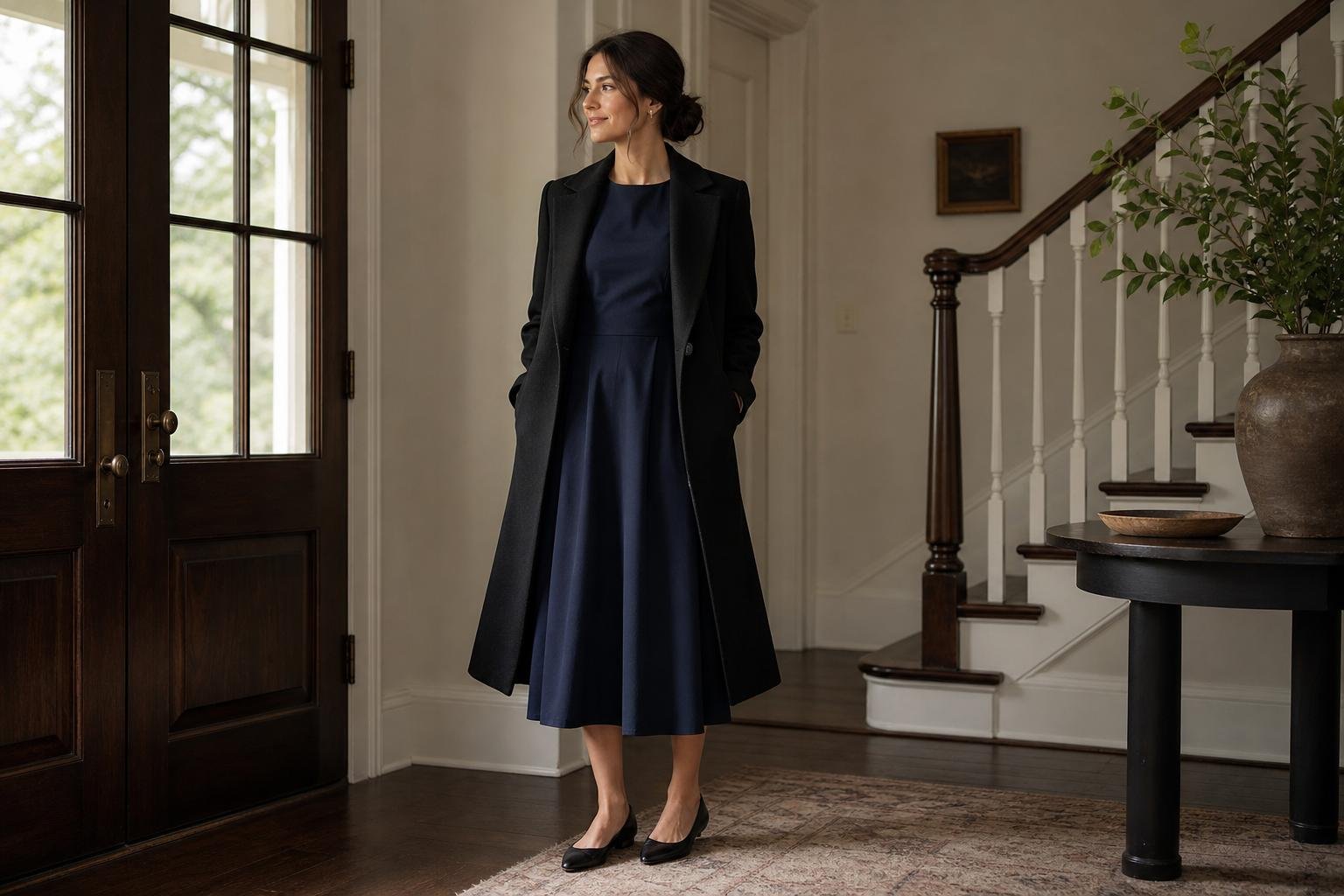
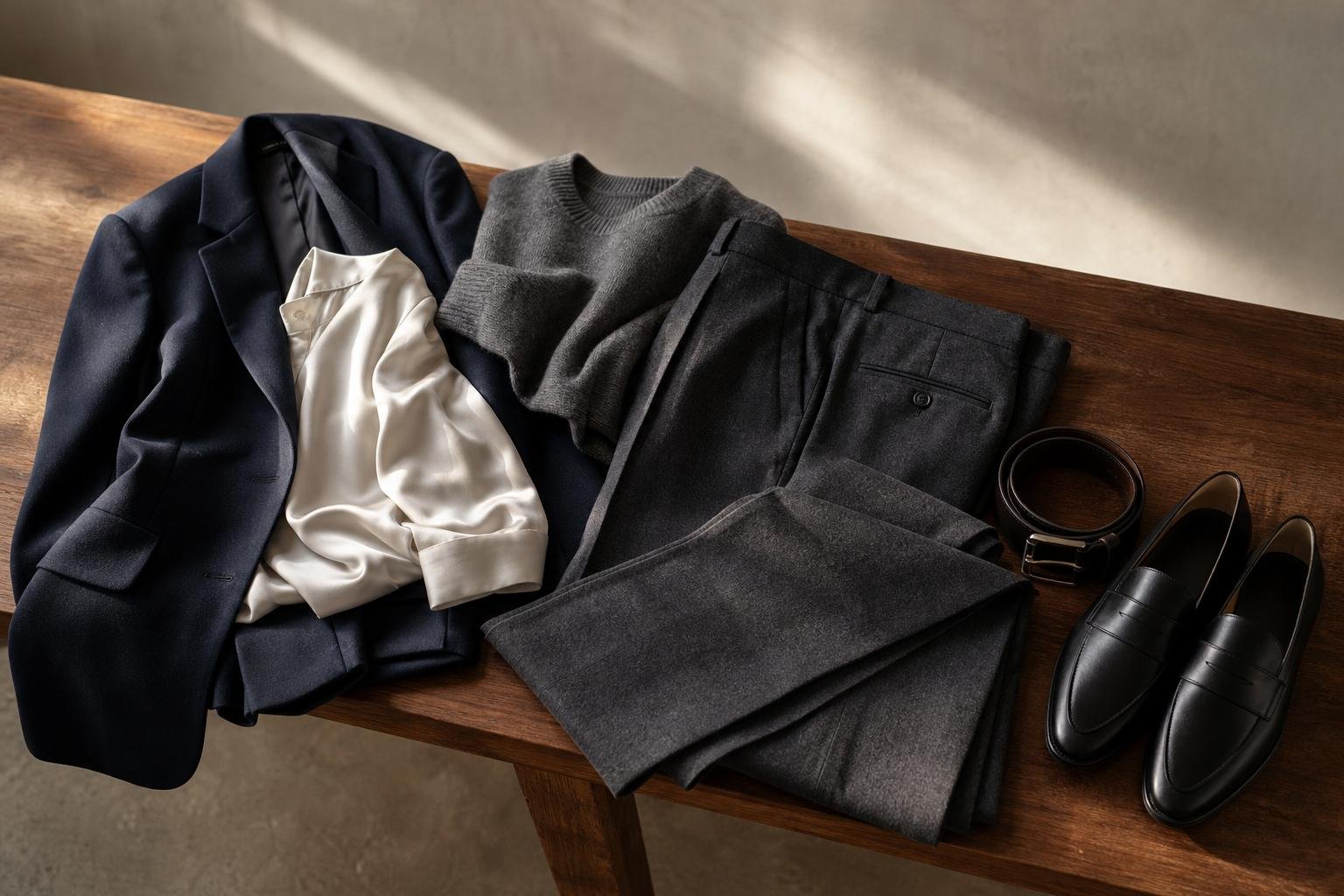
A few dependable combinations can make getting dressed easier:
These formulas are adaptable rather than prescriptive. A graveside service may call for practical shoes and an outer layer, while a formal religious service may require more coverage or a suit.
Black is a dependable choice, but it is not the only respectful option. Navy, charcoal gray, dark brown, taupe, olive, burgundy, and muted blue can all work well. In warmer weather, a soft gray, stone, or subdued beige may be more comfortable while still looking appropriate.
Avoid colors that are fluorescent, very bright, or strongly attention-grabbing unless the family has specifically requested celebratory or colorful attire. Some memorials ask guests to wear a favorite color, sports-team clothing, floral prints, or a meaningful item in honor of the deceased. In that case, the family’s request should take precedence over conventional funeral dress.
Patterns should be subtle. Fine pinstripes, small checks, restrained florals, and quiet textures are usually easier to wear than bold graphics, large logos, or high-contrast prints. The question of what to wear to a funeral is often best answered by choosing pieces that support the setting rather than dominate it.
A respectful outfit should let you move, sit, stand, and greet others comfortably. Services may include a ceremony, visitation, burial, reception, or travel between locations, so comfort is practical as well as considerate.
For dresses and skirts, many people prefer hemlines around the knee or longer. Sleeves are not always required, but a cardigan, blazer, wrap, or tailored jacket offers useful coverage. Avoid clothing that is unusually sheer, very tight, very short, low-cut, or revealing.
For trousers, choose a tailored pair with a blouse, sweater, or collared shirt. A jumpsuit can work if it is tailored, minimally detailed, and in a subdued shade. For suits, a dark two-piece suit is appropriate for many services, though a blazer with trousers can also be suitable when the dress code is less formal.
Weather matters, too. A dark wool coat, trench, or simple raincoat is practical for cooler or wet conditions. In summer, breathable fabrics such as cotton, linen blends, or lightweight wool can help you stay composed without looking overly casual.
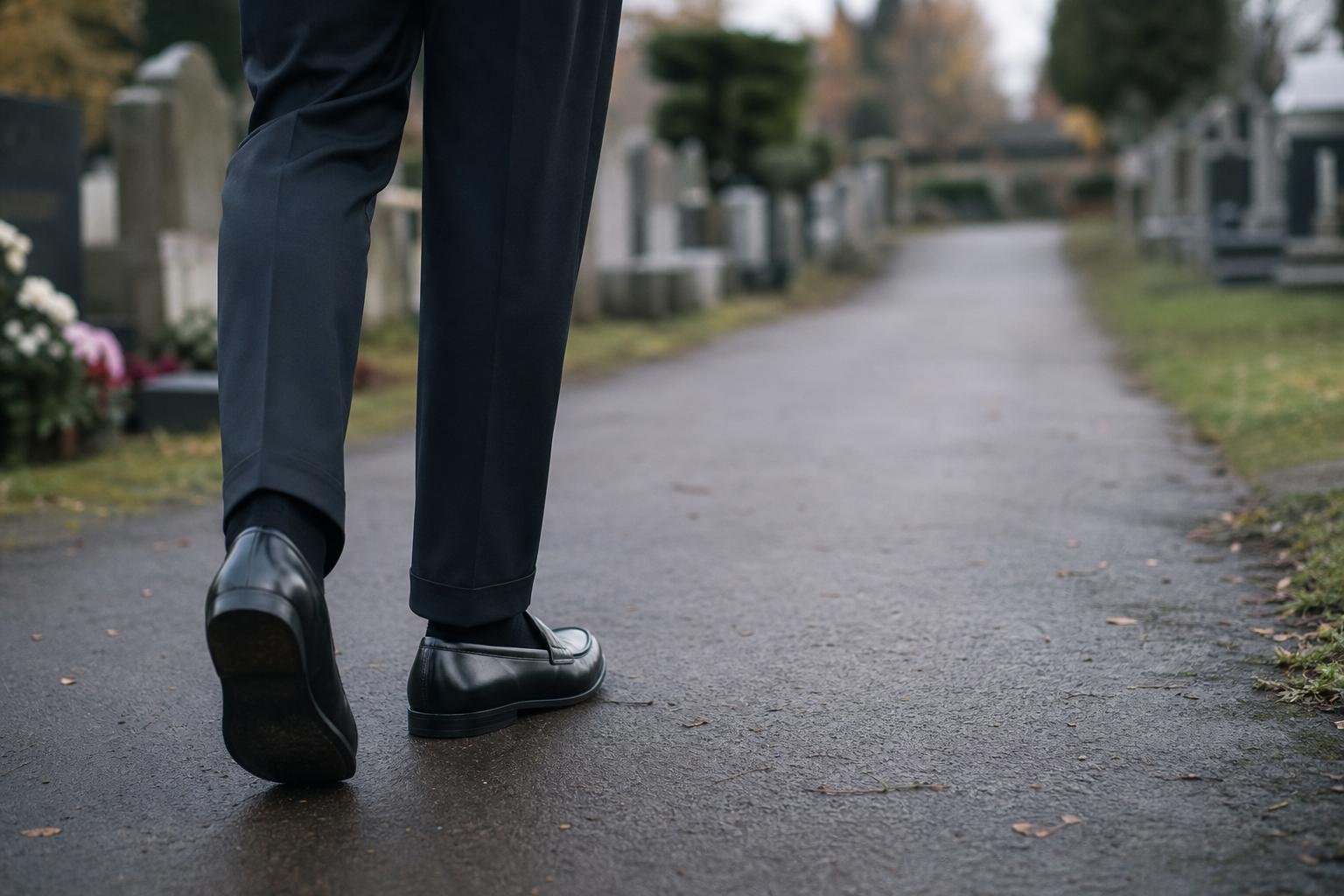
Funeral footwear should be clean, quiet, and comfortable enough for standing or walking. Closed-toe flats, low block heels, loafers, polished boots, and classic dress shoes are all sensible options. If the service includes a cemetery or outdoor gathering, stable shoes are often a better choice than narrow heels or delicate sandals.
Sneakers, flip-flops, beach sandals, and visibly worn athletic shoes are usually best avoided unless the family has made the event explicitly casual. Likewise, shoes that are difficult to walk in can become distracting during a long service or burial.
Choose dark or neutral footwear when possible. Black, brown, navy, gray, taupe, and deep burgundy are easy choices. If your shoes are not perfectly matched to your clothing, prioritize a neat, polished appearance over strict color coordination.
Accessories should finish the outfit rather than become its focal point. A simple watch, modest earrings, a small necklace, or a wedding ring is generally enough. Avoid oversized statement jewelry, loud belts, novelty accessories, or anything likely to make noise during a quiet service.
A structured tote, small shoulder bag, or simple clutch is useful for carrying tissues, keys, medication, or a small umbrella. Choose a bag in a neutral shade without prominent branding or ornamentation.
Fragrance is another consideration. If you wear perfume or cologne, use it sparingly. Close seating and embraces are common at services, and a strong scent can be uncomfortable for others.
The location and type of service can shape the appropriate level of formality. A funeral held in a house of worship may call for covered shoulders, longer hemlines, or head coverings depending on the tradition. A military funeral, formal memorial, or service at a funeral home may lean more traditional. A celebration of life at a park or private home may be less formal, but it still calls for thoughtful clothing.
If the obituary, invitation, or family representative provides attire guidance, follow it. When no guidance is given, choose conservative, polished clothing in a dark or muted color palette.
It is also appropriate to ask a close family member, host, or fellow attendee about expectations if you are uncertain. This can be especially helpful for services connected to traditions unfamiliar to you. Showing willingness to honor the family’s customs is more important than trying to interpret every detail on your own.
There are exceptions to every rule, especially when a family has requested a particular dress code. But absent specific guidance, avoid:
You do not need to look somber to the point of discomfort. You simply want your clothing to communicate that you understand the seriousness of the occasion.
Ultimately, what to wear to a funeral comes down to respect, restraint, and consideration for the family. A clean, modest outfit in a dark or muted shade, paired with practical shoes and minimal accessories, will be appropriate for most services. When the family shares specific wishes, let those guide your choices.