Physical Address
304 North Cardinal St.
Dorchester Center, MA 02124
Physical Address
304 North Cardinal St.
Dorchester Center, MA 02124

Learn how a T-shirt should fit at the shoulders, chest, sleeves, and length, with practical sizing, styling, care, and shopping tips.
A well-fitting T-shirt is one of the easiest ways to make casual clothes look intentional. The right fit should feel comfortable when you move, sit smoothly under layers, and suit the silhouette you want—whether that is fitted, relaxed, cropped, oversized, or classic.
When asking how should a T-shirt fit, focus on five areas: shoulders, chest, sleeves, torso, and length. Size labels are only a starting point. Brands use different measurements and cuts, so the garment’s actual shape matters more than the letter on the tag.
The shoulder seam is the most useful place to judge whether a standard T-shirt fits properly.
On a classic or slim-fit tee, the seam should sit close to the outer edge of your shoulder. It may fall slightly inside or outside that point depending on the cut, but it should not ride noticeably up toward your neck or hang far down your upper arm.
A seam that sits too high often means the shirt is too small through the shoulders and chest. It can restrict movement and create pulling across the upper body.
A seam that drops well below the shoulder can make a regular-fit shirt look too large. That placement is fine for an intentionally oversized or drop-shoulder style, but it should look deliberate rather than accidental.
Try raising your arms, reaching forward, and sitting down. A T-shirt should move with you without digging into your underarms, exposing too much of your midsection, or twisting sharply around your torso.
If the shirt feels restrictive at the shoulders despite fitting elsewhere, try a different brand or cut. Going up a full size may add too much width and length without solving the shoulder issue.
A T-shirt should skim the body rather than cling tightly or billow away from it, unless you are choosing a fitted or oversized look on purpose.
For a classic fit, there should be a little room through the chest, waist, and stomach. You should be able to pinch a small amount of fabric at the sides without the shirt looking shapeless.
A shirt that is too tight may pull into horizontal lines across the chest, back, or stomach. The collar can also stretch outward, and the sleeves may pull up toward the shoulders.
A shirt that is too loose can look boxy if the fabric stands away from your torso. This is not always a problem: a roomier tee can work well with straight-leg jeans, relaxed trousers, shorts, or layered outfits. The key is balancing the volume elsewhere.
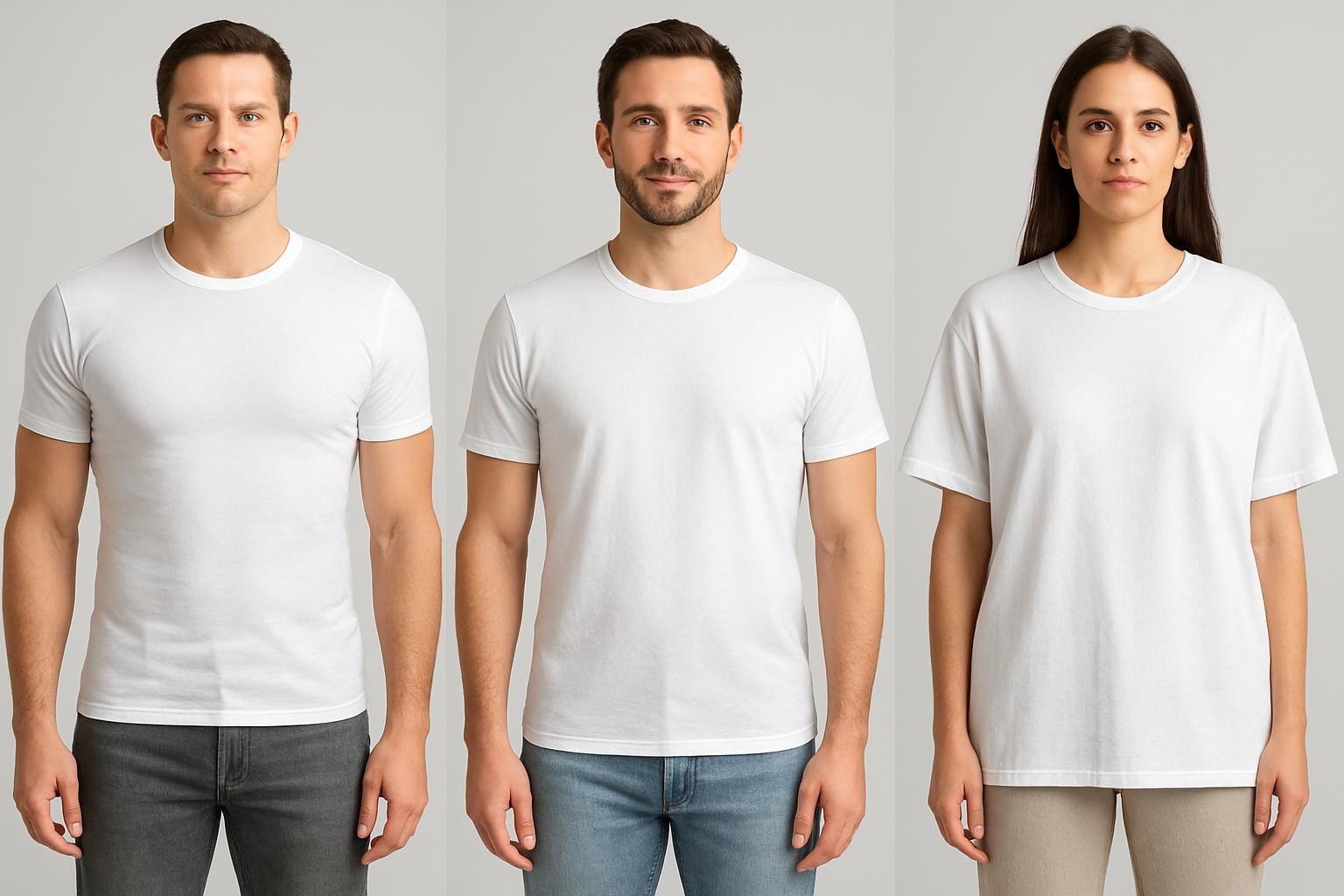
Different fits are meant to sit differently on the body.
A fitted T-shirt follows the chest, waist, and arms more closely. It should still allow comfortable movement and should not strain at the chest or stomach.
This fit works well under overshirts, blazers, cardigans, and jackets because it adds less bulk. Choose it carefully if you prefer not to emphasize the shape of your torso.
A regular-fit T-shirt has moderate room through the body. It is usually the most versatile choice for daily wear and works with jeans, chinos, shorts, skirts, and casual trousers.
For many people, this is the easiest place to start when building a wardrobe of basic tees.
A relaxed T-shirt has extra room through the body, often with wider sleeves, dropped shoulders, and a longer or boxier shape. It should look intentionally roomy, not simply too big.
To keep an oversized tee balanced, pair it with more streamlined bottoms or use a partial tuck. You can also choose a shirt with a shorter, boxier hem instead of adding excessive length.
Sleeves can change the overall impression of a T-shirt quickly.
On many classic short-sleeve tees, the sleeve hem lands around the middle of the upper arm. A slightly shorter sleeve can create a more fitted, traditional look. A longer, wider sleeve reads more relaxed or streetwear-inspired.
The sleeve should not pinch your upper arm or pull upward when you move. It also should not flare dramatically away from the arm unless the shirt is designed with a wider, boxy cut.
For women’s T-shirts, sleeve shapes vary widely, from cap sleeves to longer boyfriend-style sleeves. The most flattering option is usually the one that feels proportionate to the shirt’s body: a close-fitting tee often suits a neater sleeve, while a relaxed tee can handle a fuller sleeve.
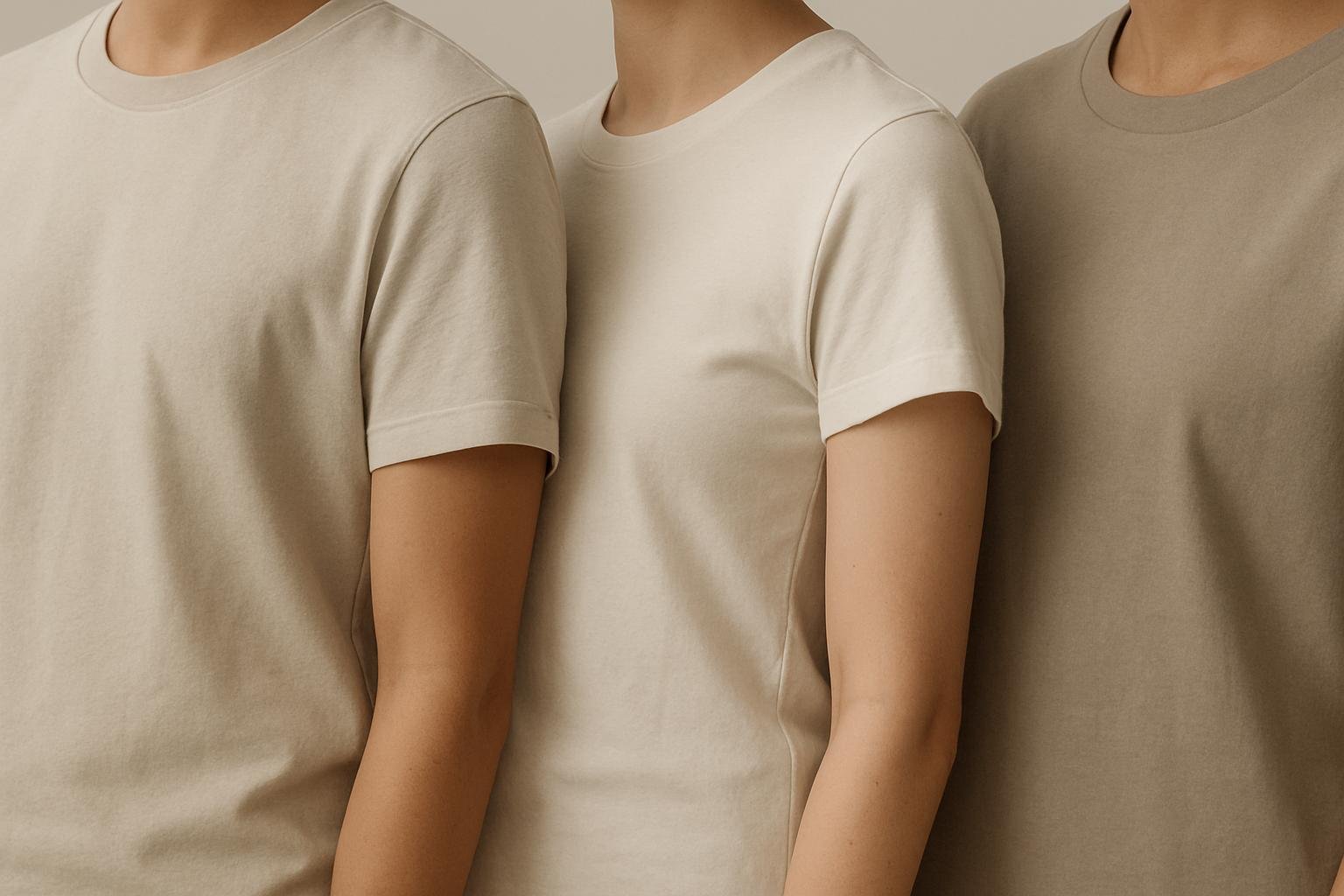
Length is one of the biggest differences between a T-shirt that looks polished and one that feels awkward.
A standard T-shirt should usually cover the waistband of your pants, jeans, shorts, or skirt. On many adults, the hem falls around the upper to mid-fly area in front and covers the waistband in back. Exact placement depends on your height, torso length, and preferred styling.
A shirt that ends too high may ride up when you lift your arms. It can also look unintentionally cropped unless it is designed as a crop top.
A shirt that falls too low can shorten the appearance of the legs and create excess fabric around the hips. This is especially noticeable with slim jeans or tailored pants.
Cropped T-shirts are designed to sit above the waistband or at the natural waist. They pair easily with high-rise jeans, trousers, skirts, and shorts. The fit should still feel secure when you reach or sit.
Longline T-shirts extend farther below the hip than a standard tee. They work best when the extra length is balanced with narrow pants, leggings, or layered pieces. If you are unsure, a standard-length hem is more versatile.
The neckline should lie flat against the upper chest without feeling tight or stretched out.
A crew neck is the most common and versatile option. It should sit comfortably around the base of the neck without pressing into the throat.
A V-neck creates more visual openness at the chest. A shallow V is usually easier to wear as an everyday basic, while a deep V is a more specific style choice.
Scoop necks, wide necks, and boat necks can offer a softer or more relaxed appearance. Check that the neckline stays in place when you move. If it slips off the shoulder or gaps widely when it is not meant to, the fit may be too large or the neckline may not suit your proportions.
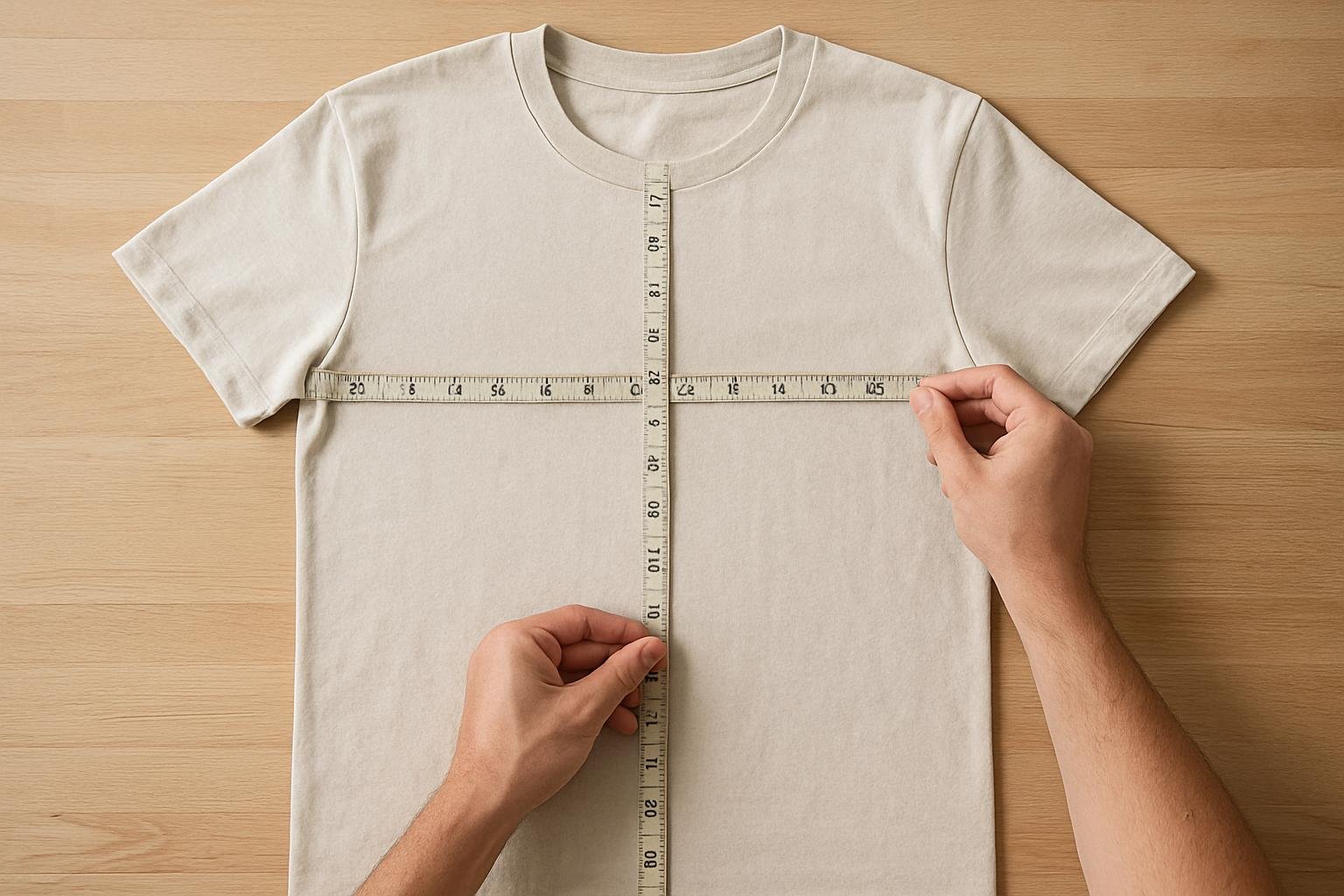
Do not rely only on your usual size. Compare the garment’s measurements with a T-shirt you already own and like.
Lay your favorite tee flat and measure across the chest, from underarm to underarm. Double that number for the approximate chest circumference. Then compare the shirt’s length from the highest shoulder point to the hem.
When reviewing a size chart, look for:
If you are between sizes, decide based on the intended fit. Size down for a closer shape only if the shoulders and chest still feel comfortable. Size up for a relaxed look, but make sure the added length and shoulder drop still work for you.
Cotton T-shirts often soften and may shrink if exposed to high heat, especially if they have not been pre-shrunk. Wash according to the care label, and consider air-drying if you want to protect the original fit.
Blends containing materials such as polyester, modal, rayon, or elastane can drape, stretch, or recover differently than all-cotton tees. A shirt with stretch may feel closer-fitting without being restrictive, while a heavier cotton jersey often holds a boxier shape.
Try on a tee before removing tags when possible. Check it after a few minutes of movement, not just while standing still in front of a mirror.
A classic, properly fitted T-shirt is easy to dress up or down.
For a simple casual outfit, wear a regular-fit crew-neck tee with straight-leg jeans and clean sneakers. For a sharper look, choose a fitted or classic tee under an unstructured blazer, overshirt, or cardigan.
A relaxed tee pairs well with looser denim, utility pants, or casual shorts. If the shirt is oversized, consider a half-tuck, front tuck, or higher-rise bottom to define the waist and keep the outfit from feeling overwhelmed by fabric.
For women, a fitted tee can balance wide-leg trousers, full skirts, or relaxed denim. A boxy tee can work with straight skirts, slim pants, or high-rise jeans. For men, a tee that fits neatly at the shoulders and chest can make denim, chinos, and shorts look more put together without adding formality.
Neither extreme is required. A standard T-shirt should skim the body with enough room to move comfortably. Choose tighter or looser fits based on your personal style and the outfit’s proportions.
For a classic short-sleeve T-shirt, sleeves often end around the middle of the upper arm. Shorter or longer sleeves can work if they match the shirt’s overall fit.
A standard tee should generally cover your waistband and stay covered when you move. Cropped and longline styles are exceptions designed for specific looks.
Not necessarily. Unisex shirts often have a straighter, roomier cut, so check the garment measurements and decide whether you want a fitted, regular, or relaxed result.
Yes. An oversized T-shirt should have intentional volume through the shoulders, sleeves, and body. It should not simply be too tight in one area and too long in another.
The best T-shirt fit begins at the shoulders, feels comfortable through the chest and torso, and ends at a length that works with your usual bottoms. Once those basics are right, you can choose fitted, classic, relaxed, cropped, or oversized silhouettes with confidence. A few well-fitting tees in your preferred cuts will make everyday dressing easier.