Physical Address
304 North Cardinal St.
Dorchester Center, MA 02124
Physical Address
304 North Cardinal St.
Dorchester Center, MA 02124
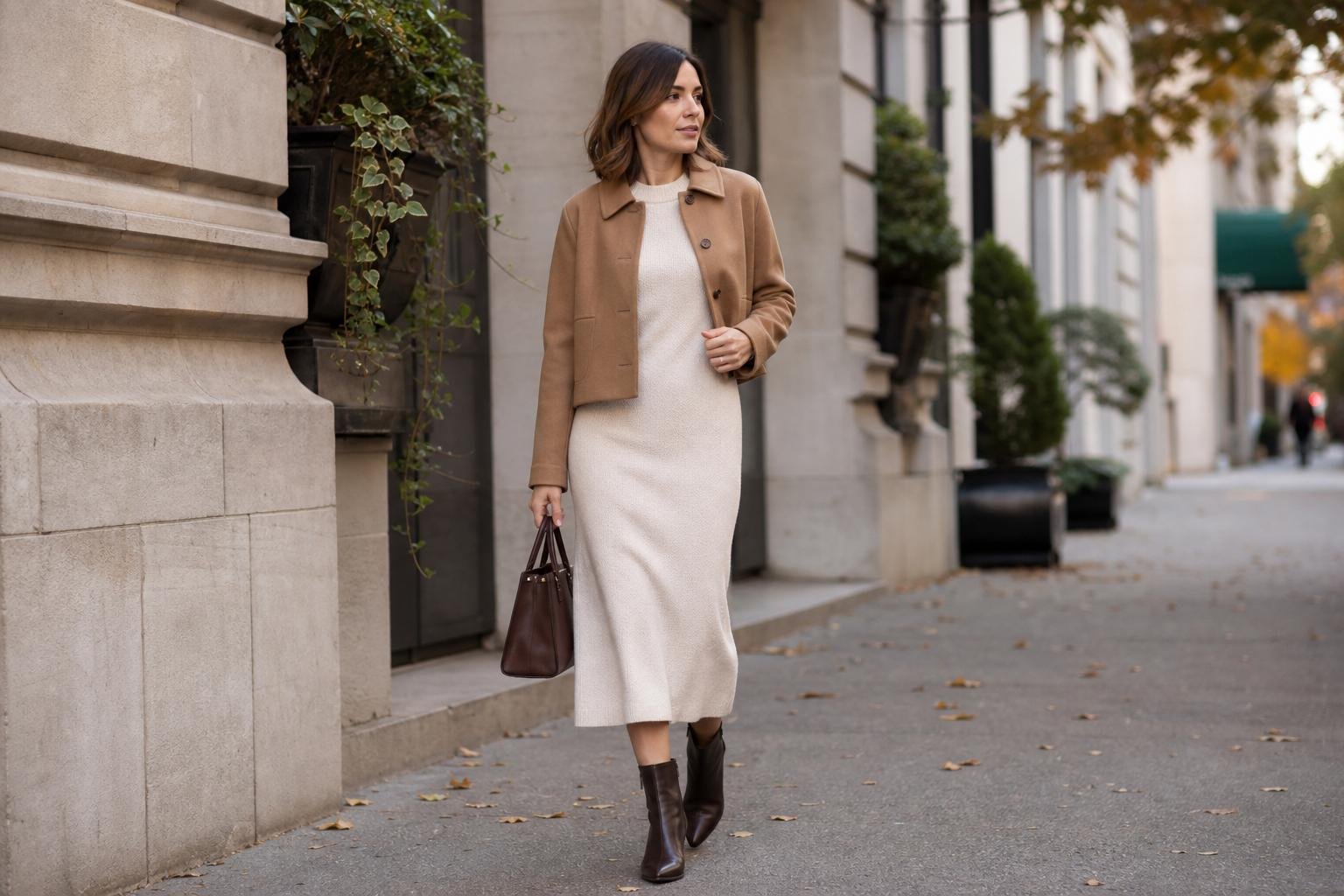
Build reliable dress outfits for every season with simple layering, footwear, and accessory ideas. These practical formulas make getting dressed feel easier.
Getting dressed is easier when a dress does more than stand alone. The best outfit ideas for women start with a dependable dress silhouette, then use shoes, layers, and accessories to suit the weather and the occasion. A few thoughtful additions can make one dress feel appropriate for a casual afternoon, a workday, or a dinner reservation.
Rather than building every look from scratch, use simple outfit formulas. They give you a polished starting point while leaving room for personal preference, comfort, and the pieces already in your closet.
A versatile dress is one that fits comfortably through the area where you need the most ease, whether that is the shoulders, bust, waist, hips, or thighs. Look for enough room to sit, walk, and raise your arms without constant adjusting. If a dress pulls across the buttons, rides up when walking, or twists at the seams, try a different size or cut before relying on shapewear or complicated styling fixes.
Shirt dresses, knit dresses, midi slip dresses, wrap-style dresses, and relaxed column dresses are useful wardrobe foundations because they layer well. A knee-length or midi hem offers especially broad footwear options, from sneakers and flats to boots and heels.
Pay attention to proportion. A voluminous dress often looks balanced with a more streamlined shoe or short jacket, while a fitted knit dress can handle an oversized blazer, roomy cardigan, or longer coat. When adding a belt, place it at your natural waist or slightly above it for definition; a wider belt makes more of a statement, while a narrow belt reads subtler.
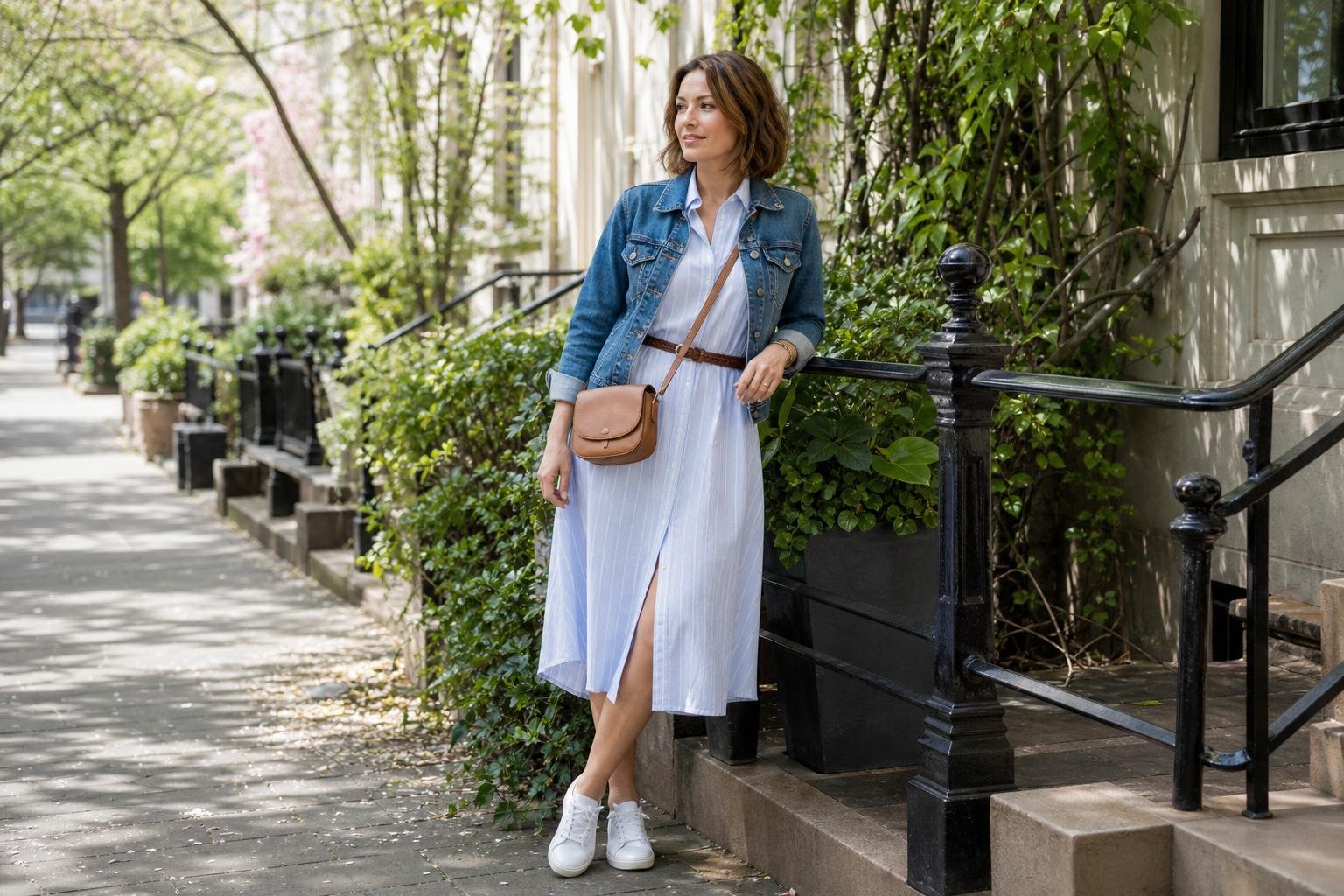
Spring dressing calls for layers that can come off easily. Start with a cotton poplin shirt dress or a printed midi dress, then add a denim jacket, lightweight trench, or fine-gauge cardigan. Loafers, ballet flats, low block heels, and clean sneakers all work well when sidewalks are damp or temperatures shift through the day.
For an easy daytime formula, pair a relaxed floral or geometric-print midi dress with white leather sneakers and a cropped utility jacket. Keep the accessories simple: small hoops, a crossbody bag, and sunglasses are enough to make the look feel finished without competing with the print.
A solid-colored knit dress can feel office-ready with a blazer and loafers. Choose a blazer that ends around the hip or slightly below it, especially if the dress is slim and long. This creates a clean vertical line while still offering coverage in cool air-conditioned spaces.
If you prefer bare legs but expect chilly weather, add sheer tights and closed-toe shoes. A fine knit scarf or lightweight rain-resistant outer layer is practical without making a spring dress outfit feel bulky.
In warm weather, fabric matters as much as silhouette. Linen, cotton, lightweight poplin, chambray, and breathable jersey are common choices for everyday wear. A looser cut encourages airflow, while adjustable straps, elasticized waists, and wrap closures can help fine-tune the fit.
For a casual summer look, try a sleeveless midi dress with flat leather sandals and a woven tote. If the dress has a fuller skirt, a compact shoulder bag keeps the proportions balanced. A simple pendant necklace or stacked bangles adds interest without making the outfit feel overdressed.
A T-shirt dress is useful for errands, travel days, and informal gatherings. Elevate it with structured sandals, a belt bag worn across the body, and a crisp overshirt tied loosely at the waist. For more coverage, choose a short-sleeve or elbow-sleeve version rather than adding a heavy layer.
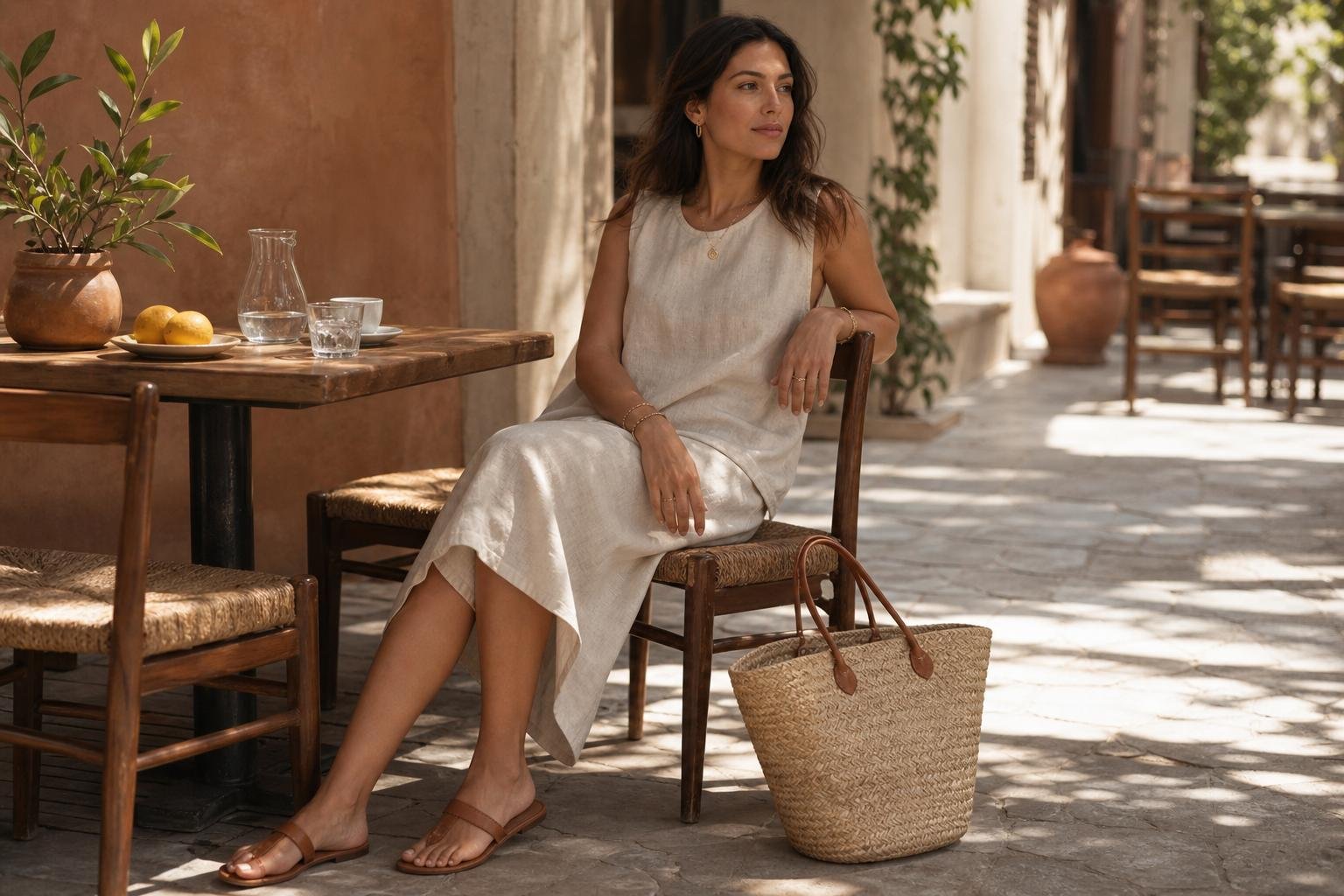
For outdoor events, consider the practical details before leaving home. A midi or maxi hem is less likely to require constant adjustment in a breeze, while a dress with pockets can reduce the need to carry essentials in hand. If the fabric is lightweight or pale in color, check it in daylight before wearing it out.
Fall is an ideal season for texture. Pair a ribbed knit midi dress with ankle boots and a suede-look or leather-look jacket for a streamlined outfit. A shirt dress also works well over opaque tights with knee-high boots and a long cardigan.
When layering over a dress, vary the lengths. A cropped jacket defines the waist over a fuller skirt, while a long coat can create an elegant line over a narrow midi dress. Avoid adding several bulky layers at the same point on the body. For example, a thick sweater, wide belt, and oversized coat can feel restrictive through the middle.
In winter, a sweater dress can be one of the simplest outfit foundations. Choose a denser knit that holds its shape, then layer it with opaque tights, tall boots, and a wool coat. If boots feel too warm indoors, loafers with socks or heeled ankle boots are polished alternatives for a shorter commute.
For a dressier cold-weather combination, wear a satin-finish midi skirt-like dress or long-sleeve wrap dress with pointed-toe boots and a tailored coat. Keep jewelry intentional: earrings and one bracelet may be enough when the outfit already includes texture, shine, or a detailed neckline.
Reliable formulas reduce decision fatigue. Adjust the color palette, dress shape, and accessories, but keep the basic structure when you need an outfit quickly.
A monochromatic look is another easy strategy. Choose a dress, shoes, and outer layer in related shades, such as cream, camel, and chocolate brown, or navy, denim blue, and soft gray. The colors do not need to match exactly; keeping them in the same family creates a cohesive result.
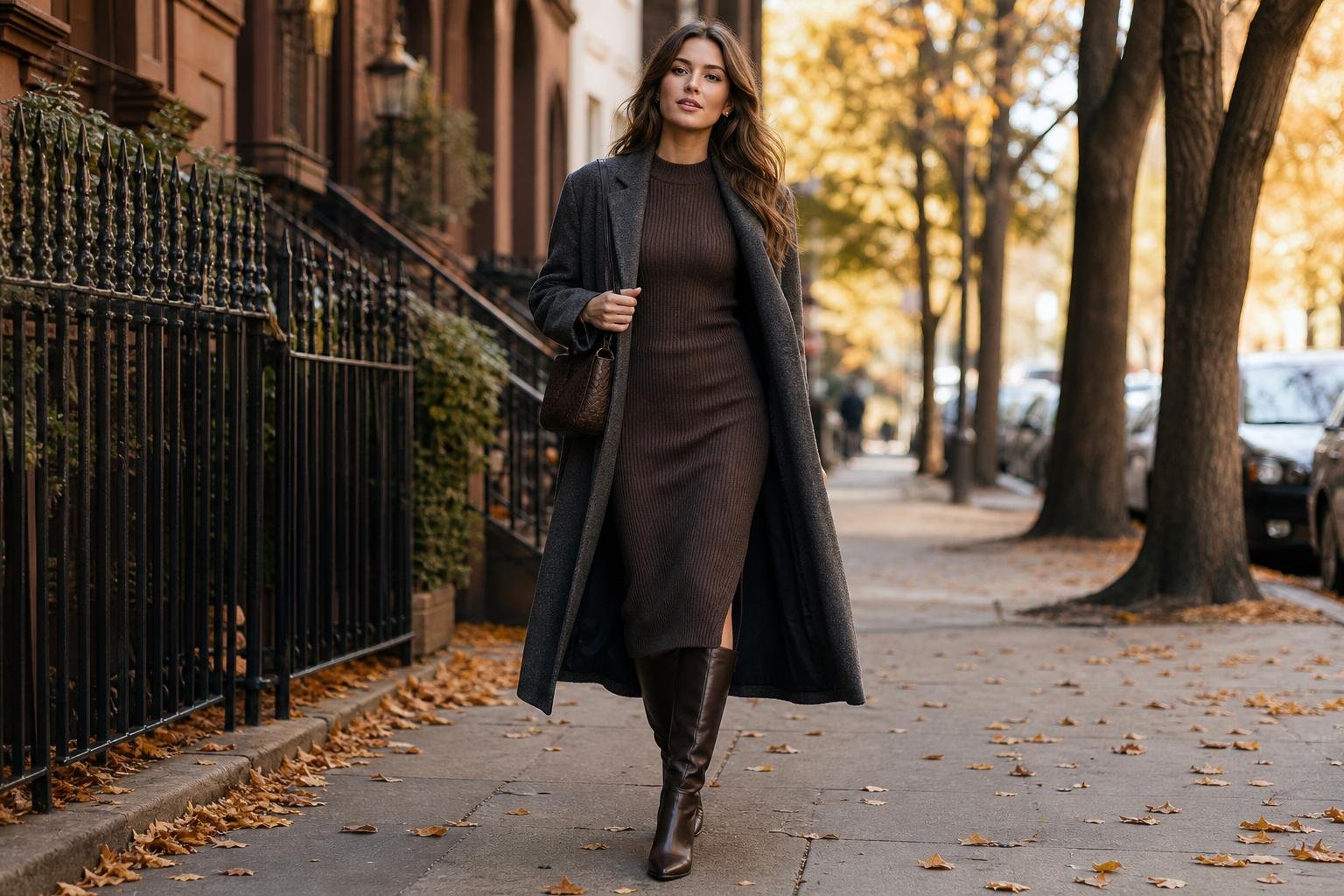
The right hem length depends partly on footwear. Ankle boots often look best when there is either a clear gap between boot and hem or enough length for the dress to fall over the boot shaft. If a midi dress ends at the widest part of the calf, consider a slightly shorter or longer hem, or try a shoe with a lower vamp to create more visual length.
For dresses that cling because of static, a slip can create a smoother layer between the dress and tights. Let knit dresses rest folded rather than hanging for long periods, since hanging can stretch the shoulders and length. For washable fabrics, follow the care label and reshape knitwear while damp to help it dry evenly.
When shopping online, use your body measurements rather than relying only on your usual size. Compare your bust, waist, and hip measurements with the brand’s size chart, then prioritize the largest measurement if the fabric has little stretch. Altering a hem or taking in a waist is often simpler than trying to add room at the bust, hips, or seams.
Add one structured element, such as a blazer, tailored jacket, leather belt, or refined bag. Swapping worn athletic sneakers for clean leather sneakers, loafers, or low block heels can also change the overall impression.
Sneakers, ballet flats, loafers, sandals, ankle boots, knee-high boots, and heels can all work with midi dresses. The most flattering pairing usually comes down to the dress hem, boot shaft height, and how much skin or sock shows between them.
A denim jacket, cardigan, blazer, trench, cropped utility jacket, or fine knit can all work. Choose a lighter layer for a fuller dress and a longer or more relaxed layer for a narrow, fitted silhouette.
There is no fixed number. Start with a few dresses that serve different needs: one casual option, one polished everyday style, and one that works for more dressed-up occasions. Prioritize pieces you can wear with more than one shoe and outerwear option.
The most useful dress outfits are built around comfort, proportion, and repeatable layers. Choose dresses that fit well, match them to practical footwear, and use seasonal outerwear to make a small collection work throughout the year.