Physical Address
304 North Cardinal St.
Dorchester Center, MA 02124
Physical Address
304 North Cardinal St.
Dorchester Center, MA 02124
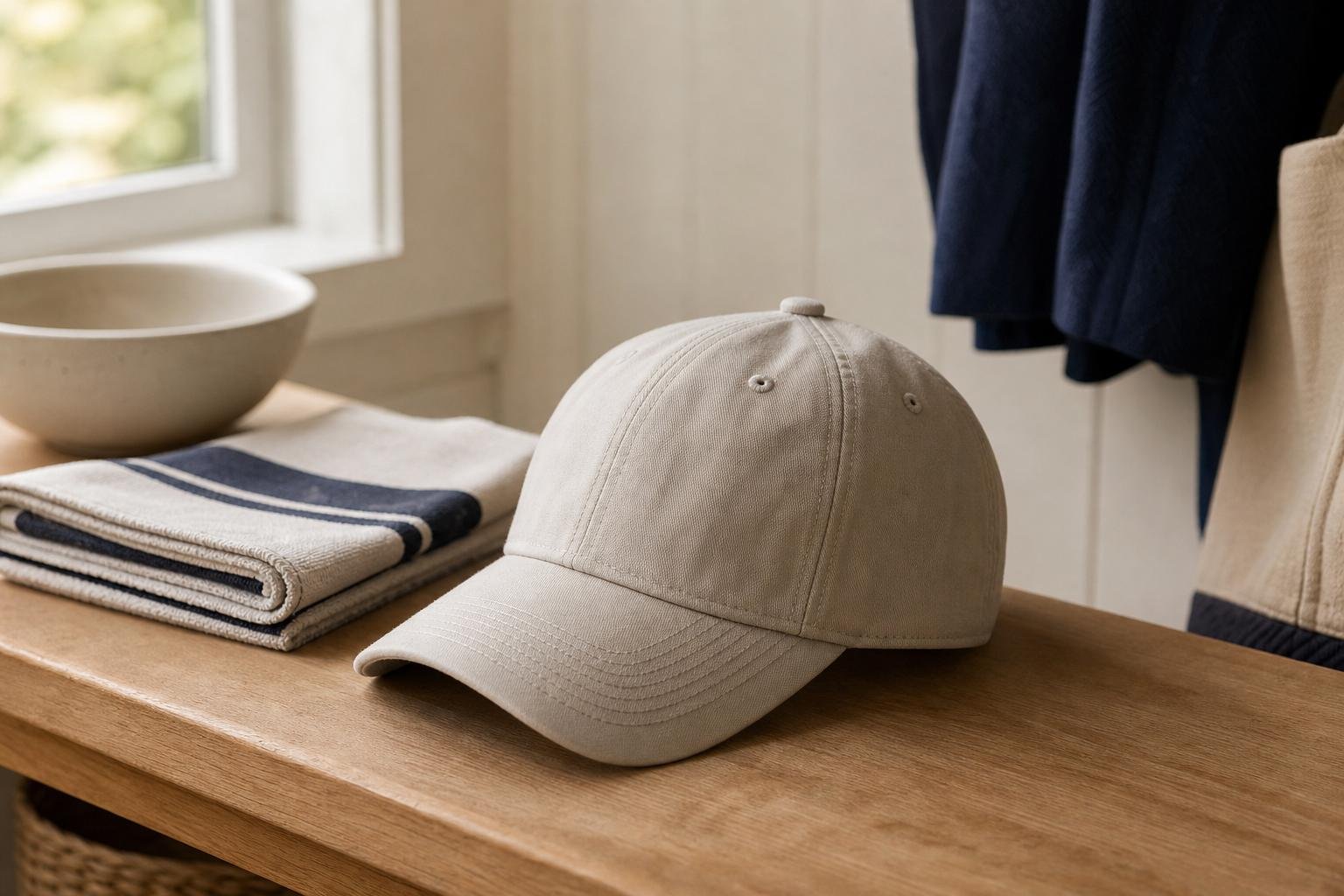
A cap can usually be cleaned at home with cool water, mild detergent, and a little patience. This guide explains how to remove grime while protecting the crown, brim, and fit.
A well-worn cap picks up sweat, sunscreen, dust, and everyday grime quickly—especially around the inner band and brim. Knowing how to wash a cap properly helps it stay clean without leaving it misshapen, faded, or stiff. In most cases, gentle hand-washing is the safest route.
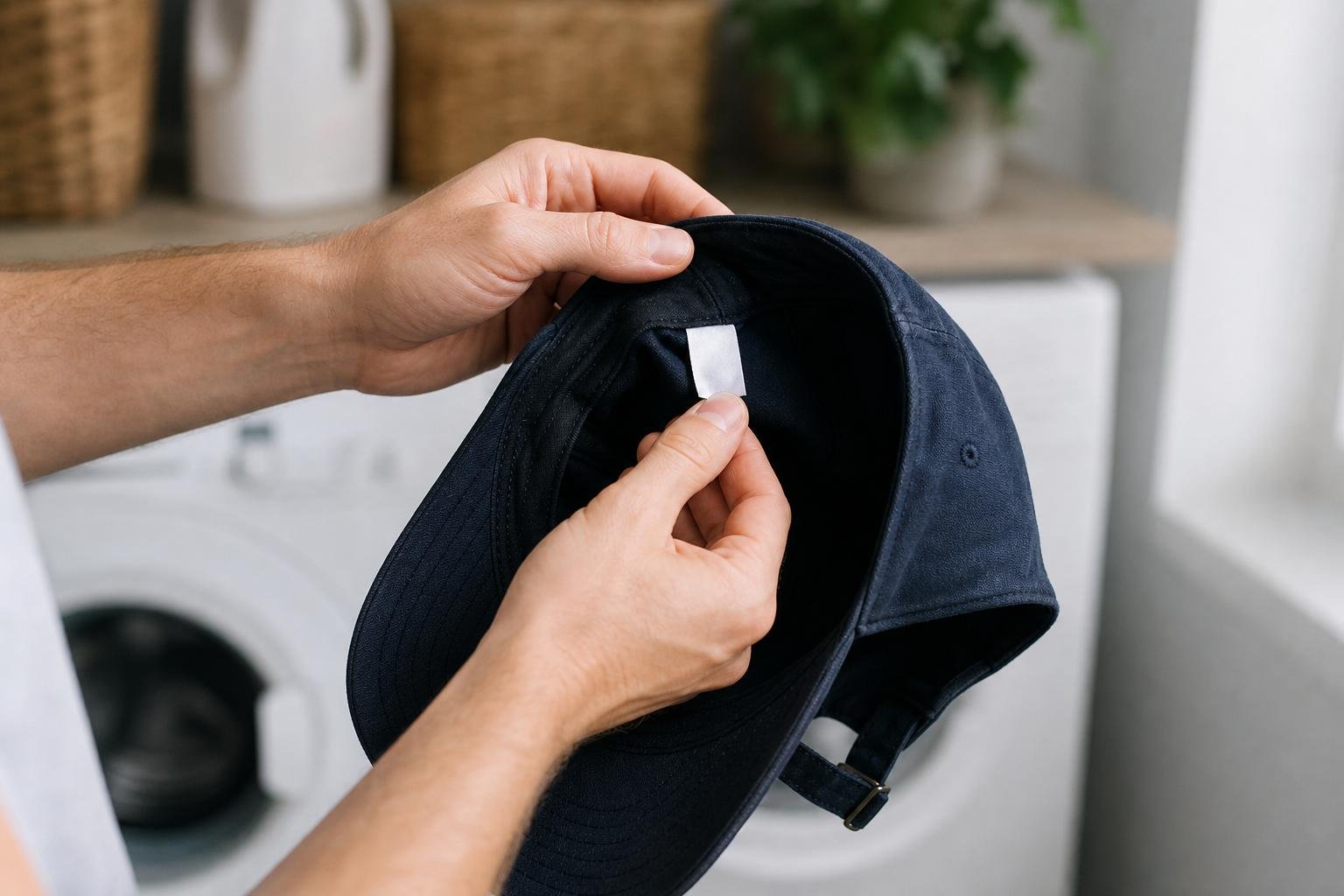
Before adding water, check the care label inside the cap. The label may specify hand-washing, spot-cleaning, or dry-cleaning only. If the label is missing, look closely at the materials and construction.
Most modern cotton twill, polyester, nylon, and mesh caps can tolerate a careful hand wash. Structured caps need more support than soft, unstructured styles because their front panels can crease or collapse when wet. Vintage caps, wool styles, suede, leather, and caps with delicate embroidery, glued patches, or metallic details deserve extra caution.
The brim is another consideration. Many newer caps have plastic brims that can handle a gentle wash. Older caps may have cardboard-based brims, which can warp or soften if soaked. If the cap’s age or construction is unclear, stick to spot-cleaning rather than submerging it.
Also test for colorfastness before washing a dark, brightly colored, or multicolored cap. Dampen a white cloth with cool water and a small amount of mild detergent, then press it against an inconspicuous area. If dye transfers to the cloth, avoid soaking the cap.
You do not need specialty equipment for routine cap care. Gather a few gentle supplies before you begin:
Avoid bleach, harsh stain removers, and strong powdered detergents. They can strip color, weaken fibers, or leave residue in the sweatband. Hot water is equally risky: it can shrink natural fibers, set stains, and affect the cap’s shape.
For light dust or a small mark, you may only need a damp cloth and a drop of mild soap. A full wash is best reserved for visible grime, built-up sweat, or an overall dingy appearance.
Hand-washing gives you the most control over water exposure, friction, and shape. It is the preferred method for most everyday caps.
Use a dry, soft brush or lint-free cloth to remove dust, hair, and loose debris. Brush gently along the seams, under the brim, and around embroidered areas. This simple step prevents dry dirt from turning into mud once water is added.
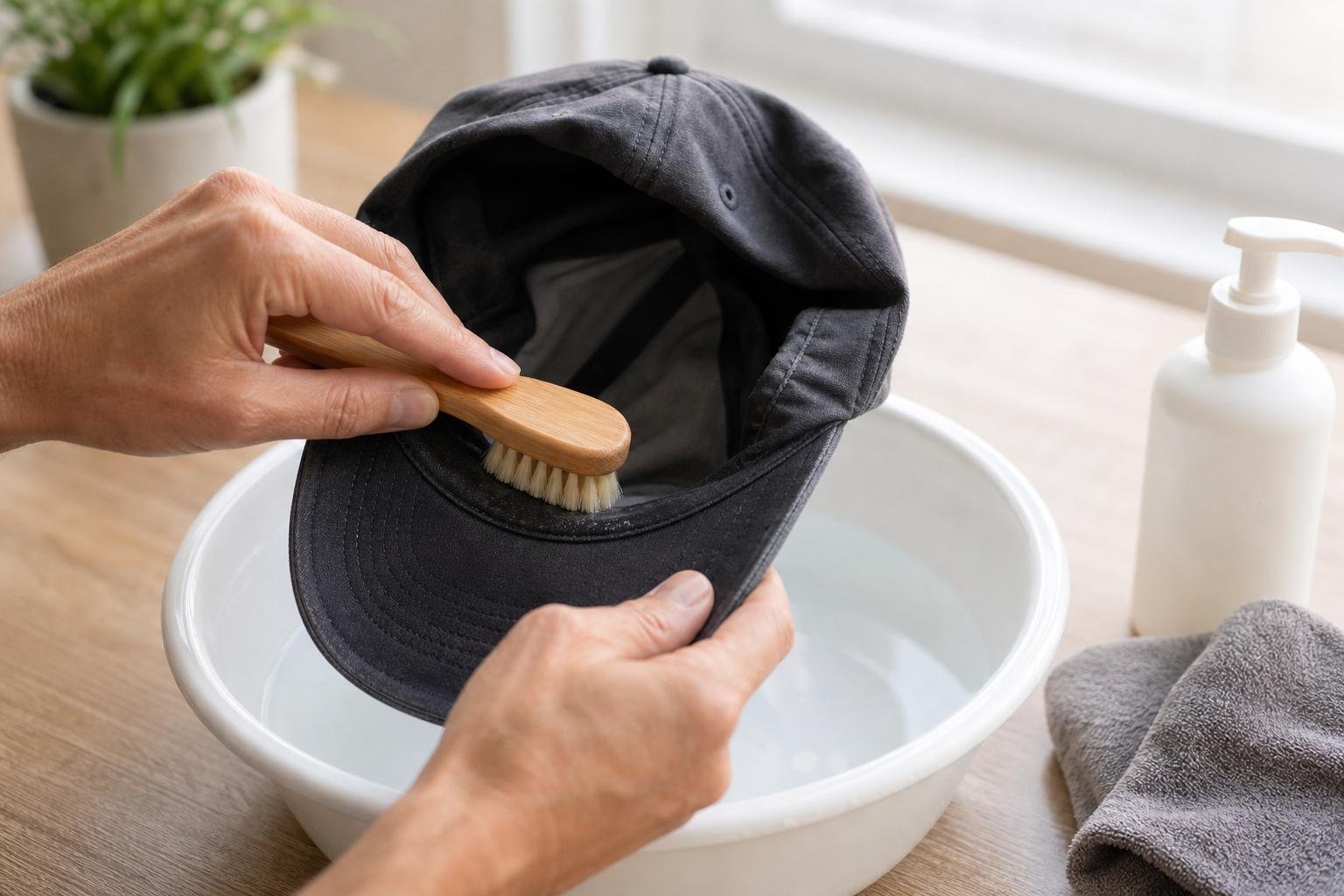
Apply a tiny amount of mild detergent to a damp cloth or soft brush. Work it gently into stained spots, particularly the inner sweatband, front edge of the brim, and areas marked by makeup or sunscreen.
Use small circular motions without scrubbing aggressively. Heavy friction can roughen cotton twill, flatten embroidery, and create faded patches. Let the detergent sit briefly, then blot with a clean damp cloth.
Sweat stains may need a second gentle treatment. It is better to repeat a mild process than to use a stronger cleaner too soon.
Fill a basin with cool or lukewarm water and mix in a small amount of mild detergent. Submerge only caps that appear sturdy and colorfast. Swish the water gently, then use your hands to move the cap through the suds.
Pay attention to the sweatband, where oil and salt tend to collect. Rather than twisting or wringing the cap, lightly squeeze soapy water through the fabric. Keep structured front panels from folding sharply.
If you are unsure about the brim, hold the cap so the crown can be cleaned while the brim stays mostly above water. A damp cloth can finish the job on the brim.
Drain the soapy water and refill the basin with cool, clean water. Rinse until the water runs clear and the cap no longer feels slippery. Leftover detergent can make fabric feel stiff and may attract more dirt over time.
Gently press out excess water with your hands. Do not twist the crown, bend the brim, or wring the sweatband. Those motions are among the fastest ways to distort the fit.
Drying matters as much as washing. Heat and poor support can turn a clean cap into one that fits awkwardly.
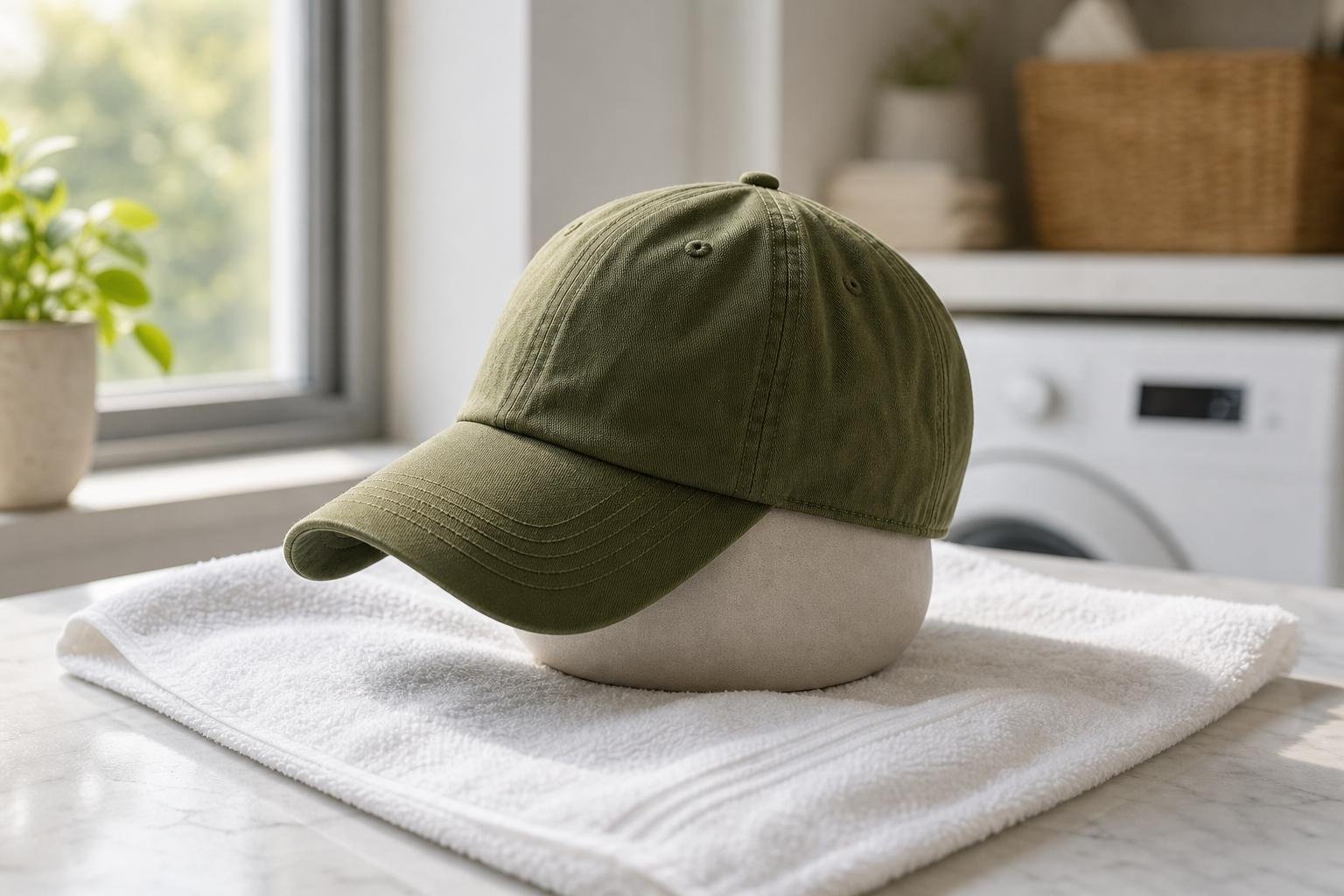
First, place the cap on a clean towel. Press the towel lightly against the cap to absorb moisture. Avoid rubbing, which can disturb the nap of the fabric or leave lint behind.
Next, reshape the crown with your hands. Smooth the front panels, straighten the brim, and restore the curve you prefer. Set the cap over an upside-down bowl, a rolled towel, or another rounded form that fills the crown without stretching it. This helps the cap dry with its intended silhouette intact.
Let it air-dry in a well-ventilated indoor area, away from direct sunlight and heat vents. Direct sun can fade darker colors, while a dryer can shrink fabric, warp a brim, and damage structured panels. Give the cap enough time to dry completely before wearing or storing it, since trapped moisture can lead to odor.
Not every cap should be soaked. Spot-cleaning is the safer option for vintage styles, wool caps, leather-trimmed designs, suede, fragile embroidery, or any cap with an uncertain brim construction.
To spot-clean, dip a soft cloth into a solution of cool water and mild detergent. Wring it out well so it is damp rather than wet, then blot the dirty area. Use a soft brush only where needed, and keep the surrounding fabric from becoming saturated.
Follow with a second cloth dampened with plain water to remove soap. Blot dry with a towel, reshape the cap, and let it air-dry on a rounded support.
For leather or suede details, avoid ordinary detergent and excess water. These materials can darken, stiffen, or develop water marks. A cleaner made specifically for the material is usually the more appropriate choice.
The easiest way to protect a cap is to avoid shortcuts that create unnecessary stress on the fabric and structure.
Do not put a cap in the washing machine unless its care label specifically permits it. Agitation can bend the brim, crush the crown, loosen stitching, and fade color. The dishwasher is also not a reliable solution: high heat, strong detergent, and powerful water pressure can damage a cap’s materials and shape.
Avoid soaking a cap for long periods. Brief contact with cool water is usually enough for routine cleaning. Long soaks increase the chance of color bleeding, weakened adhesives, and a distorted brim.
Finally, do not store a cap while it is still damp. Letting the sweatband and inner seams dry fully helps prevent stale odors and keeps the cap ready to wear.
It is usually safer to hand-wash a cap. A washing machine can bend the brim, misshape the crown, and create unnecessary wear, particularly on structured or older styles.
A small amount of mild, clear dish soap can work for hand-washing or spot-cleaning. Use it sparingly, rinse thoroughly, and avoid formulas containing bleach or strong degreasers.
Treat the sweatband and stained areas with mild detergent and cool water using a soft cloth or brush. Work gently, rinse well, and repeat if needed rather than using harsh cleaners.
Wash it when it looks dirty, smells stale, or has visible sweat buildup. Between washes, air it out after wear and spot-clean small marks to reduce the need for a full wash.
Brief indirect daylight is generally less risky than strong direct sun, but indoor air-drying is best. Direct sunlight can fade color and may dry the fabric unevenly.
The best way to wash a cap is with cool water, mild detergent, gentle handling, and patient air-drying. Protect the brim, avoid heat and harsh agitation, and dry the crown on a rounded form so your cap returns to your rotation clean and properly shaped.