Physical Address
304 North Cardinal St.
Dorchester Center, MA 02124
Physical Address
304 North Cardinal St.
Dorchester Center, MA 02124
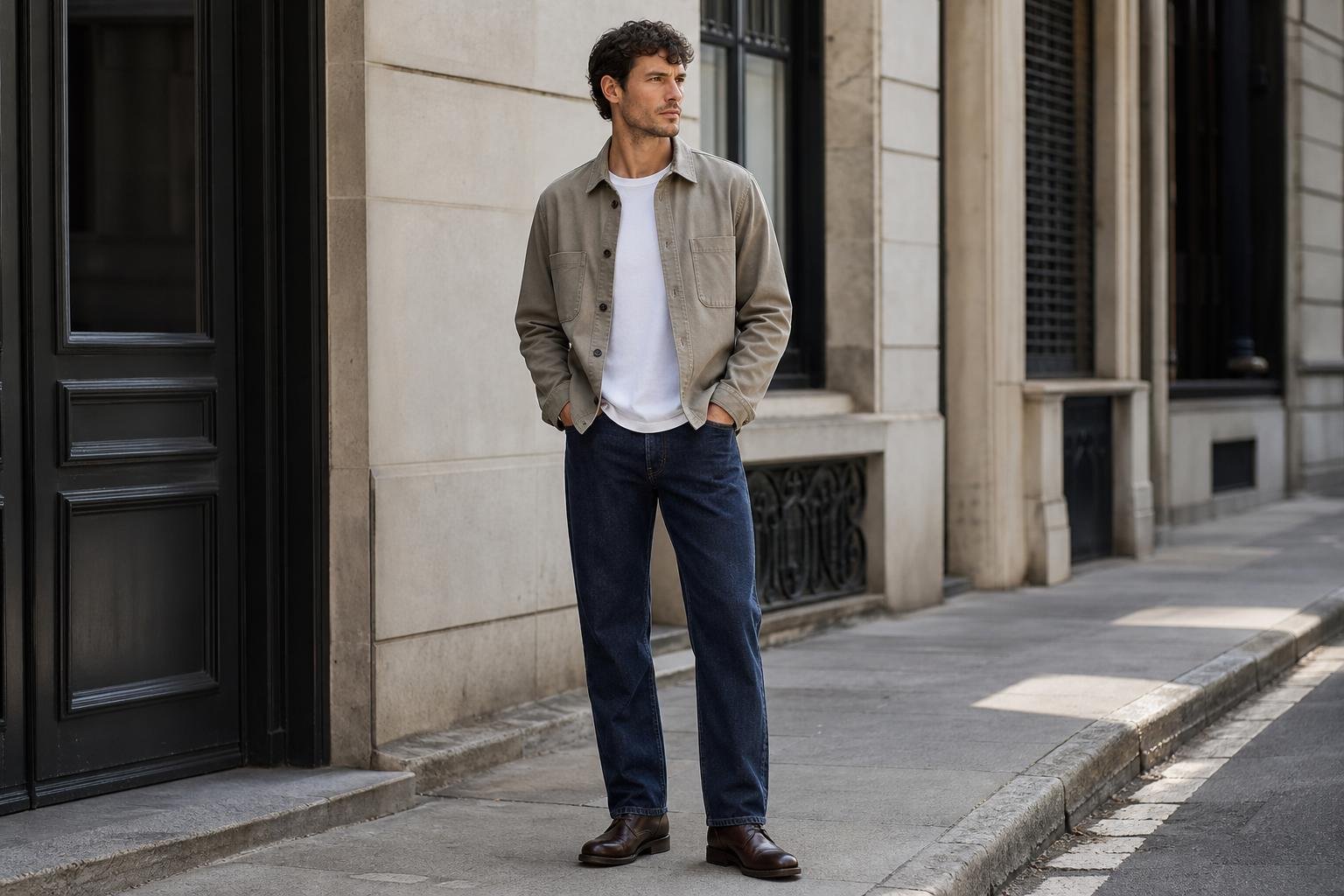
A well-fitting pair of jeans should feel secure without restricting movement. Use this guide to assess the waist, seat, thighs, rise, inseam, and the cuts that suit your build.
Jeans are a daily staple, but the right pair should do more than match your shirt. They should sit securely at the waist, leave room to move, and create a clean line from the hips to the hem. If you have wondered how should jeans fit men, start with the fundamentals rather than the label on the waistband. Size, cut, rise, fabric, and proportions all affect the final result.
A good fit feels comfortable while standing, sitting, walking, and bending. It should not require a belt to stay up, bunch heavily at the ankles, or pull tightly across the seat and thighs. The goal is not to make every pair look painted on or oversized; it is to choose a silhouette that works with your body and the way you dress.
Before deciding whether you prefer slim, straight, or relaxed jeans, assess these six fit points. A pair can have the right waist measurement and still fit poorly elsewhere.
Jeans should sit flat against your waist without digging in or sliding down. You should be able to fit one or two fingers inside the waistband comfortably, but not pull the fabric several inches away from your body. If you need a belt solely to keep your jeans from falling, the waist is too large.
Denim often relaxes slightly with wear, especially when it contains little or no stretch. A snug but comfortable waistband can be appropriate for rigid denim, while a pair that feels uncomfortably tight in the fitting room is unlikely to become a favorite.
The seat should follow the shape of your body without sagging, pinching, or pulling. Excess fabric under the seat creates a droopy appearance, while tight horizontal strain lines suggest the jeans are too small through the hips or upper thighs.
Check the back view before removing tags. A properly fitted seat looks smooth and sits close to the body without feeling restrictive when you sit down.
You should be able to squat, climb stairs, and sit without pressure across the thighs. A little fabric movement is normal, but deep horizontal whiskering or obvious pulling from the crotch toward the outer thigh usually means the cut is too tight.
The knee area should also allow natural motion. If it catches or feels constricted every time you bend your leg, try a straight or athletic-tapered fit rather than simply sizing up at the waist.
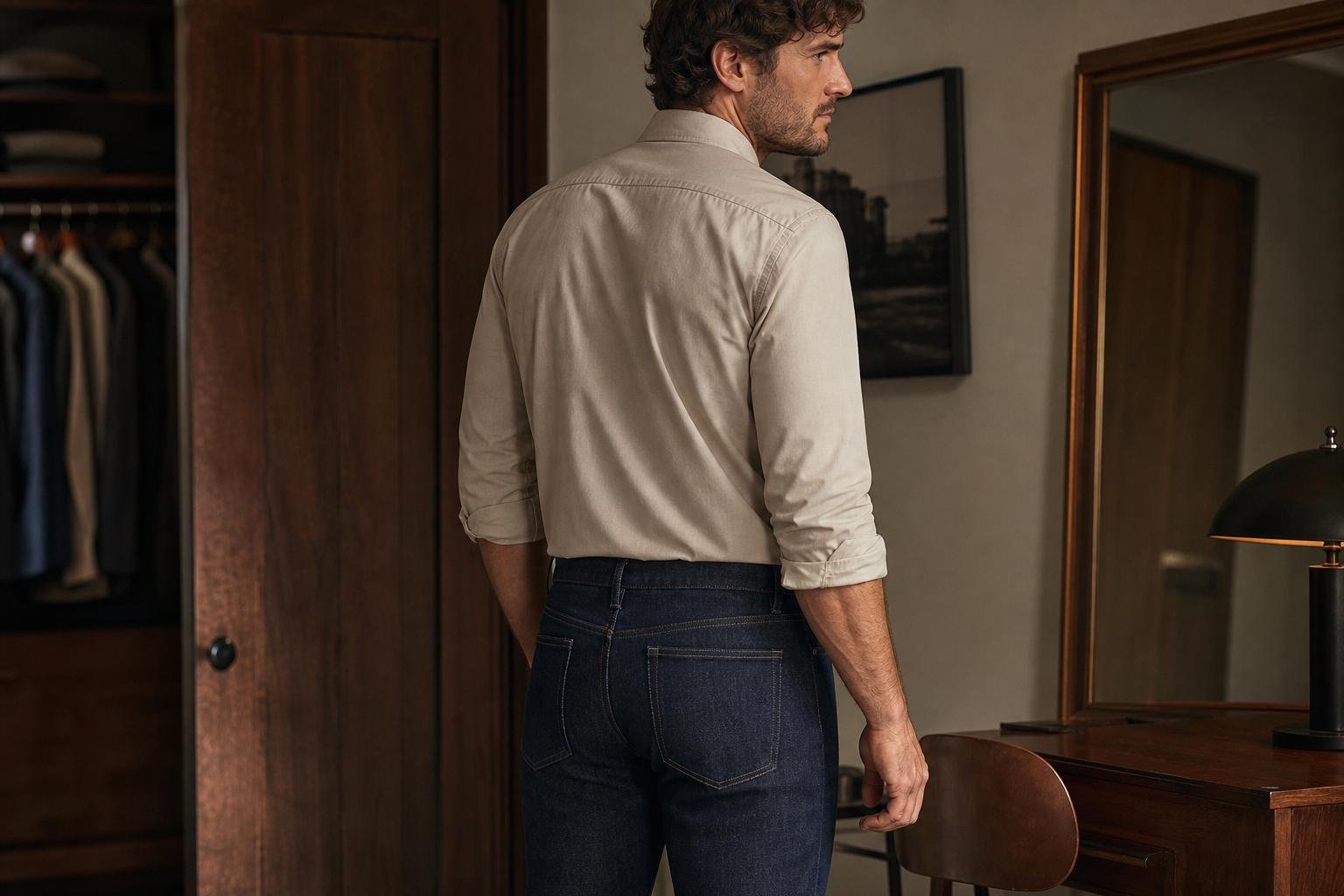
Rise is the distance from the crotch seam to the top of the waistband. It strongly affects comfort and proportion.
Low-rise jeans sit lower on the hips and can shorten the visual length of the torso. Mid-rise jeans generally sit around the natural waist or slightly below it, making them a versatile choice for most men. High-rise jeans sit closer to the natural waist and can create a longer-looking leg line, especially when worn with a tucked-in shirt or shorter jacket.
The crotch should sit close enough to your body to avoid sagging, but not so high that it pulls when you sit or walk.
The right inseam depends on the cut and the shoes you wear. Straight and slim-straight jeans typically look clean with a slight break, meaning the hem rests lightly on the top of the shoe. Tapered and slim jeans can have little to no break for a sharper profile.
Too much stacking around the ankle can make jeans look overly long and obscure the shape of the leg. If you regularly cuff your denim, leave enough length for one neat cuff rather than several bulky rolls.
Rigid denim holds its shape and often becomes more personalized with wear, but it needs enough room in the waist, seat, and thighs from the beginning. Stretch denim can feel easier immediately, though it may loosen over the day.
When trying on jeans, move through your normal range of motion. Sit in a chair, bend at the knees, and walk. Comfort is part of proper fit—not a compromise to make for a certain silhouette.
Understanding the major cuts makes it easier to compare pairs across brands. Labels vary, so inspect the shape from hip to hem rather than relying on the style name alone.
| Jean style | Shape through the leg | Works well for |
|---|---|---|
| Slim | Close, narrow leg without being skin-tight | Lean or average builds; streamlined outfits |
| Straight | Similar width from thigh to hem | Most body types; versatile everyday dressing |
| Tapered | More room at thigh, narrower at ankle | Athletic thighs; clean modern proportions |
| Relaxed | Extra room through seat and thigh | Larger frames; casual or workwear-inspired looks |
| Bootcut | Slight flare below the knee | Balancing boots or broader footwear |
Slim jeans should skim the leg rather than cling to it. They work particularly well with low-profile sneakers, loafers, and streamlined boots. If the calf is tightly outlined or the pockets pull open, move to a slim-straight or tapered option.
Straight jeans are among the easiest fits to wear. They give the thigh and calf enough space without looking baggy, and they pair naturally with everything from T-shirts to sport coats. For many wardrobes, a dark straight jean and a lighter relaxed or tapered pair cover most needs.
Tapered jeans are useful when you need room through the upper leg but prefer a narrower hem. The taper should begin gradually below the thigh. An aggressive taper can make the lower leg look disproportionately small, particularly with chunky shoes.
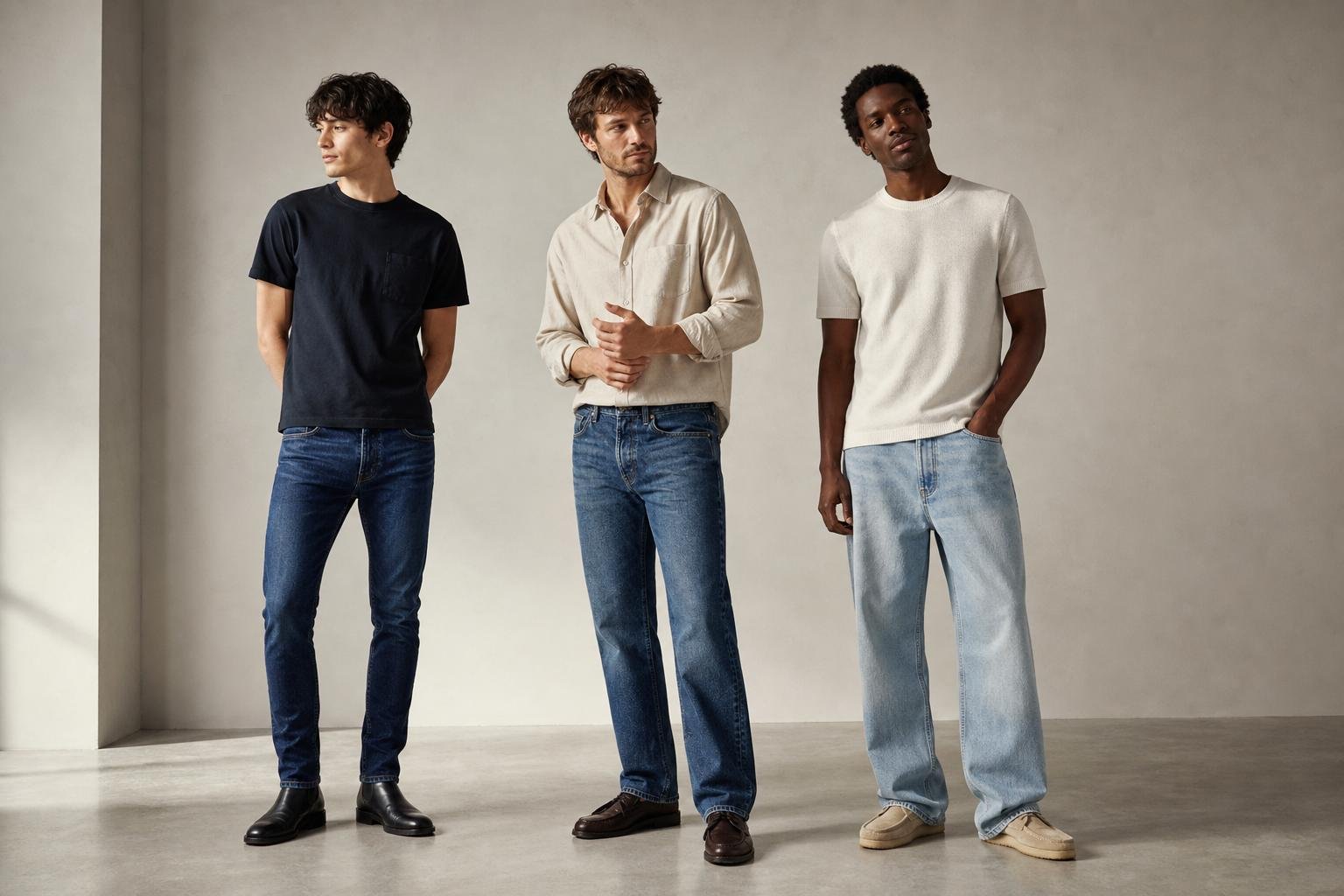
There is no body type that can wear only one cut, but proportions can guide your starting point. The central question—how should jeans fit men with different builds—comes down to balancing the upper and lower body while preserving movement.
Slim, slim-straight, and straight jeans tend to complement a lean frame. Look for a fit that follows the leg without collapsing around it. Very skinny jeans can exaggerate narrow legs, while overly relaxed styles may overwhelm the frame.
A mid-rise waist and a hem with little break usually keep the overall line tidy. If you want more visual weight, choose heavier denim, a straight leg, or a modest cuff.
Men with developed glutes and thighs often need more room in the seat and upper leg than standard slim jeans provide. Athletic-tapered, tapered, straight, and relaxed-straight cuts are strong options.
Avoid solving thigh tightness by buying a much larger waist size. That often leads to a loose waistband and excess fabric at the hips. Instead, prioritize jeans designed with additional room through the thigh and a controlled taper below the knee.
A straight or relaxed-straight leg creates a balanced, comfortable line. Mid-rise or higher-rise jeans can also prevent the waistband from rolling or slipping when seated. Aim for a fit that skims the body rather than one that is either overly tight or excessively loose.
Dark, even washes offer a streamlined look, but the cut matters more than the color. Choose a hem opening that has enough presence to balance your shoes and lower leg.
Tall men can usually wear most cuts successfully, provided the inseam is long enough. Straight, relaxed, and wider-leg jeans can look particularly natural because the extra vertical space accommodates more fabric.
Avoid a hem that stops noticeably above the shoe unless you intentionally want a cropped look. A clean slight break or full-length hem generally provides the most versatile proportion.
A close-but-comfortable slim, slim-straight, or tapered leg can create an uninterrupted vertical line. Mid-rise jeans are often easier to style than low-rise cuts, which may make the legs appear shorter.
Keep excess stacking to a minimum, and consider a hem adjustment rather than folding multiple cuffs. A clean hem that meets the shoe neatly is usually more flattering than a long inseam gathered at the ankle.
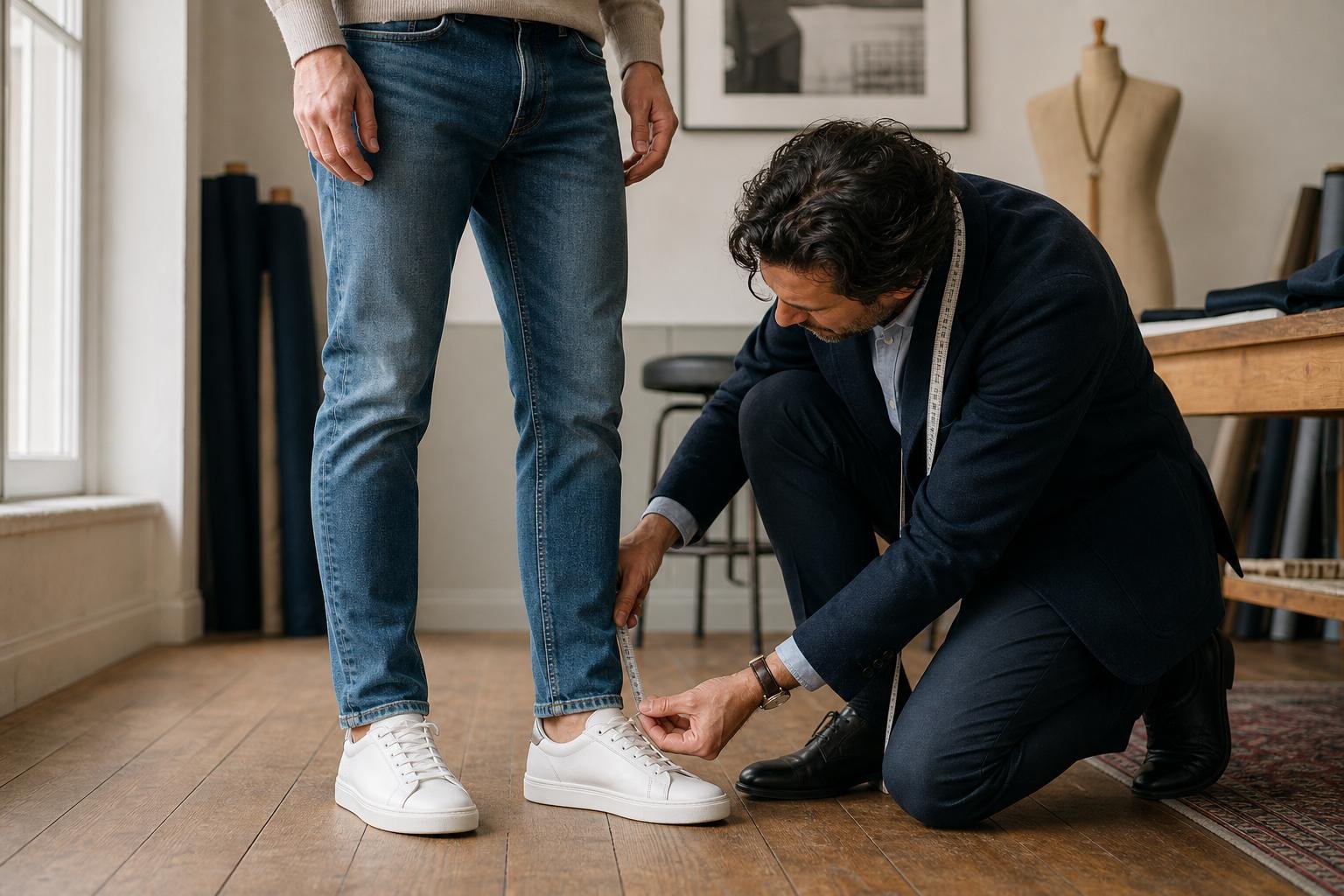
If jeans feel wrong, identify the specific issue before changing sizes. Going up or down one size affects the entire garment and may not solve a problem caused by cut or rise.
Bring or wear the shoes you expect to wear most often with the jeans. Footwear changes how the hem breaks and whether the leg opening looks balanced. Try jeans on in good light and check the front, side, and back rather than judging only the waist.
When comparing two sizes, sit down in both. The better pair should remain comfortable without creating a large gap at the waistband. Also remember that sizing varies widely, so the number on the label matters less than the actual fit.
For a versatile first pair, choose a mid-rise, dark-wash straight or slim-straight jean with a comfortable seat and a hem that reaches the top of your shoes. It can work across casual and polished settings with minimal effort.
Ultimately, how should jeans fit men is less about following a single trend and more about finding the right balance of comfort, proportion, and personal style. Your jeans should stay in place without a struggle, allow full movement, and fit cleanly through the seat, thighs, and hem.
Start with the fit points, then use leg shape and rise to refine the look. Once you know which cuts work for your build, buying jeans becomes far more straightforward.