Physical Address
304 North Cardinal St.
Dorchester Center, MA 02124
Physical Address
304 North Cardinal St.
Dorchester Center, MA 02124
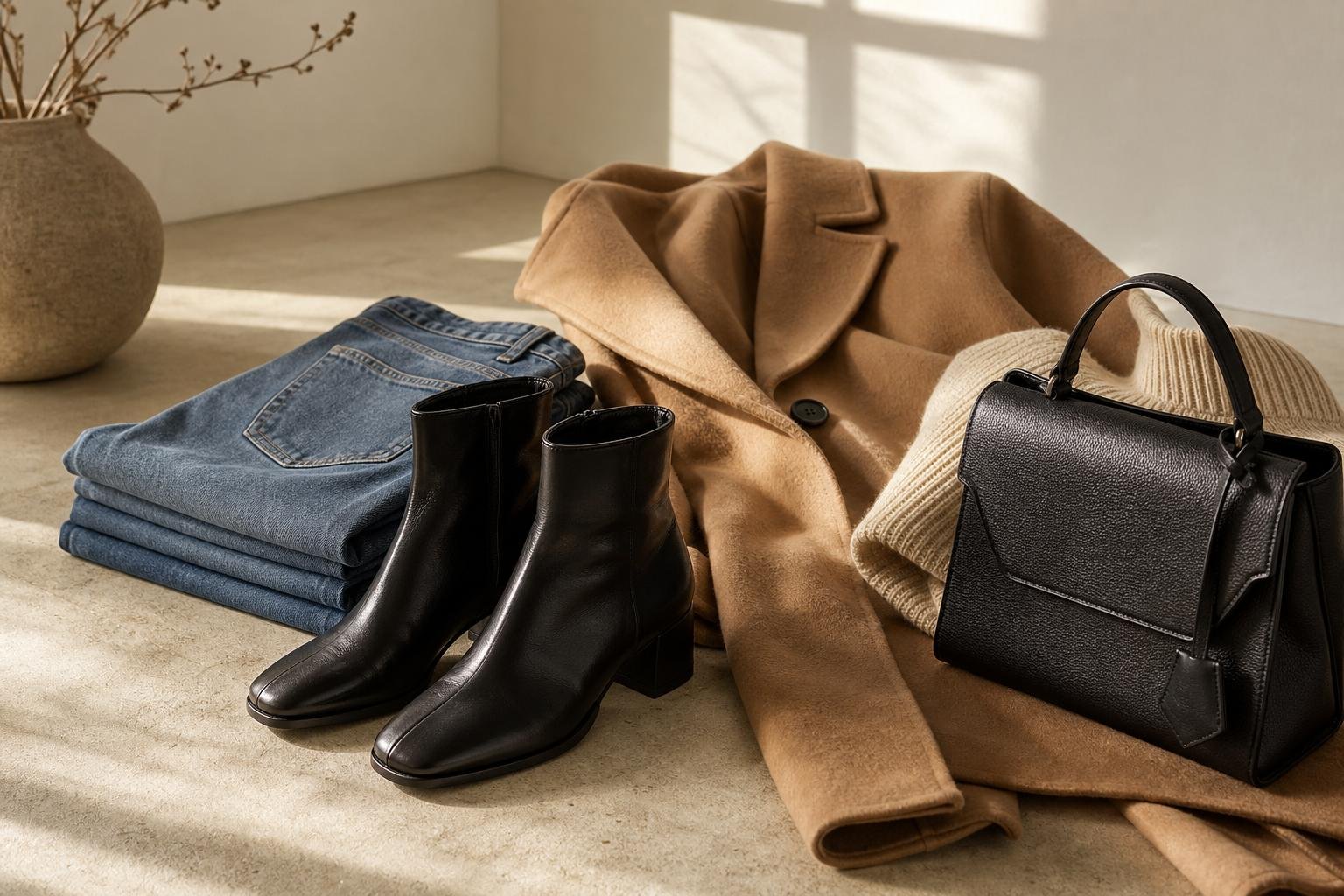
From Chelsea boots to knee-high styles, learn how to compare fit, materials, soles, and silhouettes for a considered boot purchase. This guide helps you choose a pair that works with your wardrobe and the weather.
A good pair of boots can do more than finish an outfit: it can make getting dressed easier through changing weather, long days, and multiple dress codes. When comparing boots uk options, start with the role the pair needs to play in your wardrobe rather than following a single trend. A sleek ankle boot, a practical lug sole, and a polished knee-high boot each solve a different styling problem.
The right choice comes down to silhouette, fit, materials, and sole construction. Use this guide to narrow the field and find boots that feel intentional, wearable, and suited to your everyday life.
The most useful boot is usually one that works with at least three outfits you already own. Before shopping, consider your usual hemlines, preferred pants shapes, commute, and climate. If your wardrobe relies on straight-leg jeans and tailored trousers, an ankle boot with a clean shaft often earns more wear than a dramatic over-the-knee style.
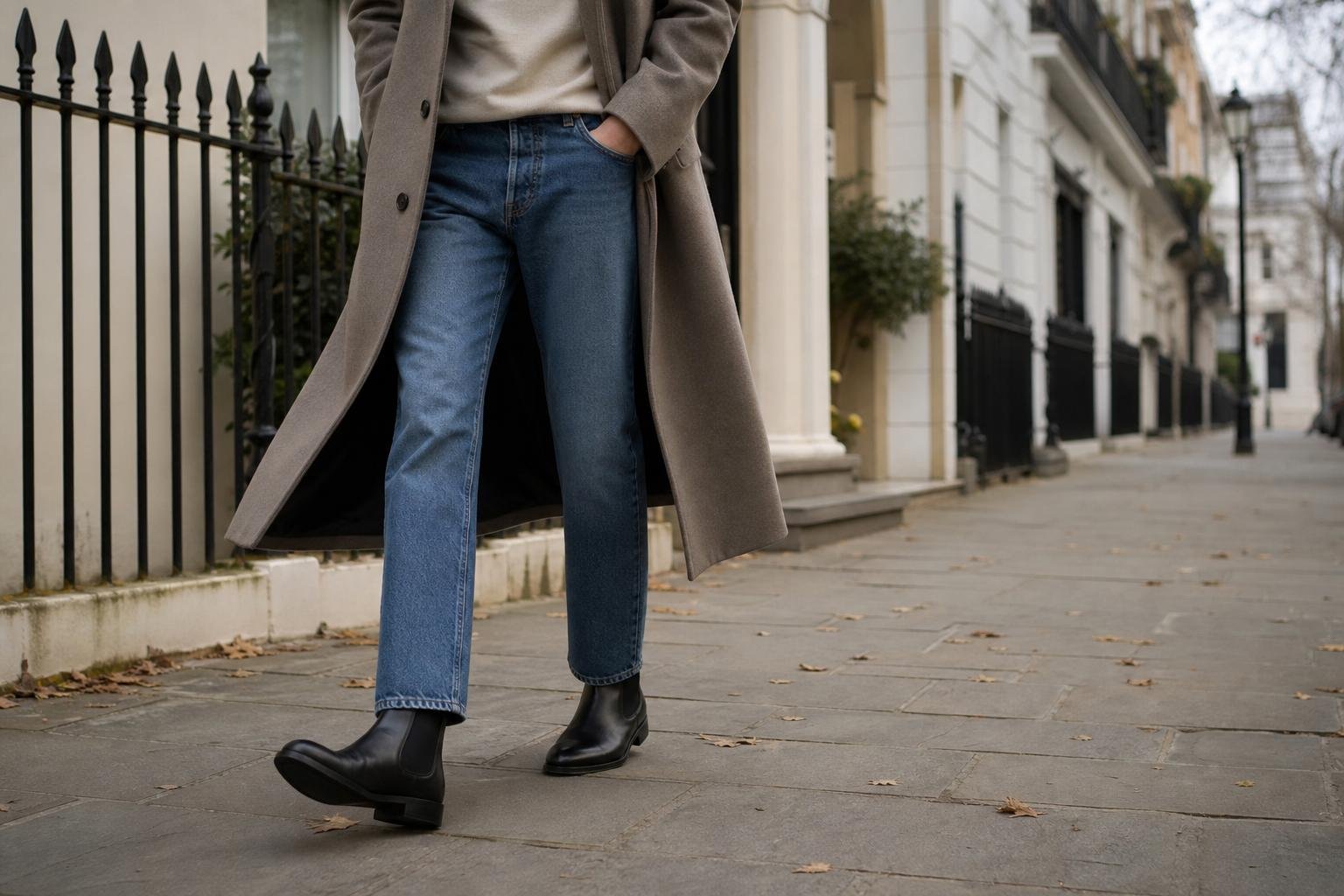
Chelsea boots are a reliable all-purpose option. Their elastic side panels make them easy to pull on, while a low or mid-height heel can work with denim, trousers, and casual dresses. Look for a shaft that sits neatly at or just above the ankle bone to avoid an awkward gap beneath cropped pants.
Knee-high boots offer a more polished line with skirts, dresses, and slim pants. They can also provide additional coverage in cooler conditions, but shaft circumference matters. A boot should zip or pull on without pinching the calf, and it should not slide down noticeably as you walk.
For a more rugged look, consider lace-up combat boots or lug-sole ankle boots. These styles bring weight and contrast to softer pieces such as knit dresses, pleated skirts, and tailored coats. A streamlined lug sole is generally more versatile than an excessively oversized platform.
When assessing boots uk selections, materials should guide the decision as much as appearance. Leather, suede, synthetics, and rubber all have different strengths, and the best option depends on how and where you plan to wear the boots.
Full-grain or smooth leather is often a sensible choice for frequent wear. It can develop character over time, is relatively easy to wipe clean, and generally holds its shape well with proper care. Minor scuffs may be less noticeable on textured or grained leather than on a very glossy finish.
Suede has a softer, more relaxed appearance and looks especially good in neutral shades such as taupe, chocolate brown, charcoal, and black. It requires more protection from moisture and stains, however. If rainy sidewalks or slushy conditions are part of your routine, reserve suede for dry days or choose a treated pair with a weather-conscious sole.
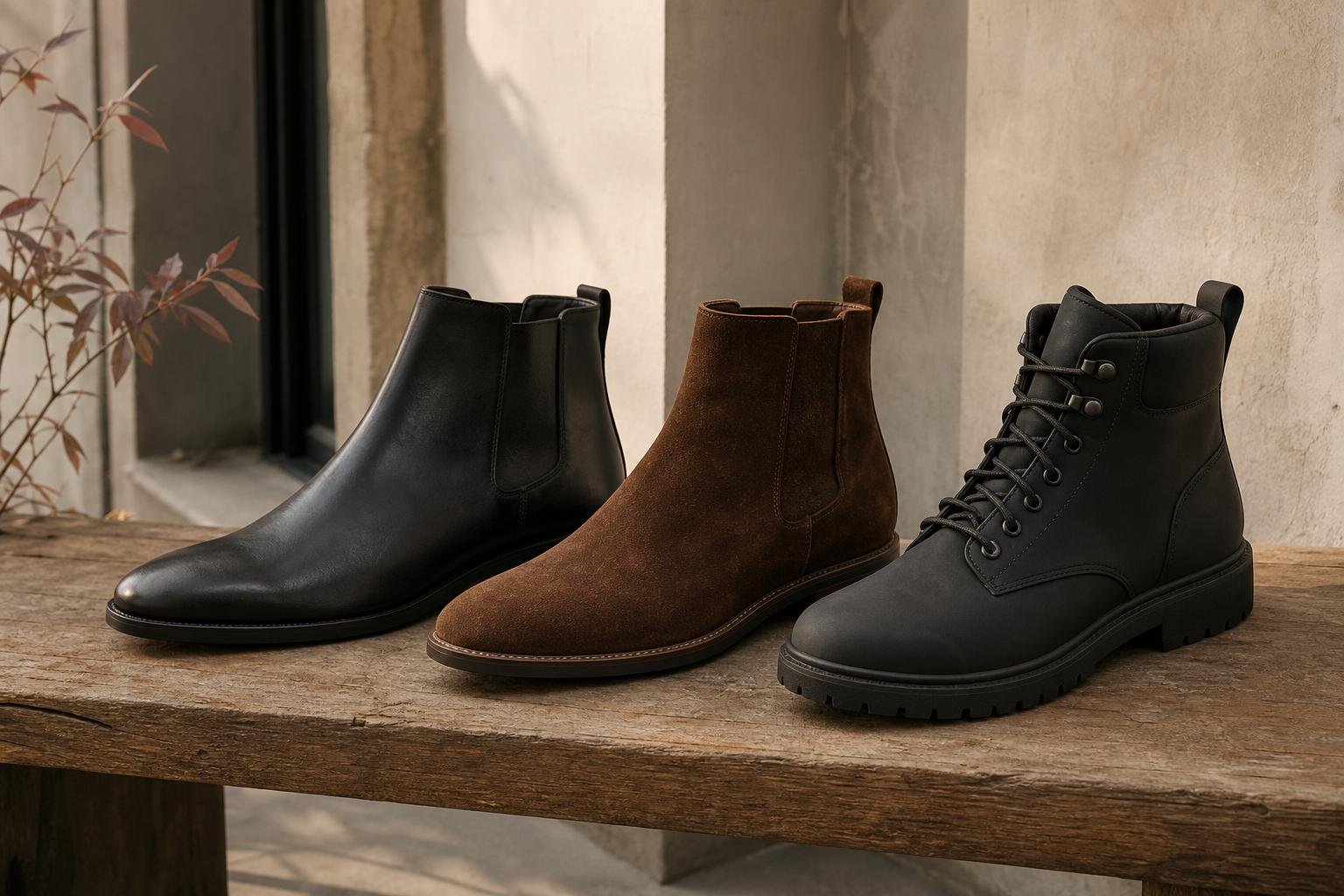
Synthetic leather can be a practical lower-maintenance option, especially for occasional or trend-led styles. Examine the finish closely: a convincing matte surface, tidy seams, and a substantial sole tend to look more refined than thin, highly shiny material.
For true wet-weather needs, prioritize waterproof construction rather than assuming any leather boot will keep feet dry. Sealed seams, water-resistant uppers, and a rubber outsole are useful details. Keep in mind that “water-resistant” and “waterproof” are not interchangeable: the former offers limited protection, while the latter is designed for more sustained exposure to wet conditions.
Boot fit is more complex than standard shoe fit because the toe box, instep, shaft, and calf can all affect comfort. Try on boots with the socks or hosiery you expect to wear most often. Thick socks can change the fit substantially, especially in narrow ankle boots.
Leave roughly a thumb’s width—about 1/2 inch (1.3 cm)—between your longest toe and the front of the boot. Your heel should feel secure, though a small amount of movement can be normal in new leather footwear. Persistent heel lift, pressure across the instep, numbness, or toe crowding are signs to try another size or shape.
A pointed toe can look elegant, but it should not force toes into a compressed position. If you want the visual effect of a pointed boot with more comfort, look for an almond or softly tapered toe. Similarly, square toes offer a modern profile and often provide a little more room across the forefoot.
Heel height should match your real routine. A block heel around 1 to 2.5 inches (2.5 to 6.4 cm) can offer elevation without the instability of a narrow high heel. Flat boots are not automatically more comfortable, either; a stiff sole with no cushioning can still be tiring over a long day.
The outsole has a major impact on how useful boots feel day to day. Smooth leather soles can look refined but may be slick on wet surfaces and show wear sooner if used for frequent walking. A rubber sole generally provides better traction and can be a stronger choice for commuting or variable weather.
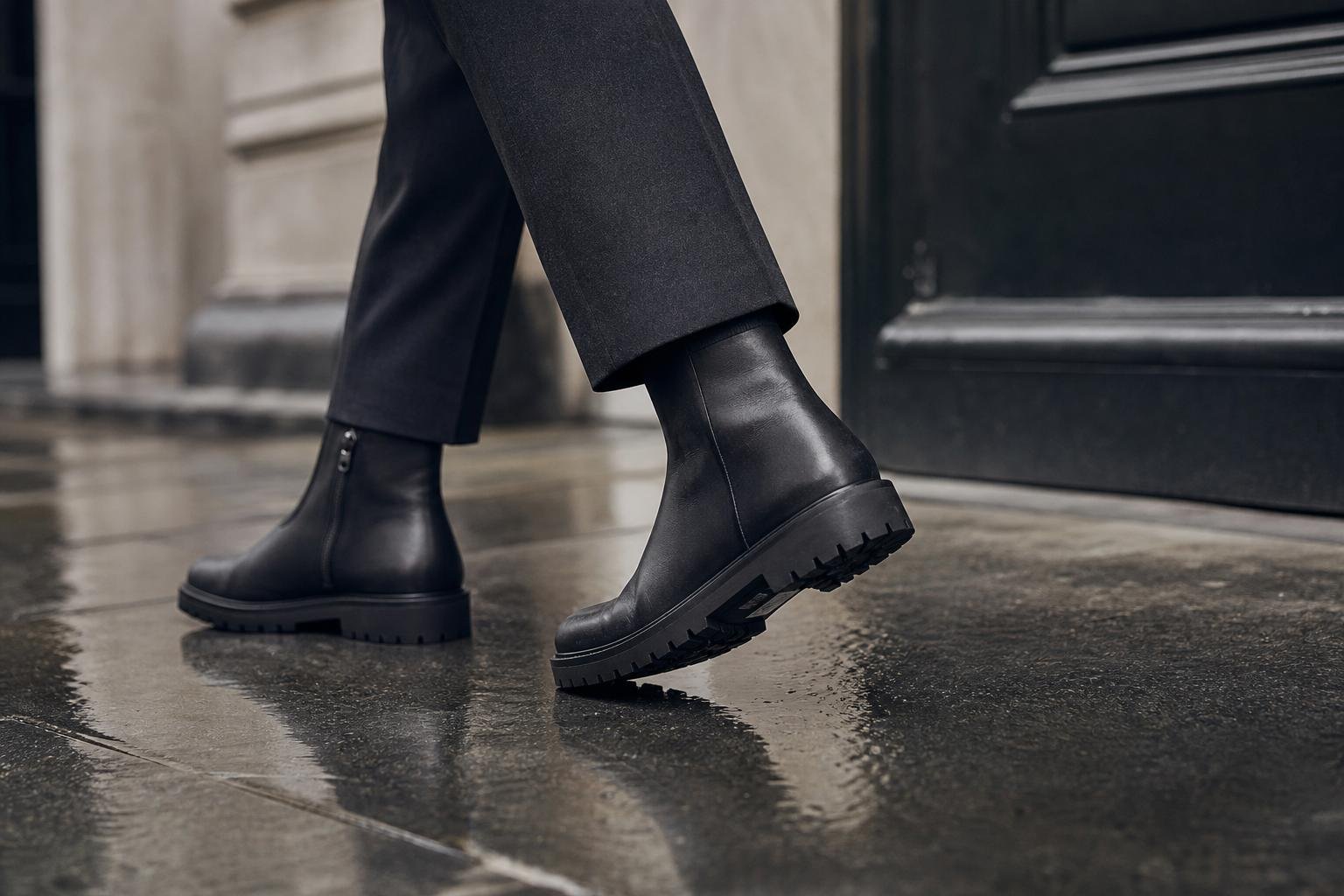
Look at the tread depth before buying. Deep lugs offer more grip and a substantial visual presence, while a lightly textured rubber sole is often enough for city wear. If you want a boot that works in both professional and casual settings, choose a profile with traction that is visible from below rather than a heavily workwear-inspired sole.
Also consider flexibility. A sole that bends slightly at the ball of the foot tends to feel more natural while walking. Extremely rigid boots may soften with wear, but they are not always the right choice for someone who spends significant time on foot.
Black boots are enduring because they pair easily with black trousers, blue denim, gray tailoring, and many dresses. But dark brown, burgundy, and rich suede neutrals can add depth to a wardrobe dominated by cream, camel, olive, or warm-toned denim.
If you want one versatile first pair, choose a finish that echoes your existing accessories. For example, someone who wears mostly black belts and bags may find black leather ankle boots easiest to integrate. Someone drawn to gold jewelry, camel outerwear, and medium-wash denim may get more use from chocolate brown leather or suede.
A simple shaft and minimal hardware generally offer the greatest styling range. Decorative buckles, contrast stitching, and bold Western details can be appealing, but they may be less adaptable across workwear, evening outfits, and casual looks.
Use these questions to compare two similar-looking pairs:
The strongest boots uk purchase is rarely the pair with the most dramatic details. It is the pair that meets your practical needs while still giving your outfits a distinct, finished shape.
Not automatically. Start with your usual size, then account for the socks you will wear and the brand’s size guidance. If one foot is slightly larger, fit the larger foot. A boot that is too large can cause heel slip and rubbing, so width or toe-box shape may be a better solution than simply going up a size.
Ankle boots usually work with the widest range of pants and casual outfits, making them a strong first purchase. Knee-high boots are especially useful if you frequently wear dresses, skirts, or slim pants and want a more polished cold-weather option.
Smooth leather is often the easiest material to maintain. Wipe away surface dirt, let boots dry away from direct heat, and use a suitable conditioner or polish when needed. Suede requires a dedicated brush and protective treatment, while waterproof boots should be cleaned according to their specific material.
Shopping for boots uk becomes simpler when you focus on your own wardrobe, walking habits, and local conditions. Choose a shape you will wear repeatedly, a material you can maintain, and a sole that supports your routine. With those details in place, a well-chosen pair can remain useful well beyond a single season.