Physical Address
304 North Cardinal St.
Dorchester Center, MA 02124
Physical Address
304 North Cardinal St.
Dorchester Center, MA 02124
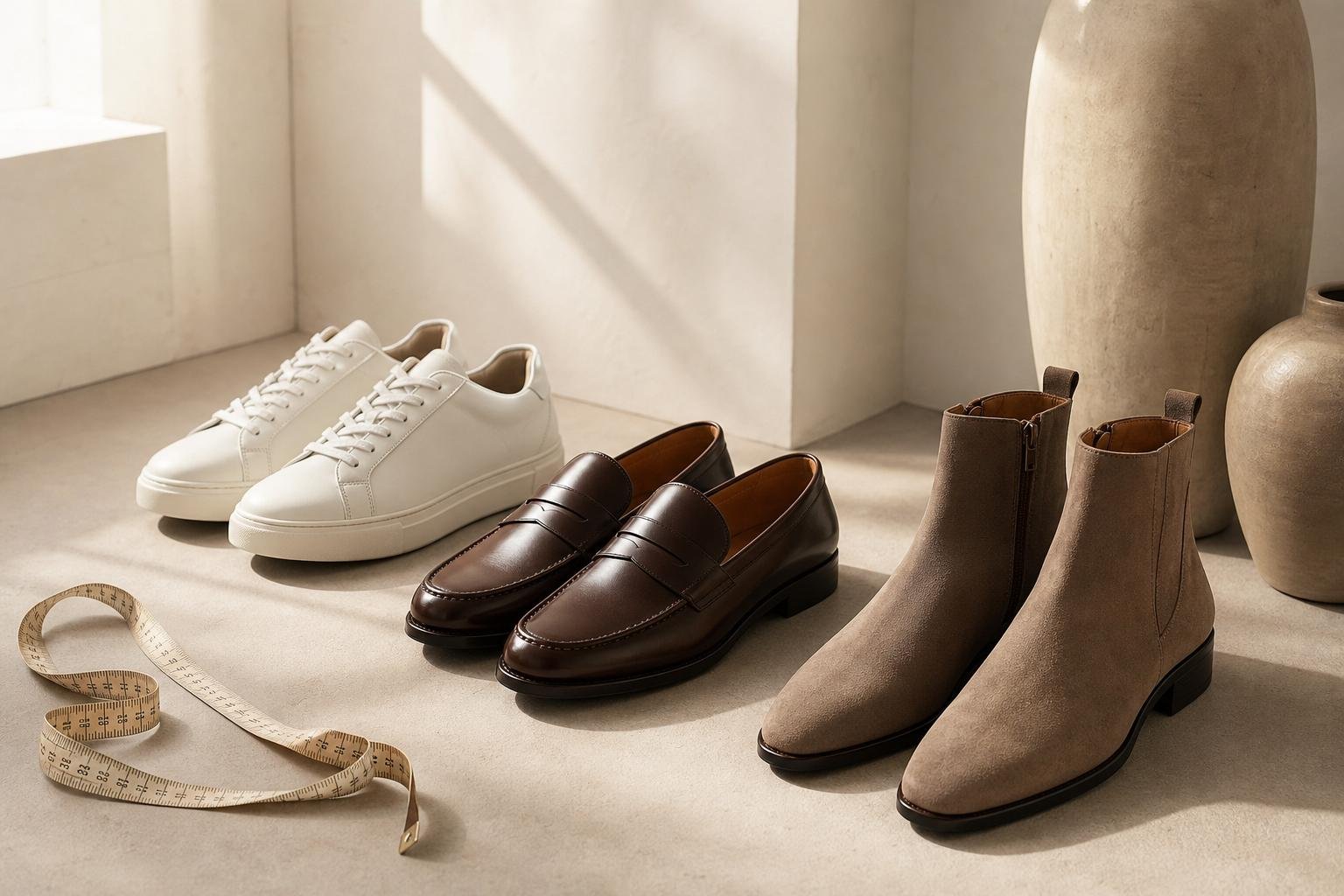
Korean shoe sizes are usually expressed in millimeters, making them straightforward once you know your foot length. Use this conversion guide as a starting point, then check each retailer’s fit notes before ordering.
Korean shoe sizing is often easier to understand than US sizing because the number usually refers to foot length in millimeters. Still, a shoes size chart korea search can produce different answers depending on whether you are shopping for women’s, men’s, unisex, athletic, or fashion footwear. The most reliable approach is to start with your measured foot length, use the Korean number as a baseline, and then compare it with the brand’s own chart.
Korean sizes commonly appear as 230, 240, 250, and 260 rather than US sizes such as 6, 7, or 8. Those numbers are generally tied to millimeters: a Korean 240, for example, is designed around a 240 mm foot length.
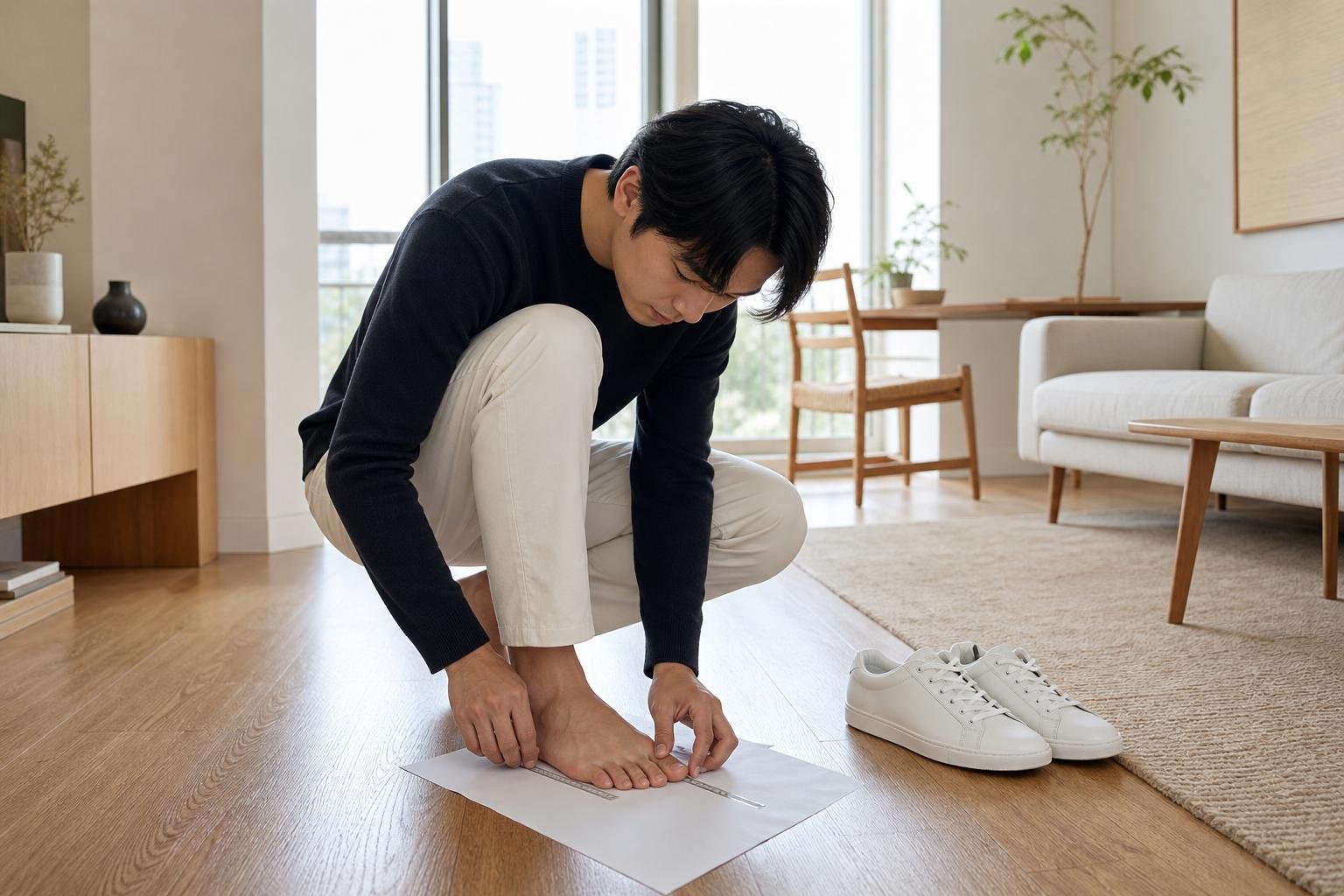
In Korea, footwear is typically labeled in millimeters, often abbreviated as mm. A size 235 corresponds to approximately 9.25 inches (23.5 cm), while a size 250 corresponds to approximately 9.84 inches (25 cm). Many Korean brands use 5 mm increments, although some styles are offered only in 10 mm steps.
This system is not strictly divided into women’s and men’s sizing. A 250 is a 250 whether it appears in a women’s sneaker, a men’s loafer, or a unisex sandal. The differences come from the shoe’s last, width, instep room, materials, and intended fit—not necessarily from the number on the label.
For US shoppers, the Korean millimeter number is often more useful than a direct US-size conversion. US sizing can vary substantially by brand, while your foot measurement remains the same. If your longer foot measures close to 9.45 inches (24 cm), begin by checking Korean size 240 and review the product’s fit guidance.
Use the chart below as a practical reference for common Korean sizes. US and EU equivalents are approximate, since conversion systems and brand sizing are not standardized.
| Korean size (mm) | Approx. US women’s | Approx. US men’s | Approx. EU |
|---|---|---|---|
| 220 | 5 | 3.5–4 | 35 |
| 230 | 6 | 4.5–5 | 36–37 |
| 240 | 7 | 5.5–6 | 38 |
| 250 | 8 | 6.5–7 | 39–40 |
| 260 | 9 | 7.5–8 | 41 |
| 270 | 10 | 8.5–9 | 42–43 |
| 280 | 11 | 9.5–10 | 44 |
Rather than treating a shoes size chart korea conversion as an exact match, use it to narrow your starting size. A US women’s 8 may align with Korean 250 in one brand and 255 in another, especially in pointed-toe shoes, boots, or styles with a narrow forefoot.
Measuring at home takes only a few minutes and can prevent the most common conversion mistake: choosing a size based solely on the US number you usually wear. Measure both feet because it is normal for one foot to be slightly longer or wider than the other.
Stand on a sheet of paper with your heel lightly touching a wall. Keep your weight evenly distributed, then mark the tip of your longest toe. Measure the distance from the wall edge to that mark in inches, then convert to centimeters and millimeters. Repeat on the other foot and use the larger measurement.
For example, if your longer foot measures 9.65 inches (24.5 cm), a Korean 245 is a sensible starting point when available. If a brand only offers 240 and 250, use the product description to decide. Choose 250 for a close-toed style with a narrow shape, thick socks, or firm materials. Choose 240 only if the shoe is known to run roomy and you prefer a close fit.
Measure later in the day when feet are more likely to be at their fullest. Wear the type of socks or hosiery you expect to use with the shoes. For boots, running shoes, and walking shoes, leave a small amount of space beyond the longest toe rather than sizing to an exact skin-tight foot measurement.
Length conversions are only part of the fit equation. Korean fashion shoes can sometimes be cut slimmer through the forefoot than comparable US styles, particularly pointed pumps, ballet flats, loafers, and sleek ankle boots. A person with a wide forefoot may need to size up even when their measured length suggests the smaller option.
Sneakers and performance footwear may have more structured fit recommendations. Some models are intended to fit close for stability, while others have a roomier casual shape. Check whether the listing describes the fit as standard, narrow, wide, small, or large. A retailer’s notes about sizing up or down are often more useful than a generic conversion chart.
Open-back mules and sandals require a different judgment. The heel should not hang over the back edge, and the toes should not extend beyond the front. If you are between sizes, consider the width of the footbed and the placement of straps as well as length.
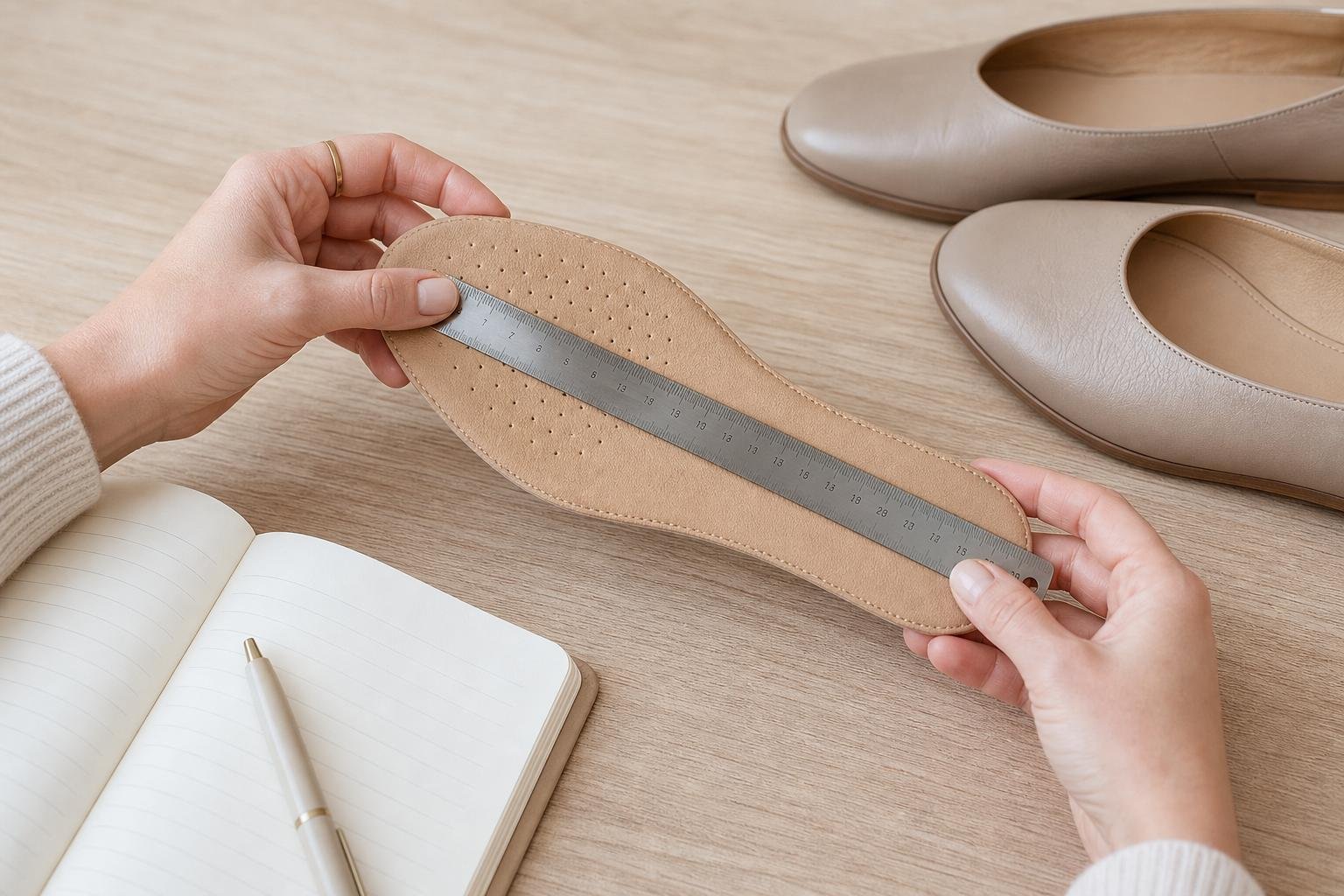
Use the shoes size chart korea reference alongside the measurements supplied on the individual product page. Look for an insole length, recommended foot length, or a stated last measurement. “Insole length” can be helpful, but it should be longer than your actual foot to allow for comfort and toe clearance.
If a listing gives only a Korean number, compare it with the measurement of a shoe you already own and like. Remove the insole if possible and measure it from heel to toe. This can give you a more relevant benchmark than comparing US labels across different brands.
Pay close attention to materials. Leather and some woven uppers may soften with wear, but they should not be painfully tight at the start. Patent finishes, stiff synthetics, and structured shoes offer less give. Suede can feel forgiving, but it still needs enough room at the toes and across the ball of the foot.
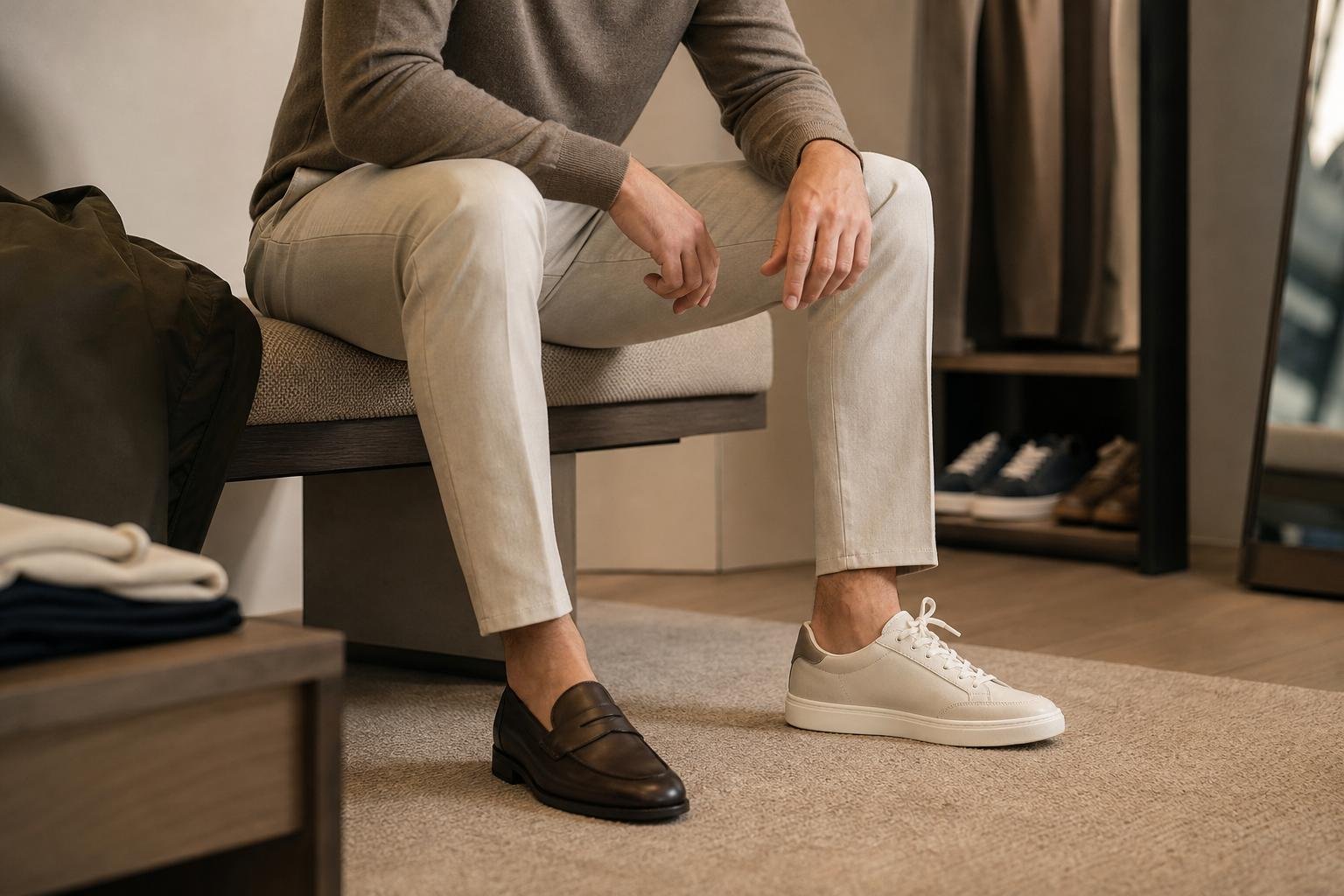
When you fall between sizes, think about the style’s purpose. A fitted dress shoe may call for a closer choice, while a winter boot or everyday sneaker often benefits from extra room. If returns are difficult or unavailable, choosing the size based on your larger foot is usually the safer decision.
Korean sizing is generally based on millimeters rather than gender-specific scales, so the same number represents the same approximate foot length. However, the fit can differ because women’s, men’s, and unisex shoes may use different lasts, widths, and proportions.
A US women’s 7 commonly corresponds to Korean 240, but this is an approximation. Check the brand’s chart and compare your measured foot length before ordering.
A US men’s 9 often aligns with Korean 270. Depending on the brand and the shape of the shoe, some shoppers may prefer 275 for additional toe room.
Size up if you have wide feet, are between sizes, plan to wear thick socks, or are buying a narrow closed-toe style. Do not automatically size up in every shoe; an overly long fit can cause slipping and discomfort.
Korean shoe labels offer a practical starting point because they are built around millimeter measurements. Measure your longer foot, match that length to the nearest Korean size, and use US and EU conversions only as general guidance. Once you also account for width, toe shape, material, and the retailer’s fit notes, choosing Korean footwear becomes much more straightforward.