Physical Address
304 North Cardinal St.
Dorchester Center, MA 02124
Physical Address
304 North Cardinal St.
Dorchester Center, MA 02124
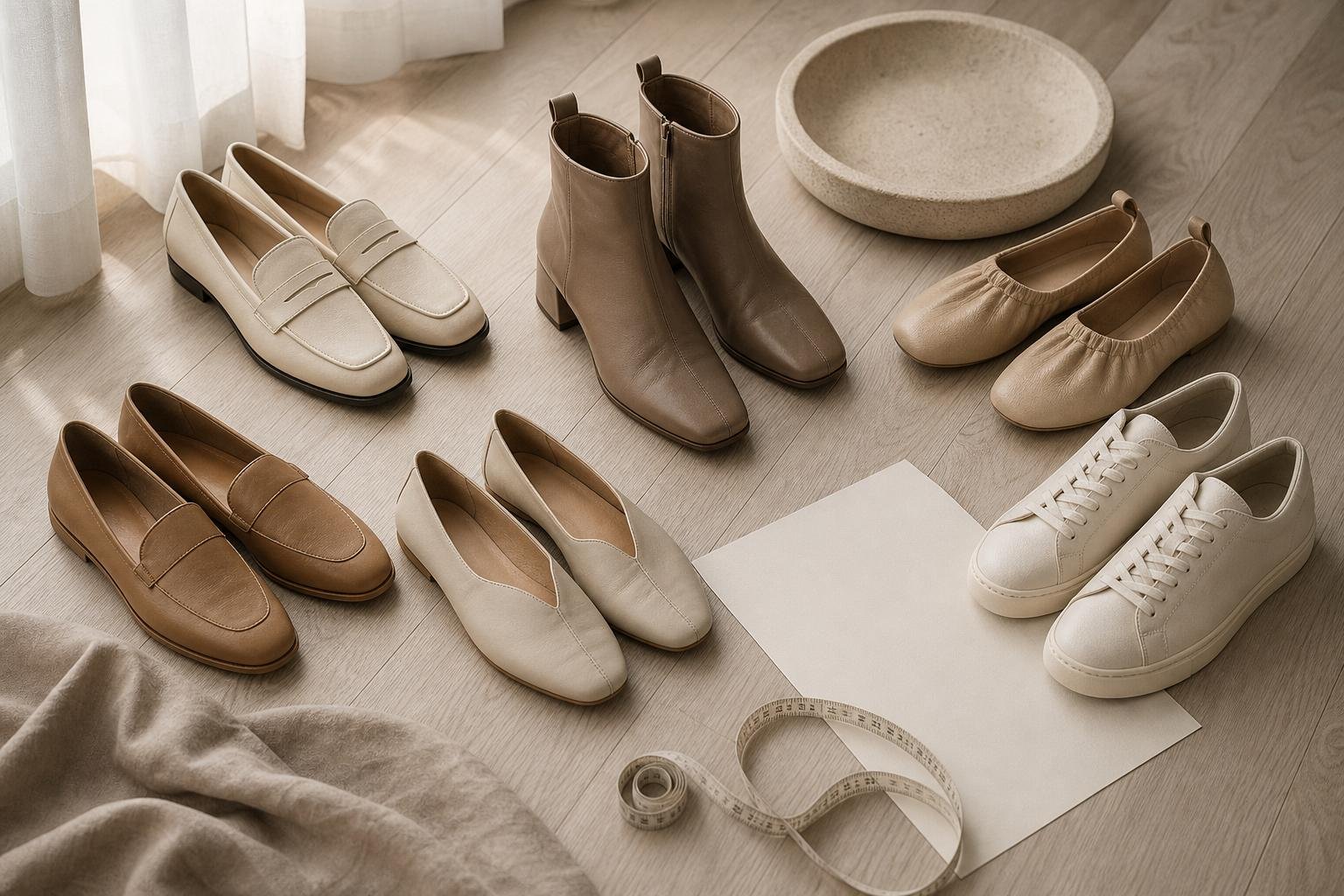
Learn how to get an accurate at-home foot measurement, interpret brand size charts, and convert between common US, UK, and EU shoe sizes.
Finding a comfortable pair of shoes starts before checkout. A shoes size chart can help you compare sizing systems, but it works best when you begin with a current measurement of both feet. Foot size can change over time, and the number printed in one brand may not translate perfectly to another.
Measure at home, use the brand’s own chart as the final reference, and leave room for the socks and activity your shoes are meant to handle.
A chart is a conversion tool, not a guarantee of fit. Shoe makers use different lasts—the foot-shaped forms around which shoes are built—so two shoes labeled with the same US size can feel meaningfully different in length, width, toe shape, and instep volume.
Start by locating your foot length in inches, then centimeters in parentheses if the brand provides both. Match that measurement to the size range specified by the manufacturer. When your measurement falls between sizes, the better choice depends on the shoe’s shape and intended use: closed-toe fashion shoes may need a little room, while a structured loafer or sandal may require a closer fit.
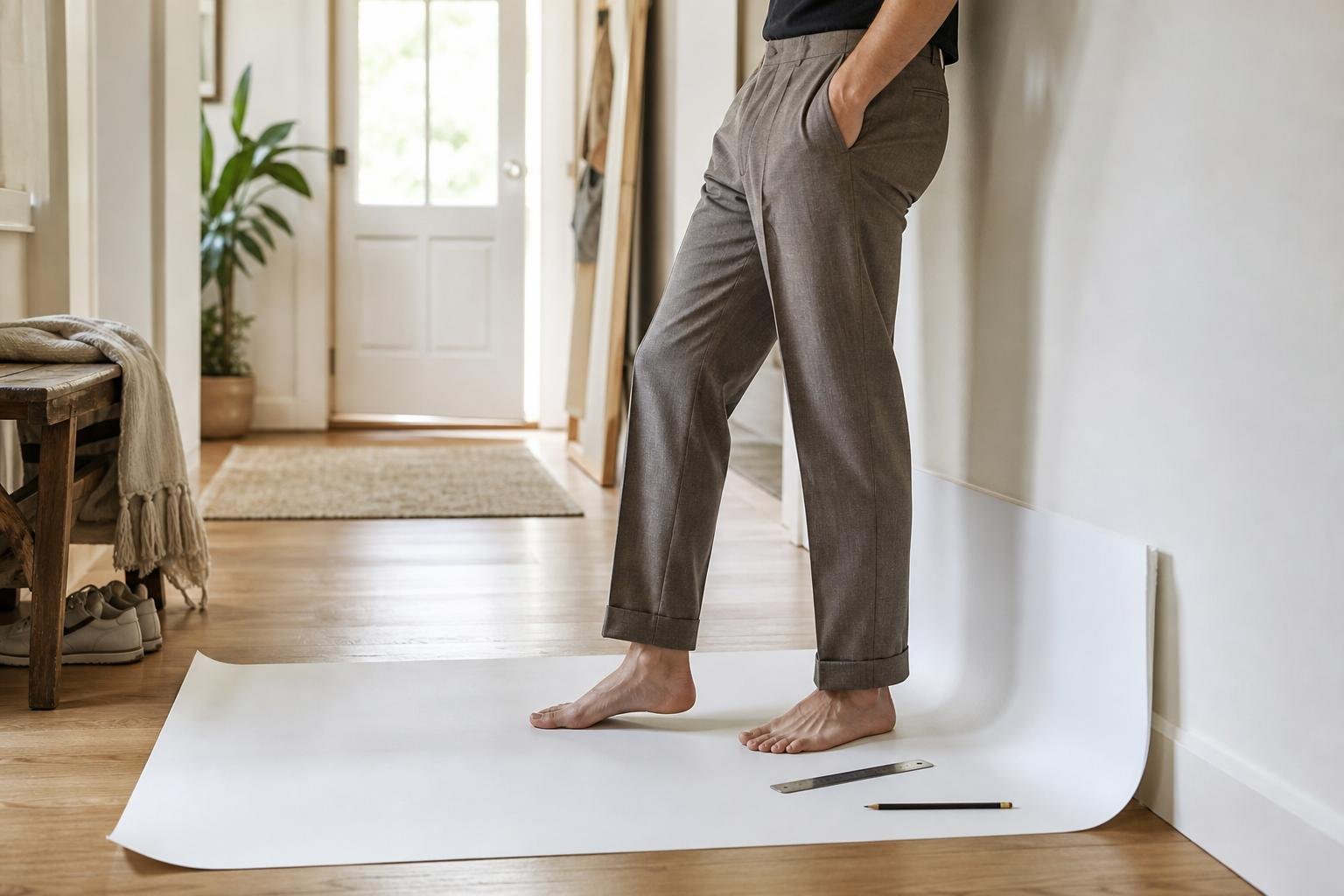
Measure later in the day, when feet tend to be at their largest. Wear the type of socks or hosiery you expect to wear with the shoes. For running shoes, hiking boots, and winter footwear, thicker socks can change the fit enough to affect your size choice.
Always measure both feet. It is common for one foot to be slightly longer or wider than the other, and you should generally buy for the larger foot.
You need a sheet of paper larger than your foot, a pencil or pen, a ruler or tape measure, and a wall. Hard flooring is ideal; carpet can make tracing less precise.
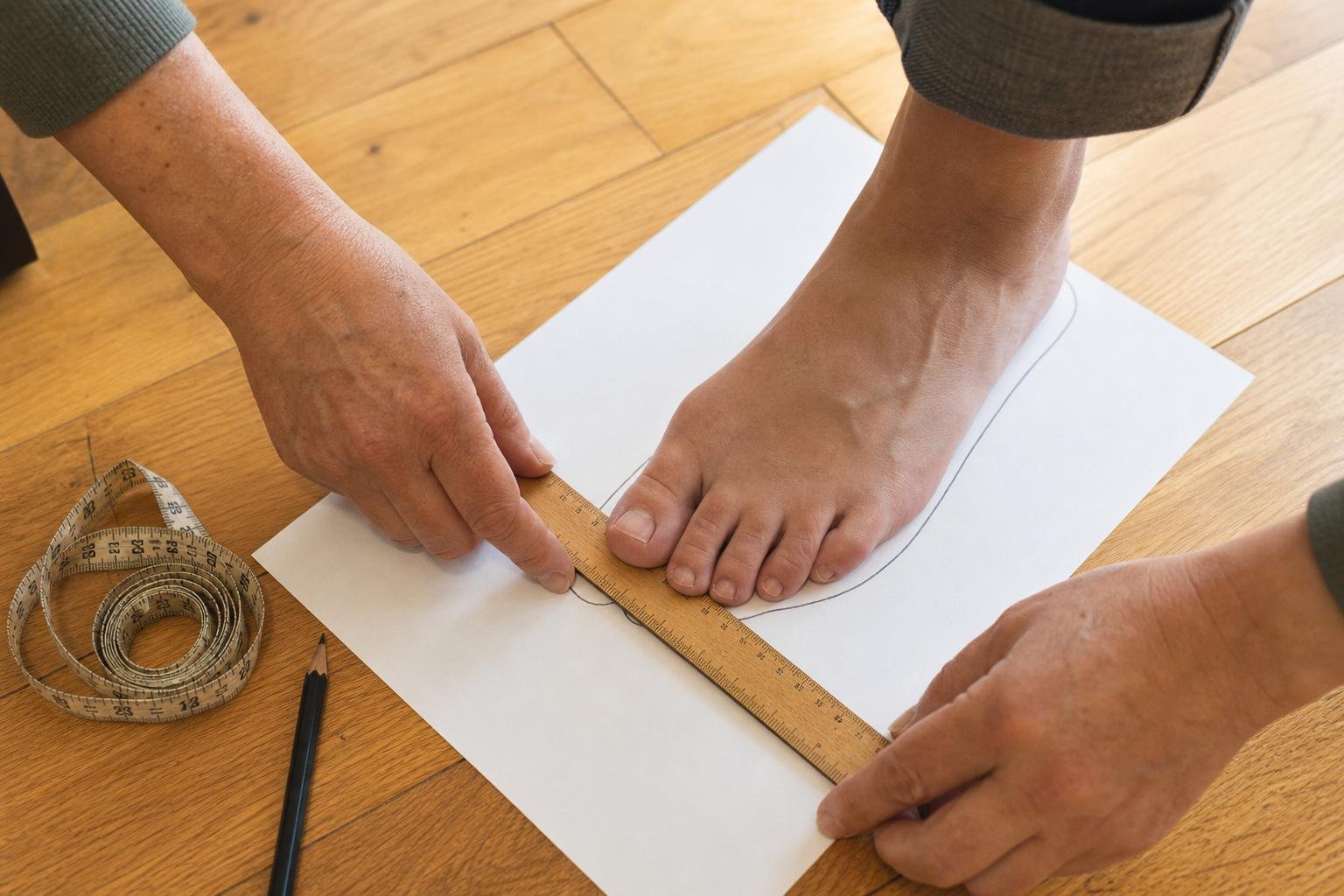
Place the paper flat against a wall. Stand with your heel lightly touching the wall and your weight distributed naturally across both feet. Have someone trace around your foot if possible. If you are tracing alone, keep the pen upright rather than angled inward.
Measure from the heel to the longest toe. Your big toe is not always your longest toe, so use the farthest point of the tracing. Record the length in inches first, then centimeters in parentheses.
For width, measure across the widest part of the forefoot, usually around the ball of the foot. Repeat for the other foot and use the larger length and width measurements when checking a brand chart.
Your measurement gives you a starting size, but the shoe category determines how much extra room you need. A pointed-toe pump may feel shorter than a round-toe flat in the same labeled size. Leather may relax with wear, while many synthetic materials offer less give.
For athletic shoes, a common fit check is to leave roughly a thumb’s width—about 0.4 to 0.6 inches (1 to 1.5 centimeters)—between your longest toe and the end of the shoe. That space helps accommodate forward movement and natural foot swelling during activity.
US, UK, and EU sizing systems do not use the same numbers, and women’s and men’s US sizing are also different. A women’s US size is often about 1.5 sizes higher than the comparable men’s US size, though this is a general conversion rather than a rule for every brand.
Treat any shoes size chart as a starting point, especially when converting to EU sizes. EU sizing may be listed in whole numbers, half sizes, or brand-specific ranges, so a brand’s foot-length measurement is more useful than relying on an EU number alone.
| US Women’s | US Men’s | UK | Approximate EU |
|---|---|---|---|
| 6 | 4.5 | 3.5 | 36–37 |
| 7 | 5.5 | 4.5 | 37–38 |
| 8 | 6.5 | 5.5 | 39 |
| 9 | 7.5 | 6.5 | 40–41 |
| 10 | 8.5 | 7.5 | 42 |
| 11 | 9.5 | 8.5 | 43 |
These equivalencies are approximate. Some brands use unisex sizing, which is often labeled in men’s US sizing; others publish separate women’s, men’s, and gender-neutral size systems. Check the label and product page carefully before converting.
A shoes size chart cannot account for every construction choice. The last shape is often the biggest variable: a narrow almond toe, a high-volume toe box, a low vamp, or a generous heel cup can all alter how a shoe feels.
Materials matter, too. Full-grain leather commonly softens and molds somewhat with wear, but it should not begin painfully tight. Suede may offer modest flexibility, while patent leather, coated materials, and many technical uppers are less likely to stretch in a useful way.
The outsole and insole also affect fit. A thick cushioned footbed can reduce internal volume, while a removable insole may create more flexibility for orthotics. Boots with a rigid shaft can feel different around the ankle and instep even when the toe length is correct.
Product pages often include more useful details than a general conversion chart. Look for notes such as “runs small,” “runs large,” “true to size,” “narrow fit,” or “wide toe box.” These descriptions are helpful when paired with your actual measurement and knowledge of your own foot shape.
Pay attention to width options. In US sizing, women’s medium width is commonly marked B and men’s medium width D. Wider options may be marked D for women and EE or 2E for men, but labeling is not completely universal. A shoe that feels too tight across the forefoot may require a wider width rather than a longer length.
Customer reviews can help identify recurring issues, such as a narrow heel or a short toe box. They are less reliable as a substitute for measurements, since reviewers may be comparing different prior brands and shoe types.
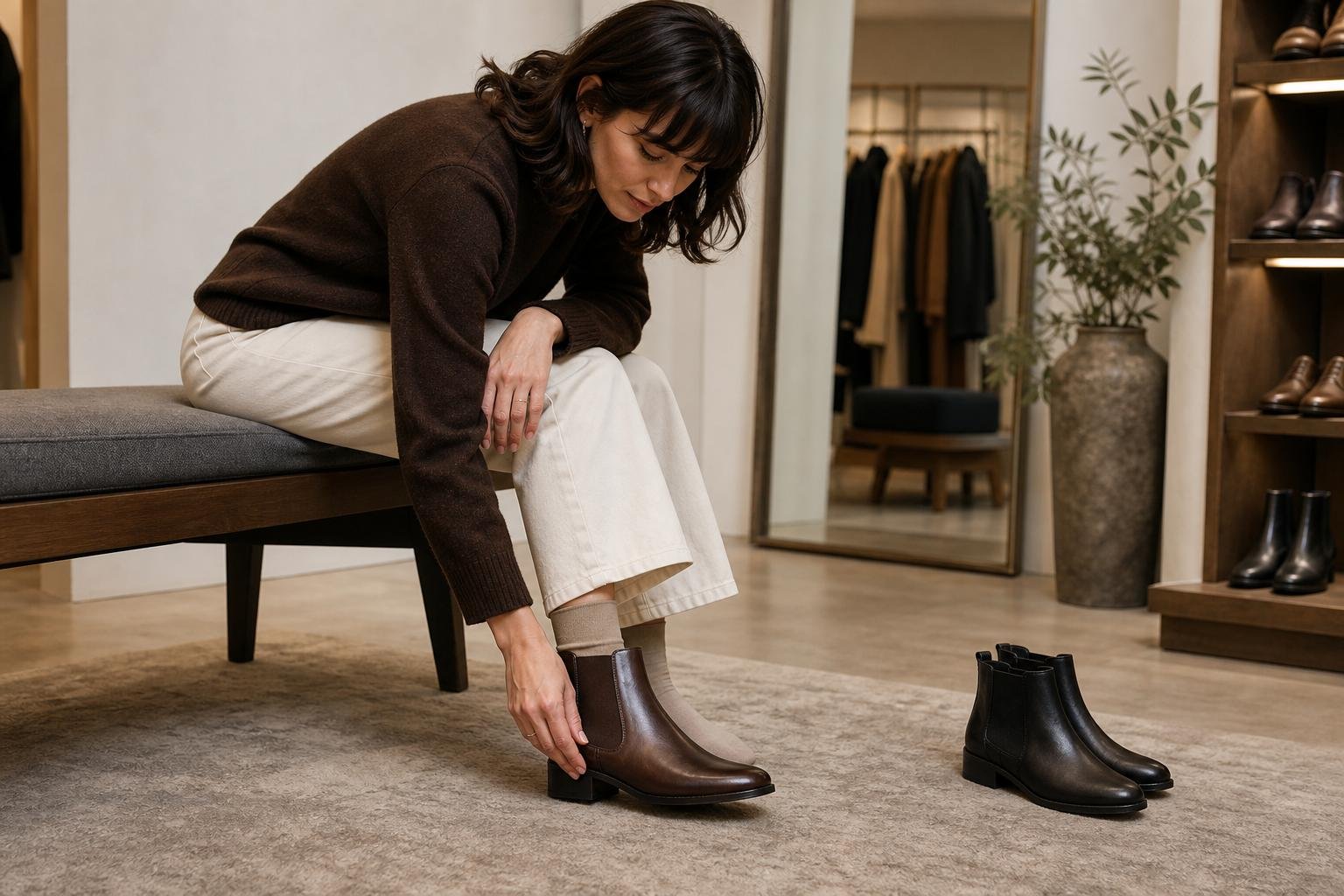
Try shoes on indoors on a clean surface so they remain returnable if needed. Walk, stand, and bend your feet as you would during normal wear. Your heel should feel secure without pinching, and your toes should not touch the front when you step forward.
Check for pressure at the widest part of the foot, across the top of the instep, and around the ankle collar. A shoe that immediately causes numbness, sharp rubbing, or toe compression is unlikely to become comfortable simply through breaking in.
For boots and sneakers, test them with the socks you will actually wear. For dress shoes, assess them after standing for several minutes; a pair that feels fine while seated may feel restrictive once your foot bears weight.
Usually, size up when a closed-toe shoe is short in length or when you plan to wear thicker socks. For open-back shoes or sandals, sizing up can create excess length and make the shoe harder to keep on. The brand’s measurement chart and the shoe’s construction should guide the decision.
No. In many US size systems, women’s sizing is approximately 1.5 numbers higher than men’s sizing for a comparable foot length. This varies by manufacturer, so confirm whether a product uses women’s, men’s, or unisex sizing.
Often, but not always in the way an individual foot needs. A longer shoe may provide slightly more overall volume, but it will not necessarily solve a width problem. Look for a designated wide-width option when available.
The right shoes size chart is most useful when it is paired with an up-to-date foot measurement, a clear understanding of the shoe’s intended use, and the manufacturer’s fit guidance. Compare length first, consider width and toe shape next, and test the fit indoors before committing to a new pair.