Physical Address
304 North Cardinal St.
Dorchester Center, MA 02124
Physical Address
304 North Cardinal St.
Dorchester Center, MA 02124
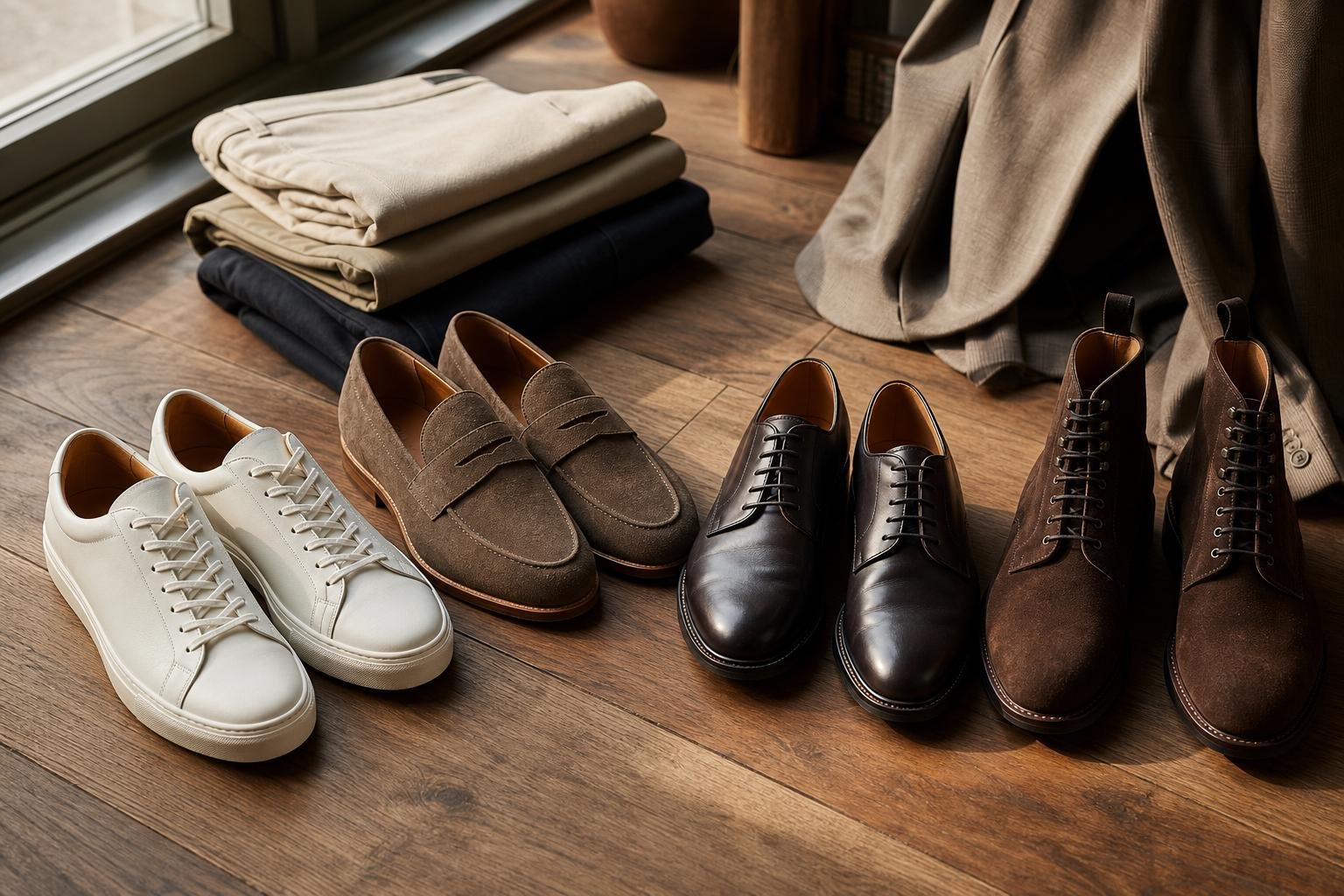
The right footwear wardrobe is less about owning every style and more about choosing a few dependable pairs for the occasions you actually have. Use this guide to understand fit, materials, and the most useful shoe categories.
A good footwear wardrobe makes getting dressed easier. Rather than accumulating pairs that serve the same purpose, focus on shoes for men that fit well, suit your daily routine, and work with the clothes already in your closet. A compact rotation can cover office days, casual plans, formal events, and changing weather without feeling overly complicated.
The most useful approach is to buy for versatility first, then add more specialized options only when your lifestyle calls for them. Consider where you spend your time, what trouser shapes you wear most, and whether you need polished footwear, durable casual pairs, or both.
Start with function. Someone who commutes to an office in tailored trousers needs different footwear from someone whose week consists mostly of denim, travel, and informal social plans. The goal is not to follow a rigid checklist; it is to identify the styles that will earn regular wear.
Fit should come before almost every other factor. Your heel should feel secure without slipping, while the front of the shoe should leave enough room for your toes to sit naturally. A shoe that feels merely tolerable in the store is unlikely to become comfortable after a full day on your feet.
Try shoes on later in the day, when feet tend to be slightly fuller. Wear the socks you expect to use with them, especially with boots, loafers, and dress shoes. Walk on a firm surface and notice any pinching at the instep, pressure across the widest part of the foot, or friction at the heel.
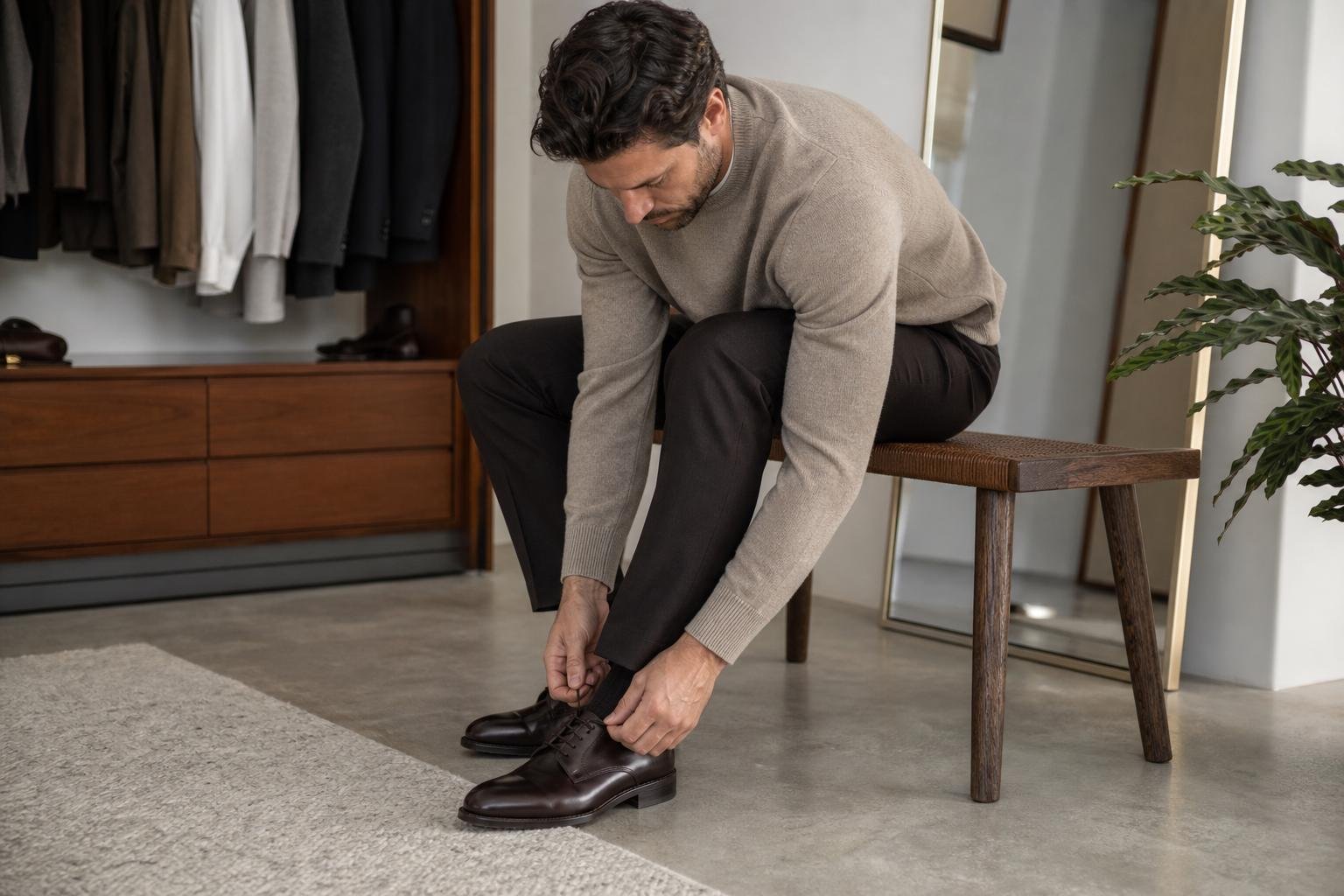
Think of footwear on a spectrum from formal to relaxed. Sleek leather lace-ups belong at the dressier end, while canvas sneakers and rugged boots sit firmly at the casual end. The most adaptable pairs usually land in the middle: refined enough for a dinner reservation, but not so formal that they look out of place with jeans.
| Need | Strong options | What to look for |
|---|---|---|
| Formal events | Oxfords, derbies | Smooth leather, streamlined shape |
| Office or smart casual | Loafers, derbies, minimal sneakers | Neutral color, clean finish |
| Everyday casual | Leather sneakers, chukkas | Comfortable sole, simple profile |
| Cold or wet weather | Lace-up boots, rubber-soled shoes | Traction, water-resistant materials |
Black is the traditional choice for more formal tailoring, especially with dark suits. Dark brown leather is often more flexible for everyday tailoring, chinos, and dark denim. White, off-white, gray, navy, and brown casual footwear can all be useful, but a restrained palette makes coordination much easier.
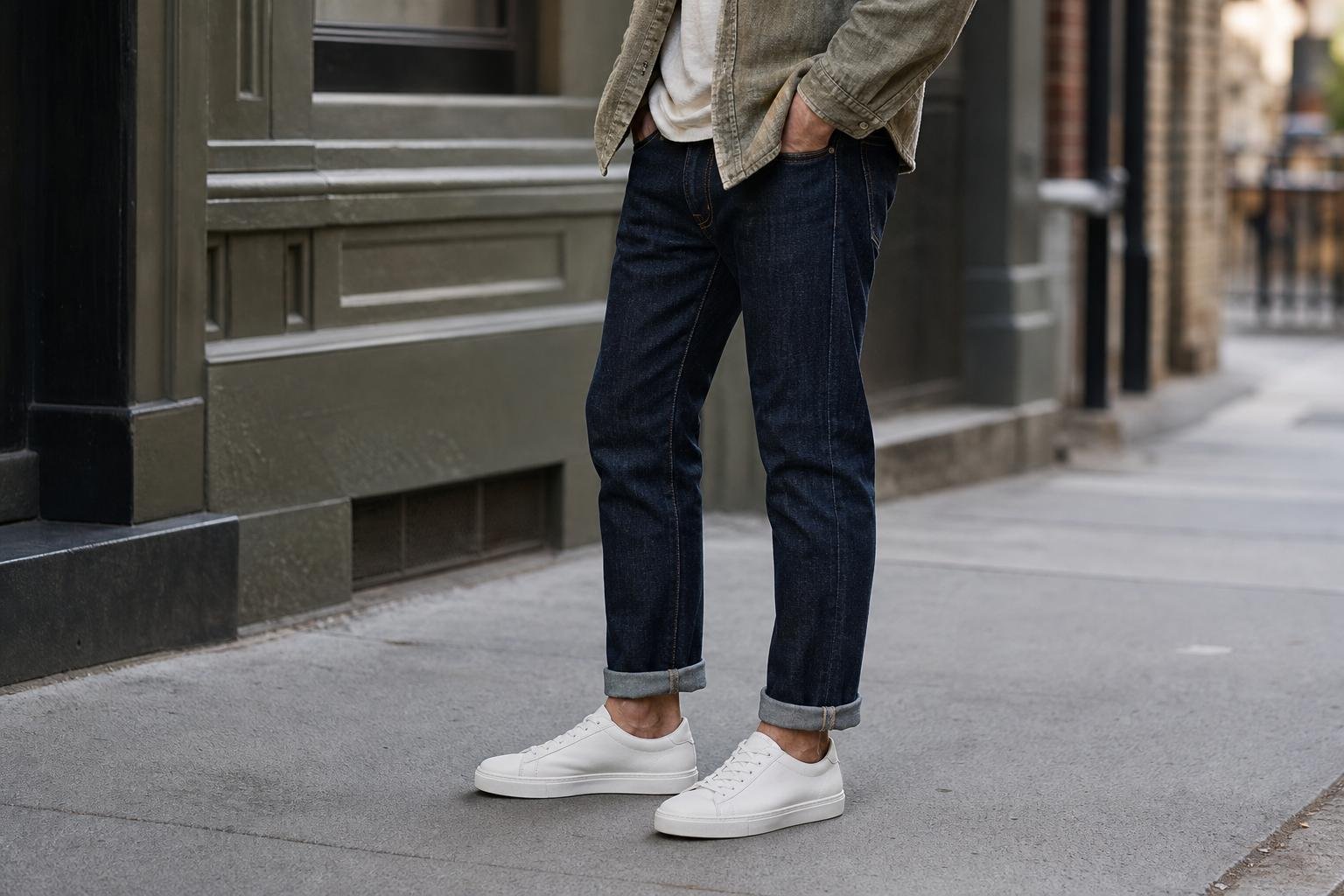
A minimal leather sneaker is one of the most flexible casual shoes available. It pairs naturally with jeans, chinos, casual trousers, and even unstructured tailoring in the right setting. Look for a low-profile silhouette, limited contrast detailing, and a sole that is neither overly chunky nor extremely thin.
White is the obvious starting point, but it requires routine cleaning. Off-white, gray, navy, or dark brown can be more forgiving while offering much of the same versatility. Avoid treating a worn-out sneaker as a smart-casual shoe; once the leather is heavily creased or the sole is visibly dirty, reserve it for more relaxed use.
Loafers bridge the gap between dress shoes and casual footwear. Penny loafers are especially adaptable: they work with chinos, tailored trousers, denim, and summer-weight suits. Suede versions feel more relaxed, while smooth leather brings a sharper finish.
Because loafers expose more of the ankle, trouser length matters. A gentle break or a slightly cropped hem tends to look cleaner than fabric pooling over the vamp. In warm weather, no-show socks can preserve the easy look while helping manage moisture inside the shoe.
Derbies and Oxfords are foundational men’s dress shoes, but they serve slightly different roles. Oxfords have a more closed, streamlined lacing system and are generally the formal choice for business dress, ceremonies, and conservative suits. Derbies have open lacing, which gives them a little more visual ease and can make them friendlier for broader feet or higher insteps.
For most wardrobes, a dark brown derby is an excellent first dress shoe because it works beyond formal tailoring. Wear it with navy or gray trousers, chinos, dark jeans, and sport coats. A black Oxford becomes more valuable when formal events, interviews, or traditional business dress are regular parts of your calendar.
Leather, suede, canvas, and synthetic uppers each have a place, but they behave differently over time. Full-grain or top-grain leather can develop character with proper care and often responds well to conditioning and polishing. It is a practical choice for dress shoes, loafers, and many boots.
Suede has a softer, more relaxed texture that works particularly well in loafers, chukkas, and casual boots. It needs a protective treatment and a suede brush, but it should not be dismissed as too delicate for everyday use. Regular brushing and prompt attention to marks help maintain its appearance.
Start with shoes for men that have a sole suited to their job. Leather soles look refined and can work well in dry conditions, while rubber soles generally offer more grip and shock absorption. A rubber insert or lugged sole can make a dressier shoe far more practical for walking, commuting, or damp pavement.
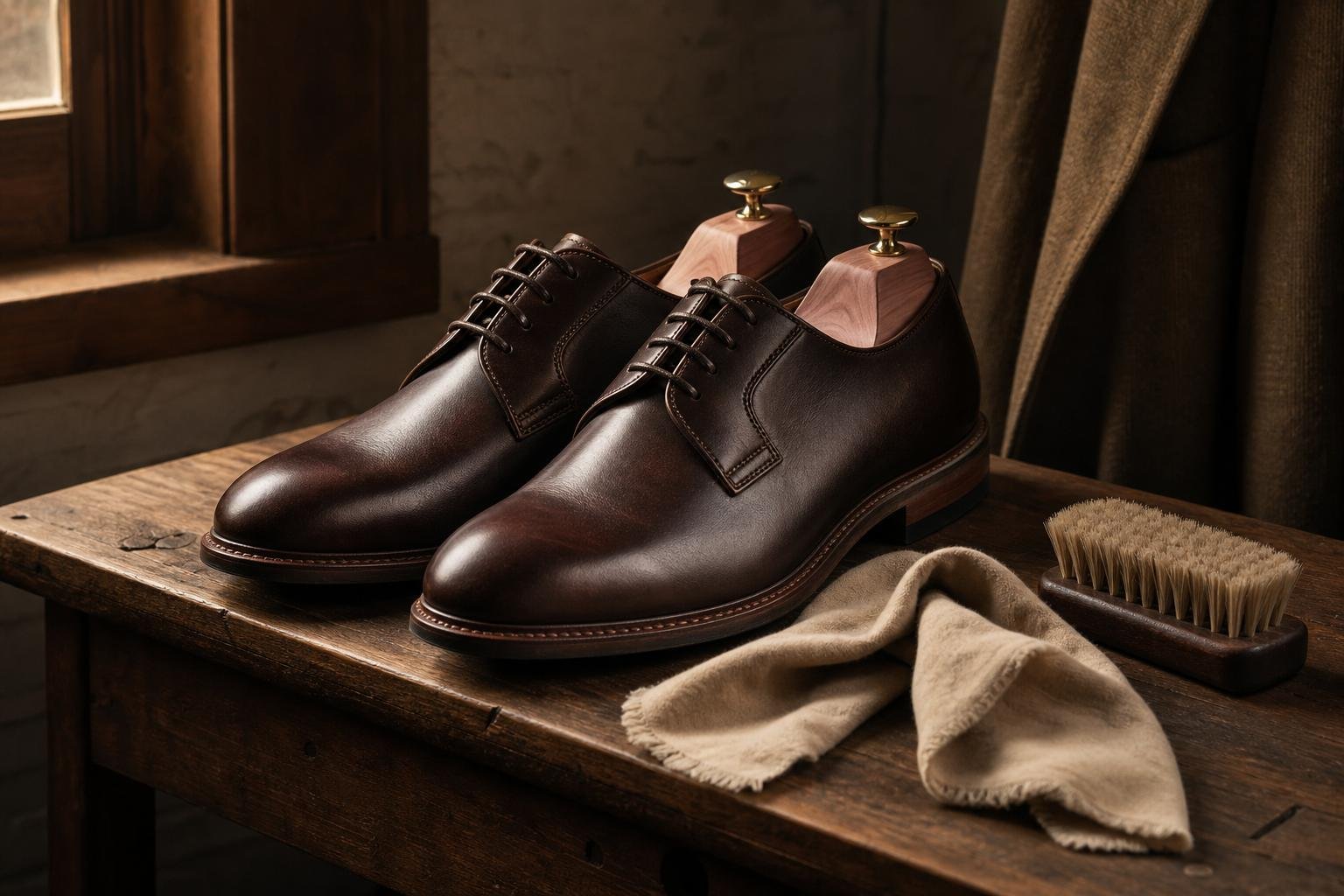
Construction affects repairability and feel, though it should not be treated as the only marker of quality. Well-finished stitching, securely attached soles, a stable heel, and a properly shaped upper all matter. A shoe should also feel balanced underfoot rather than stiff in one area or unstable at the ankle.
A useful rotation prevents any one pair from taking all the wear. It also gives footwear time to air out between uses, which can help preserve the interior and reduce odors. You do not need a large collection to benefit from this principle.
For many men, a practical starting point includes a minimal sneaker, a versatile loafer or derby, a weather-ready boot, and a more formal dress shoe if required. Add a running or training shoe separately if exercise is part of your routine; performance footwear is designed around different needs than everyday casual pairs.
When comparing shoes for men, consider cost per wear rather than the initial price alone. A pair that matches several outfits, feels comfortable for hours, and can be maintained over time is usually a better wardrobe investment than a highly specific style worn only once or twice.
Give leather shoes a quick wipe after wearing them and use shoe trees in leather pairs when possible. Shoe trees help absorb moisture and support the shape of the upper, particularly through the toe box and vamp. Let shoes dry naturally away from direct heat.
For suede, use a dedicated brush to lift the nap and remove dry dirt. For sneakers, clean marks before they set in and replace worn laces when the rest of the shoe is still in good condition. Regular, small maintenance is easier than trying to restore a pair after months of neglect.
The most useful shoes for men are the pairs that suit your real schedule, feel right from the start, and complement the rest of your wardrobe. Prioritize fit, choose materials appropriate for the setting, and begin with versatile silhouettes before adding trend-driven or highly specialized styles. A small, considered rotation will take you further than an overcrowded shoe rack.