Physical Address
304 North Cardinal St.
Dorchester Center, MA 02124
Physical Address
304 North Cardinal St.
Dorchester Center, MA 02124
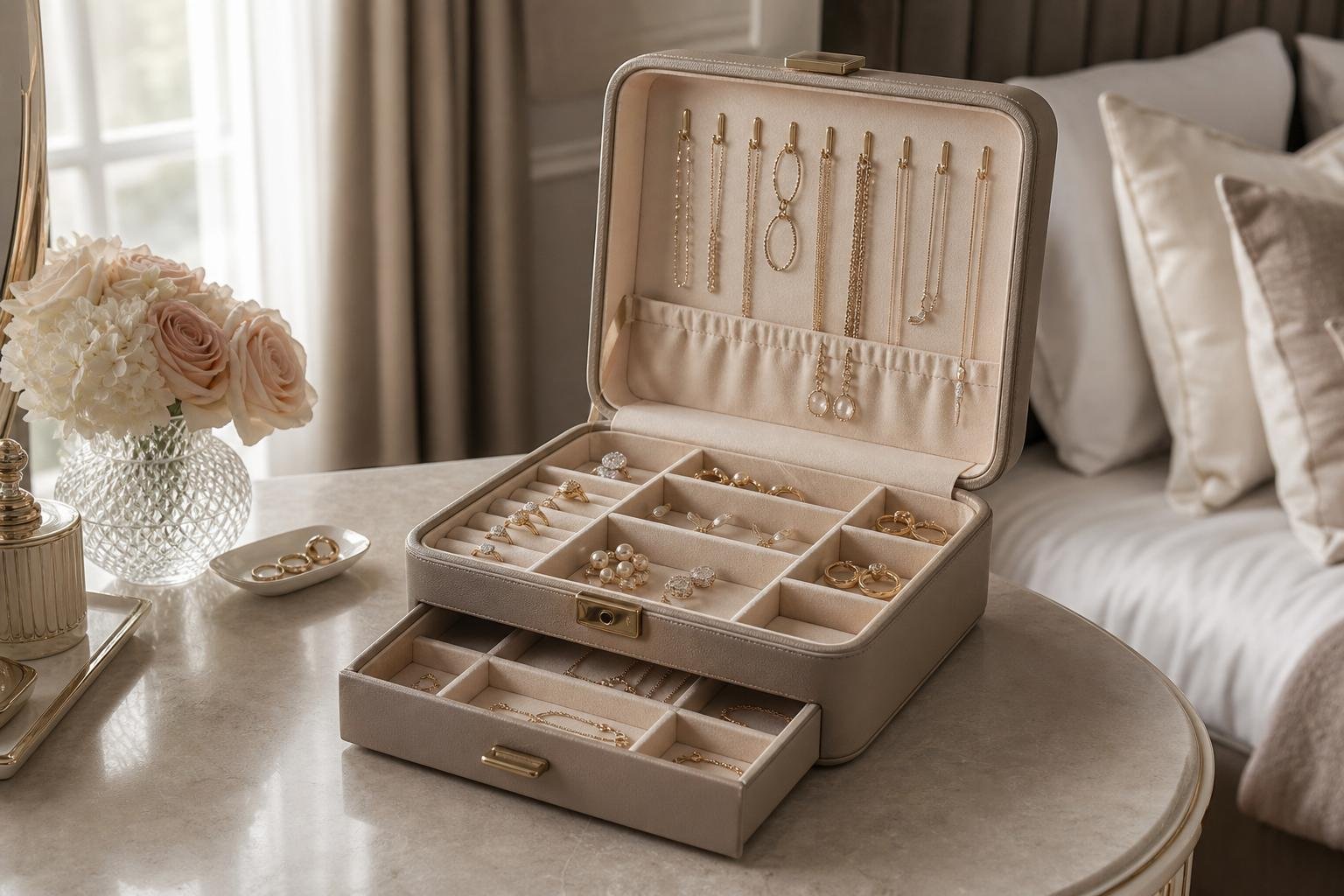
The right jewelry storage balances protection, visibility, and the way you actually get dressed. Compare common styles, materials, and compartment layouts before choosing.
A well-chosen jewelry box does more than clear a dresser top. It separates delicate pieces, reduces tangles, makes everyday favorites easier to reach, and gives occasion jewelry a safer home between wears. The best option depends less on how much it holds than on what it holds: fine chains need a different setup than watches, statement earrings, or a growing ring collection.
Before comparing finishes or decorative details, take stock of your pieces and your habits. Do you reach for the same small rotation every morning? Need long-term storage for heirlooms? Want something compact enough for a closet shelf? Those answers should guide the purchase more than a pretty exterior alone.
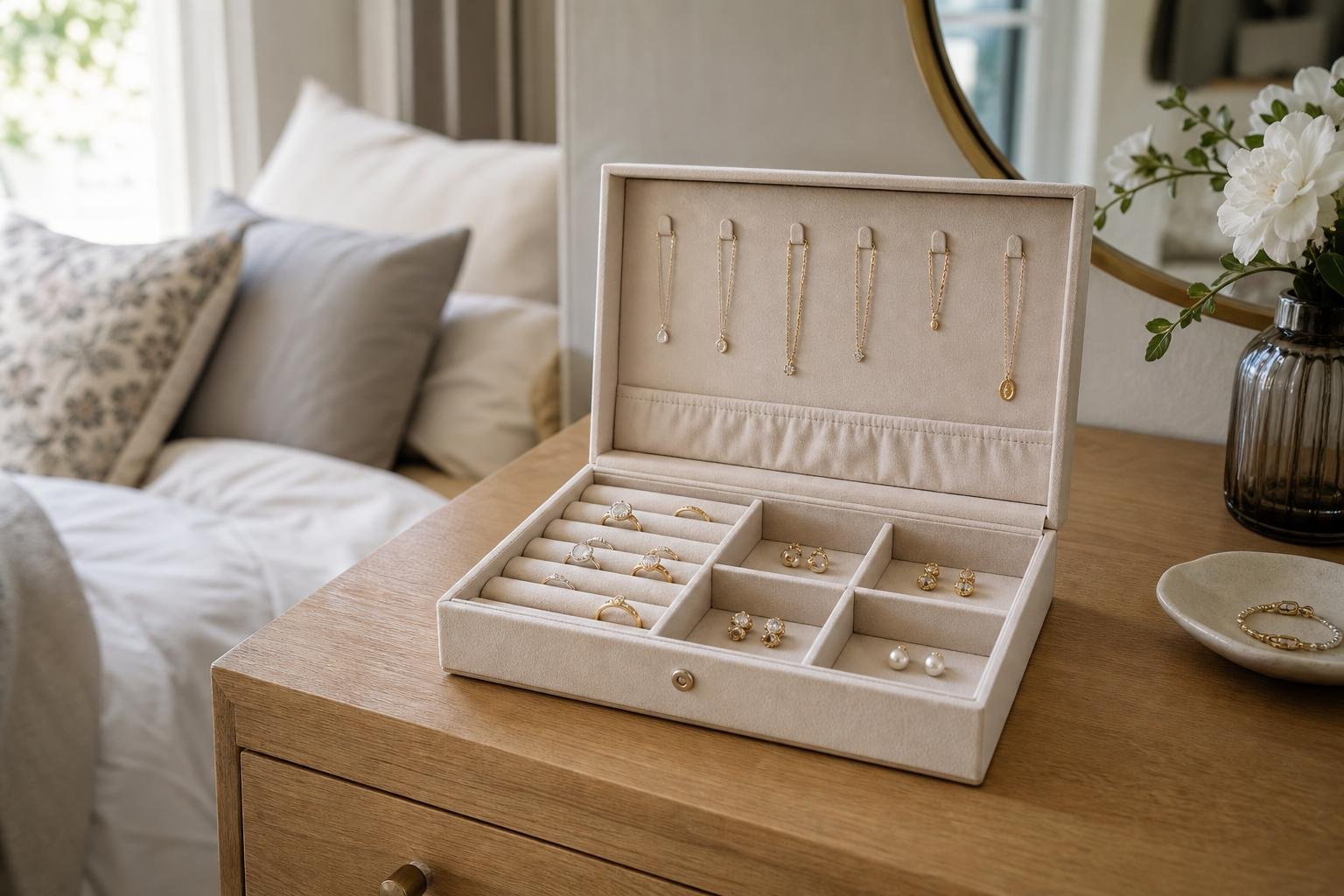
Start with inventory, not dimensions. Spread your jewelry on a soft towel and sort it into broad groups: rings, stud earrings, drop earrings, necklaces, bracelets, watches, and larger pieces. Notice what tangles, what gets misplaced, and what you wear frequently. This quickly reveals whether you need shallow trays, necklace hooks, earring panels, or a few flexible open compartments.
A small collection of daily jewelry may only need a compact lift-top case with a ring roll and several divided sections. A larger wardrobe often benefits from a stacked organizer or a multi-drawer chest, where categories can stay separated without being piled on top of one another. If visibility matters, a glass-top tray can make morning selection easier, though it should sit away from direct sunlight.
Consider where the organizer will live. Measure the available dresser, vanity, shelf, or drawer space before buying. Also account for clearance: a hinged lid needs room to open, while drawers need enough space to pull out fully. For shared bedrooms or busy surfaces, a lidded option keeps dust at bay and looks more intentional than an open tray.
| Storage style | Best for | Watch for |
|---|---|---|
| Compact lift-top case | Daily basics, small spaces | Limited room for long necklaces |
| Drawer chest | Larger, varied collections | Takes up more surface space |
| Stackable trays | Customizable drawer storage | May not protect pieces from dust |
| Travel case | Weekend trips and small edits | Not ideal for full collections |
Interior layout has the greatest effect on everyday usefulness. Ring rolls are efficient for rings and small hoops, but they are less useful for bulky cocktail rings or wide bands. Individual earring slots keep studs paired, while perforated panels better accommodate hooks and drop earrings. Shallow square compartments work well for brooches, pendants, and chunkier bracelets.
Necklace storage deserves extra scrutiny. Look for hooks with a lower pocket or elastic tab that keeps each chain from slipping free. A case with only a single large compartment may be fine for cuffs and watches, but it is usually a poor choice for fine chains. If your collection includes several delicate necklaces, dedicated hanging space is worth prioritizing.
For watches, consider compartments that are wide enough to avoid forcing straps into a tight curve. Soft removable cushions are useful for structured watch bands, while open padded sections may better suit larger watches. Sunglasses, hair accessories, and oversized costume jewelry also need room that is not overly segmented.
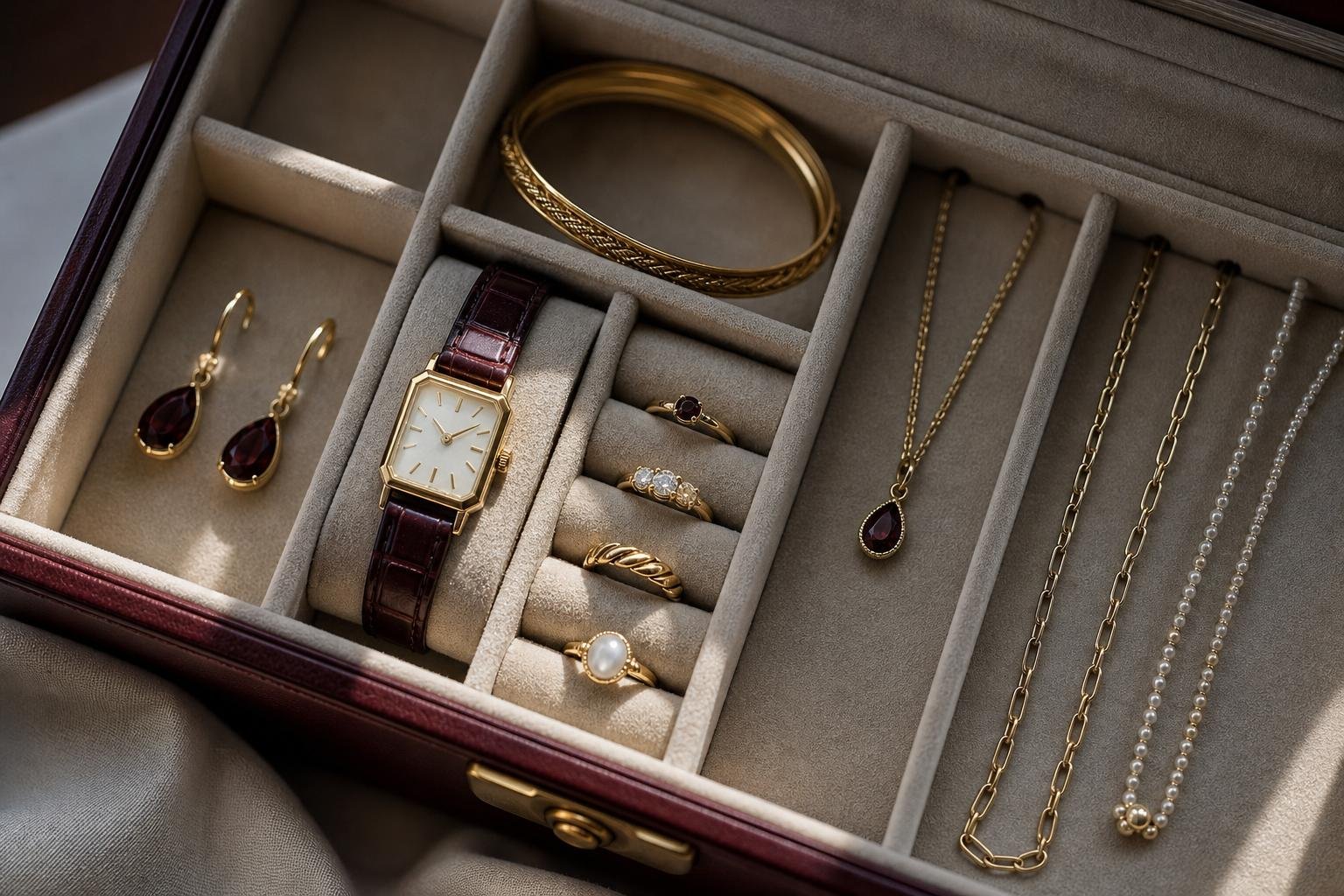
Think about access as carefully as capacity. Deep drawers can hold plenty, but a shallow top tray may be where everyday pieces belong. Some designs include removable trays, allowing you to lift out one category at a time. This is practical for getting ready and for occasional cleaning, since you can inspect a section without emptying the entire case.
A jewelry box can be wood, metal, acrylic, fabric-covered board, leather, or a leather-like material. Each has a different visual effect and level of maintenance, but the interior lining matters most for protection. Look for a soft, smooth lining that will not snag chains or scratch polished surfaces. Velvet and microfiber-style linings are common choices because they cushion pieces and help prevent them from sliding.
Wood is a classic option for a bedroom or dressing area and can feel substantial, especially in a drawer-style format. Check that drawers glide smoothly and that the finish is even, without sharp interior edges. Acrylic is visually light and makes contents easy to see, but it can show fingerprints and may provide less cushioning unless it has lined inserts.
Fabric-covered and leather-like cases tend to be lighter and more portable. They work especially well for a small curated collection or as a travel-friendly option. Examine the closure, handle, seams, and corner construction; these details often determine whether a portable case remains useful over time.
Avoid storing jewelry loose against rough unfinished surfaces. Tarnish-prone metals and plated pieces benefit from separation, while pearls and softer stones are best kept away from sharp settings or hard metal edges. Storage helps reduce friction, but it does not replace regular cleaning or careful handling.
For a minimal collection, buying the largest organizer available can create its own problem: too much unused room allows pieces to slide around. A smaller case with well-proportioned compartments is often more protective and easier to maintain. Choose enough capacity for modest growth, but not so much that your daily pieces disappear into unused drawers.
For a varied or expanding collection, modular storage is the most flexible route. Stackable trays, removable dividers, and separate travel cases let you adjust the system as your needs change. You might keep fine jewelry in a lidded, lined case while using a simple tray for watches and everyday costume pieces.
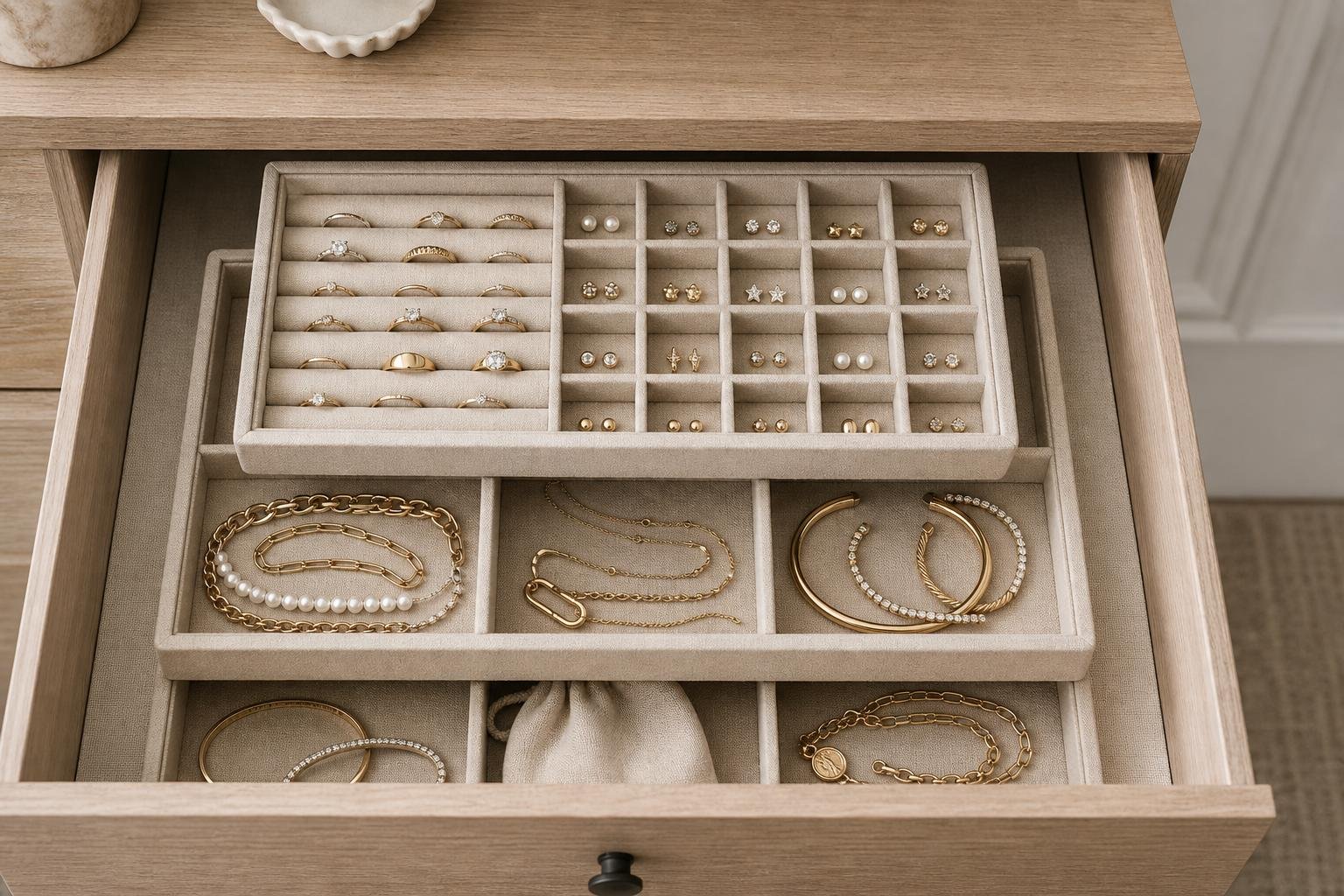
It can also help to divide storage by frequency. Keep daily studs, a favorite chain, and a watch in the most accessible layer. Reserve lower drawers for special-occasion earrings, seasonal pieces, and items that need less frequent attention. This approach reduces rummaging, which in turn helps prevent tangles and lost pairs.
Security is a separate consideration from organization. A small lock may discourage casual handling, but it is not a substitute for secure storage of valuable items. For pieces with substantial monetary or sentimental value, consider a more appropriate secure location and keep documentation separately.
A polished exterior can distract from small functional shortcomings. Review these points before deciding:
Do not overlook weight. A substantial wood chest may feel luxurious but can be inconvenient if you rearrange often or store it on a high shelf. Conversely, a lightweight travel case is easy to move but may not be sturdy enough for a heavy collection of watches or large costume jewelry.
The right jewelry box is one that protects the pieces you own, fits where you will use it, and makes getting dressed simpler. Prioritize interior organization over decorative appeal, choose a soft lining and reliable closure, and select a size that suits both your current collection and realistic growth. A thoughtful storage setup keeps accessories visible, wearable, and far less likely to become tangled or forgotten.