Physical Address
304 North Cardinal St.
Dorchester Center, MA 02124
Physical Address
304 North Cardinal St.
Dorchester Center, MA 02124
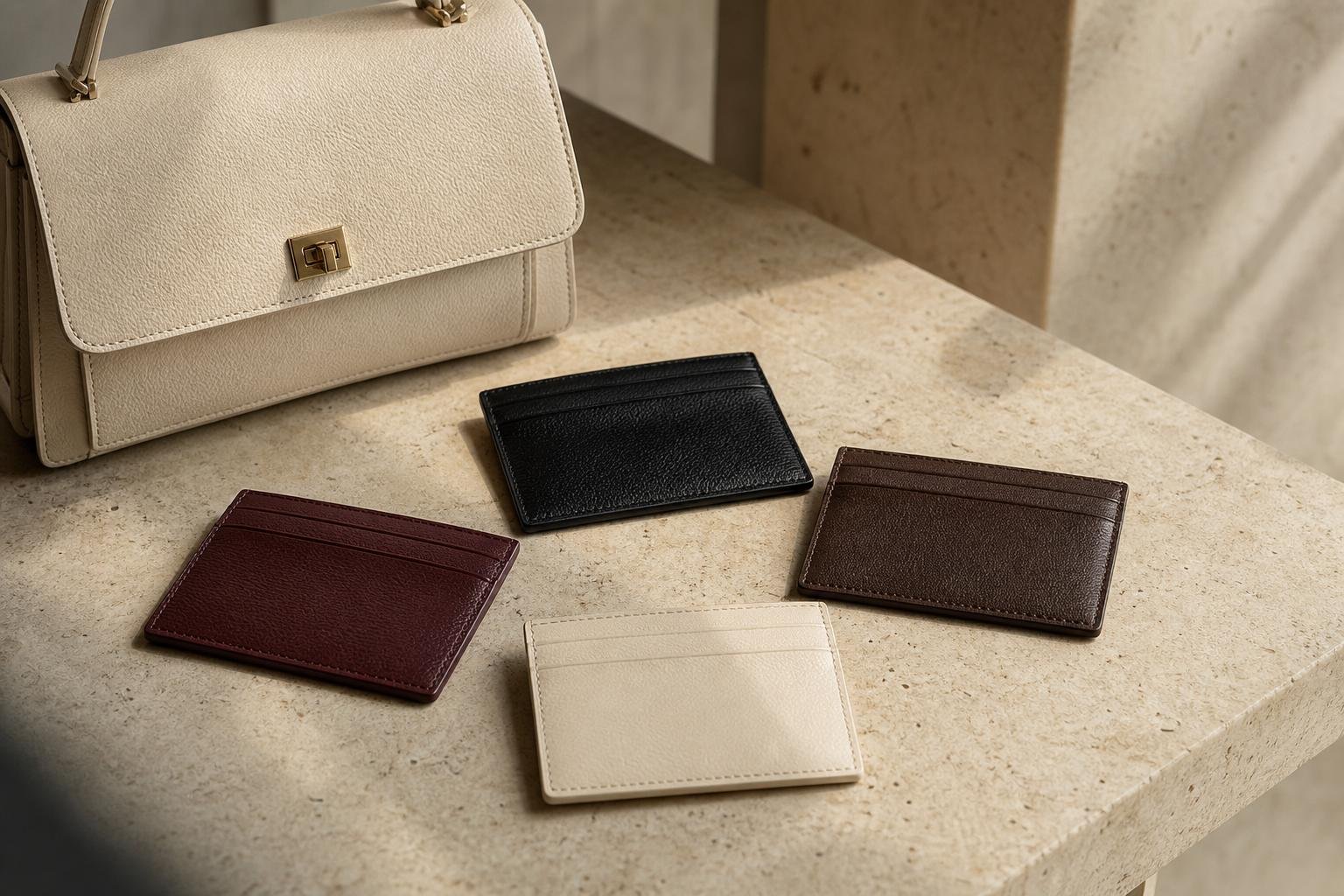
A compact card case can be a polished daily essential when its layout, material, and finish fit the way you actually carry. Use this guide to compare common styles and identify the details worth considering.
A card holder is one of the smallest accessories in a wardrobe, but it gets handled more than most. The right designer card holder should feel considered rather than precious: slim enough for a pocket or compact bag, organized enough for daily cards, and durable enough to look better—not worn out—over time.
Unlike a full wallet, a card case asks you to edit what you carry. That restraint is part of its appeal, but it also makes details such as slot placement, leather texture, edge finishing, and center-pocket depth more important. Here is how to compare the common options before choosing one.
Start with your actual daily carry, not the maximum number of cards the case can technically hold. Most people need a payment card, ID, transit card, and one or two backups. If you often carry folded bills, receipts, or a key card, look for a center compartment rather than relying only on exterior slots.
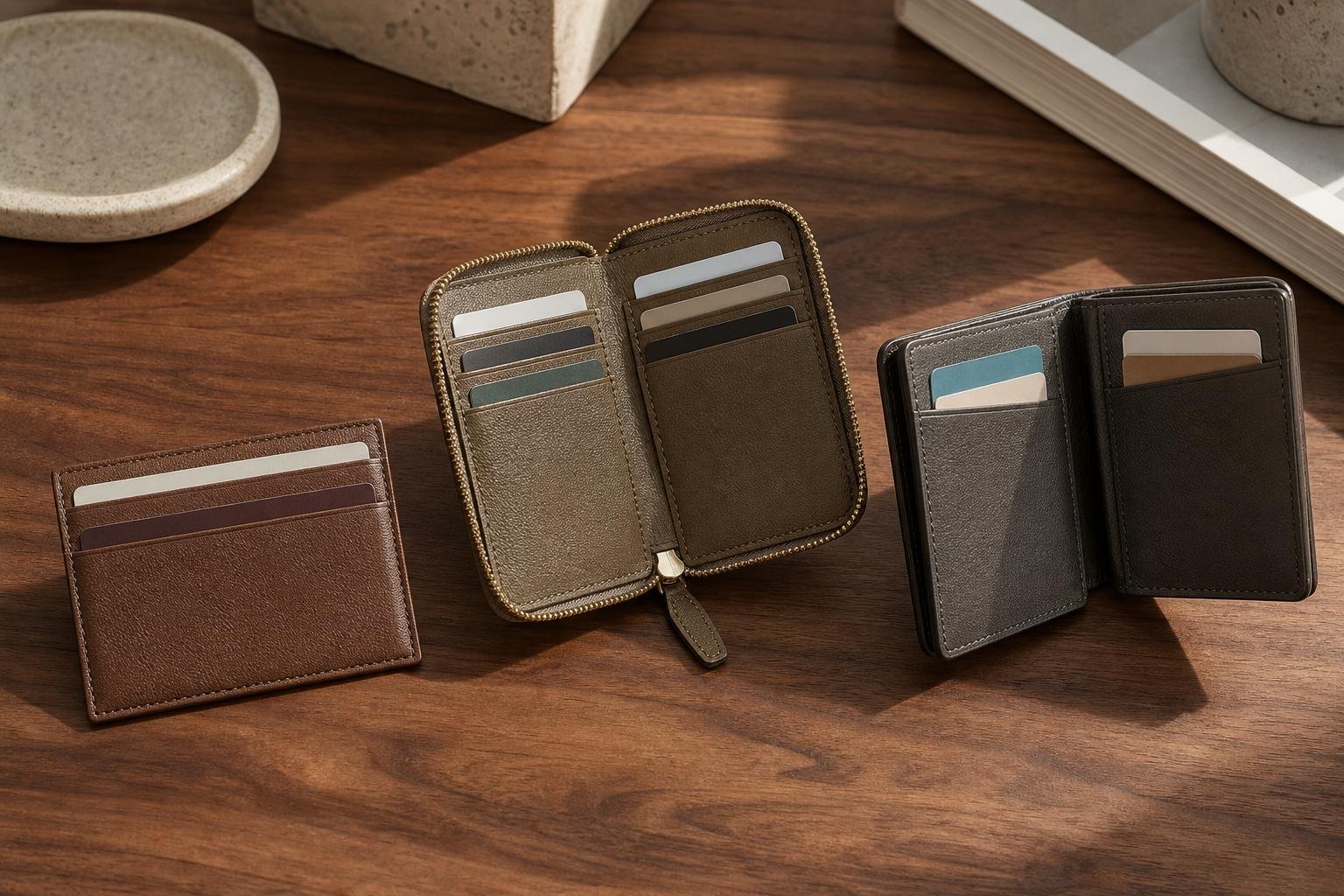
A standard flat card case usually has three to six exterior slots and a central opening. It is the most compact option and works well in a front pocket, jacket pocket, or small shoulder bag. A zip card case adds security and room for coins or folded cash, but it creates more bulk and can be less convenient at checkout.
A bifold card wallet falls between these options. It offers more structure and capacity, often with an interior bill compartment, while staying smaller than a traditional wallet. It is a practical choice for someone who wants to streamline without giving up cash storage.
| Style | Best for | Consider before buying |
|---|---|---|
| Flat card case | Minimal daily cards | Limited room for cash and receipts |
| Zip card case | Coins, keys, or folded bills | Added thickness and hardware |
| Bifold card wallet | More cards and cash | Less pocket-friendly |
| Lanyard card case | Commuting or travel access | More casual, less streamlined |
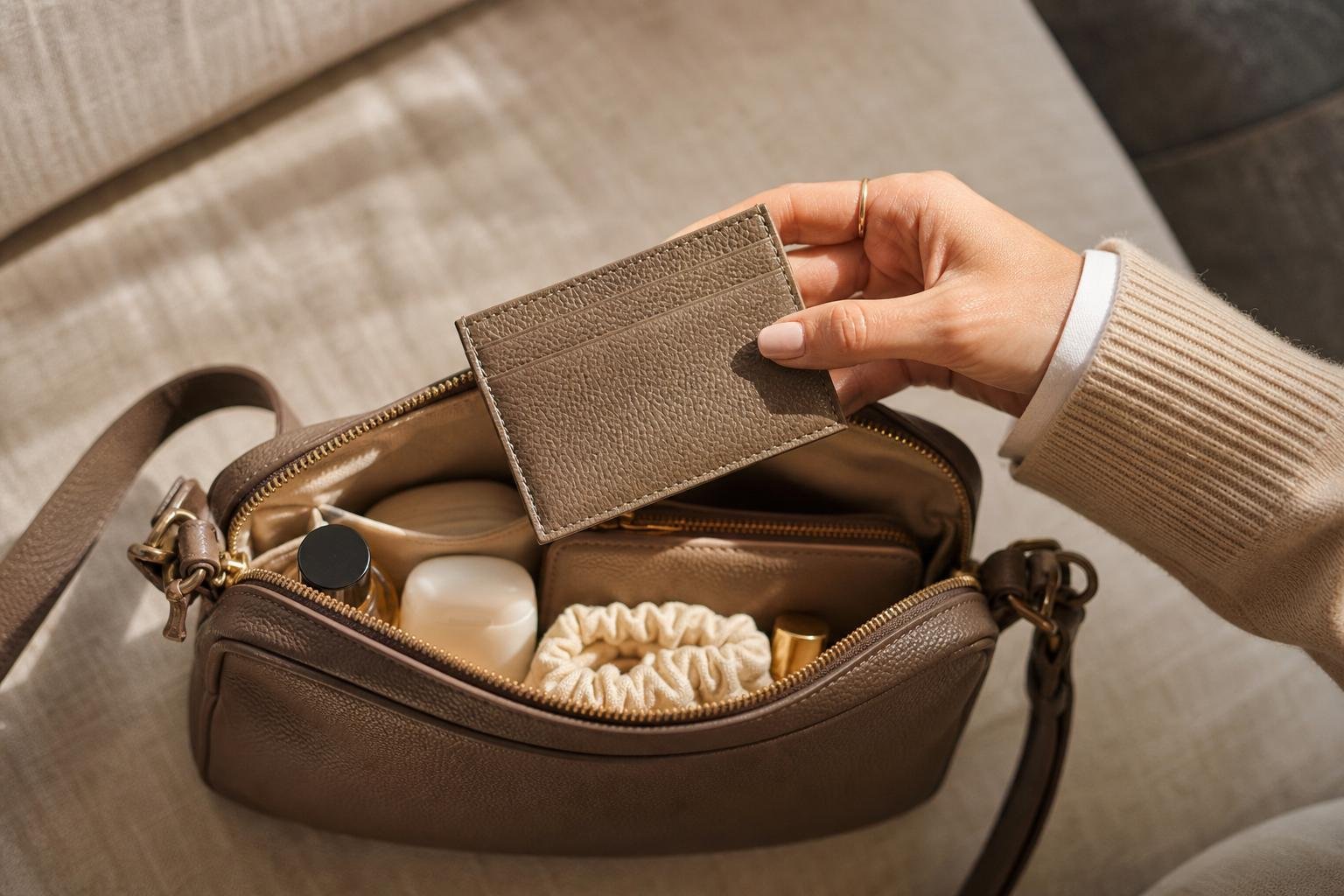
A handsome finish cannot solve a frustrating layout. Examine where cards sit and how easily they can be removed. Slots that are too shallow can leave cards exposed, while very tight slots may be difficult to use until the leather relaxes slightly with wear.
For daily use, exterior slots are usually the quickest. A central pocket can hold a few folded bills or a less frequently used card, but it may be inconvenient if you need to access it repeatedly. If you use a transit card, consider whether it will remain accessible without taking every card out.
Capacity claims deserve a practical reading. A case may fit more cards than its original shape suggests, but overfilling can stretch leather, distort edges, and create a visibly bulky silhouette. Buying a slightly roomier format is generally wiser than forcing a minimalist case to perform like a wallet.
Think about the bag or pocket you use most often, too. A slim wallet may disappear into a tailored trouser pocket, while a zip style can make more sense inside a tote where small items are otherwise difficult to find. For evening bags, a flat card case is often the cleanest fit.
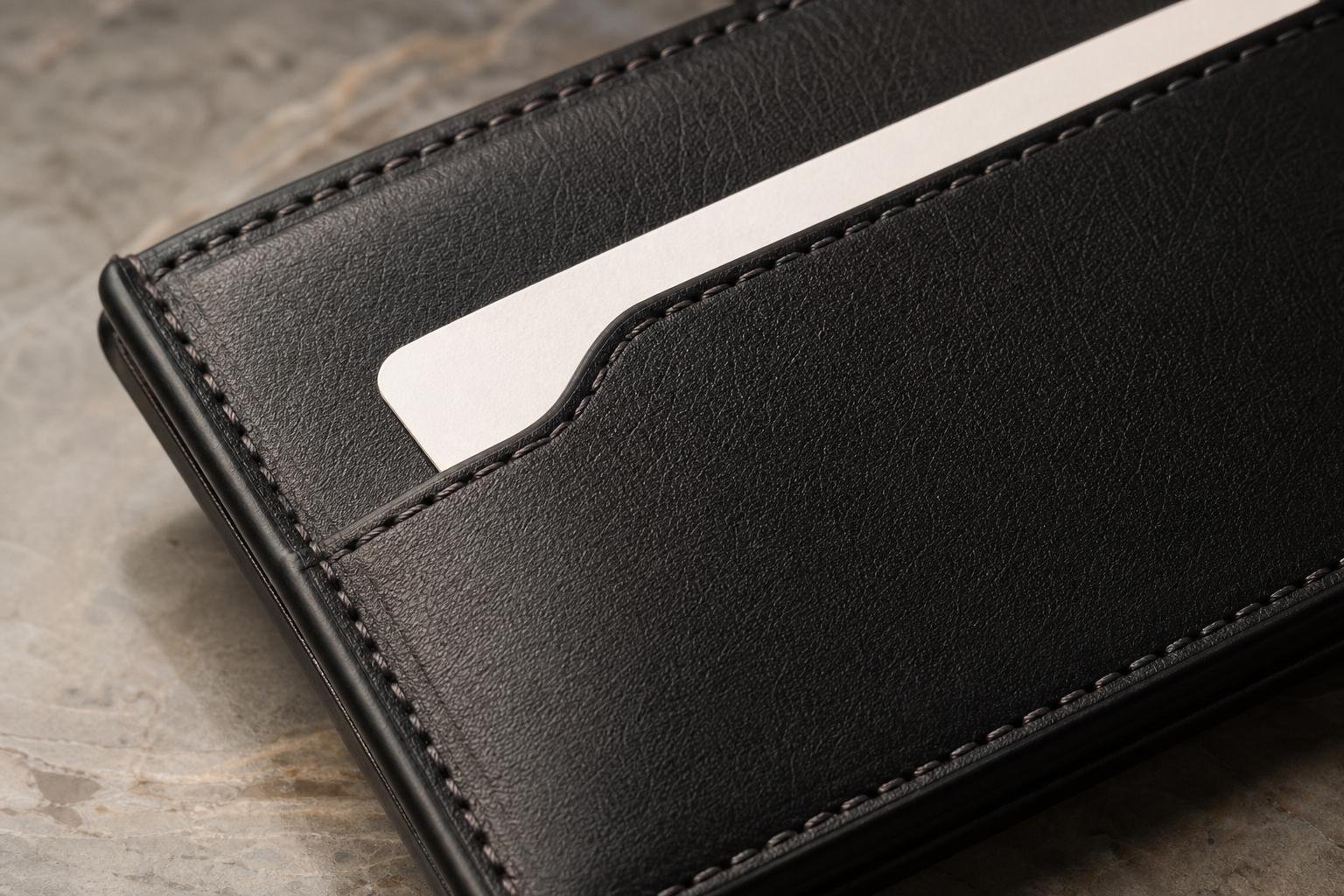
Leather remains the classic choice because it develops character as it ages, but the type of leather affects both appearance and maintenance. Smooth leather has a refined, formal look and may show scratches more readily. Grained leather has visible texture that can be more forgiving of everyday scuffs. Embossed finishes offer texture and structure, though they may feel less supple.
Canvas and coated textiles can be lightweight and easier to wipe clean, making them useful for frequent travel or less careful daily routines. Their durability depends on construction, especially at corners and along slot seams. Look closely at high-contact areas rather than judging only the front panel.
A designer card holder should also have clean edge paint or neatly turned edges, even stitching, and slots that lie flat. These small details help the accessory retain its shape. Hardware, if included, should feel secure and proportionate; a large zipper pull or oversized key ring can undermine the compact purpose of the piece.
Color is another practical decision. Black, deep brown, navy, and muted neutrals tend to disguise wear and coordinate easily with bags and outerwear. Lighter shades, bright colors, and pale pastels can be visually distinctive but may show color transfer from denim or darker bag linings. Choose them when you are comfortable treating the item with more care.
Because it is often pulled out in public, a card holder can quietly reinforce your overall style. A smooth, minimally detailed piece suits a polished wardrobe built around tailoring, fine knits, and clean-lined bags. A pebbled leather card wallet feels more relaxed and works naturally with denim, loafers, and everyday leather accessories.
Monogrammed or heavily patterned options create a stronger visual statement. They can be appealing if you like recognizable accessories, but consider whether the pattern works with the bags and small leather goods you already own. A restrained finish often gives an accessory more versatility across work, travel, and evening settings.
If you prefer a more personal look, focus on details rather than loud branding: contrast stitching, a distinctive interior color, a subtle embossed texture, or a sculptural zipper pull. These choices can make a small accessory feel intentional without limiting how often you use it.
A designer card holder can make sense when its craftsmanship, material, and functionality align with a long-term wardrobe. The value is not simply in a name or logo. It is in whether the piece suits your carrying habits, maintains its shape, and remains useful as your style evolves.
Before committing, inspect product photos or the item in person for dimensions, slot count, closure type, lining, and edge treatment. Measurements matter more than they might with a larger bag. Even a difference of a fraction of an inch can determine whether a case fits comfortably in a preferred pocket or mini bag.
Avoid choosing solely based on a trend color or a decorative detail that does not serve your needs. A card case is most successful when it reduces friction in your routine. If you regularly carry coins, select a zip compartment. If you rarely use cash, do not add bulk for a bill slot you will not use.
Empty the case occasionally and remove receipts that can create uneven pressure. Do not overstuff slots, especially with leather styles, since stretched slots may not return to their original shape. Store the accessory away from direct sunlight and avoid leaving it pressed beneath heavy items in a crowded bag.
For leather, use a soft dry cloth for routine dusting. If a deeper clean is needed, follow the care guidance appropriate to the material and test any conditioner or cleaner in an inconspicuous area first. Keep it away from alcohol-based hand sanitizer until your hands are dry, as repeated contact can affect some finishes.
It can be worth it if you use it every day and choose a design with durable construction, a useful layout, and a finish that fits your wardrobe. It is less compelling if you need substantial cash, receipt, or coin storage; in that case, a compact wallet may be the better format.
For a streamlined shape, carry only the cards you use regularly—often three to six. A center pocket can hold a folded bill or backup card, but keeping it lightly filled helps preserve the case’s shape.
The best choice is the one that reflects how you move through the day. Prioritize a layout that makes essential cards easy to reach, a material that suits your tolerance for wear, and a size compatible with your favorite bags and pockets. With those basics in place, a designer card holder becomes a small but genuinely useful finishing piece in an everyday accessory rotation.