Physical Address
304 North Cardinal St.
Dorchester Center, MA 02124
Physical Address
304 North Cardinal St.
Dorchester Center, MA 02124
A blazer can sharpen jeans, relax tailoring, and make everyday separates look intentional. Use these pairings to build polished outfits for work, weekends, dinners, and occasions.
A blazer is one of the most useful pieces in a man’s wardrobe because it can move between polished and relaxed settings with a few simple changes. The strongest blazer outfit ideas men can rely on start with fit, then use contrast: refined tailoring balanced by casual fabrics, or easy separates sharpened with a structured layer.
You do not need a large collection to get variety. A navy blazer, an unstructured cotton or linen option, and a textured wool version can cover most social and professional situations. The key is choosing trousers, shirts, and shoes that agree on the overall level of formality.
Before considering color combinations, make sure the blazer works on its own. The shoulder seam should end close to your natural shoulder point, while the collar should sit neatly against the shirt collar without a gap. Sleeves usually look balanced when about 1/4 to 1/2 inch (0.6 to 1.3 cm) of shirt cuff shows.
A blazer should button comfortably without pulling across the chest or creating an X-shaped crease. For a two-button style, fasten only the top button when standing. The hem should generally cover your seat, though some casual, unstructured blazers can run slightly shorter.
Proportion matters below the waist, too. Slim or straight-leg trousers are usually the easiest partners because they create a clean line without competing with the jacket. Very skinny pants can make a classic blazer look dated, while excessively wide trousers need more intention and often work best with a roomier, softly tailored jacket.
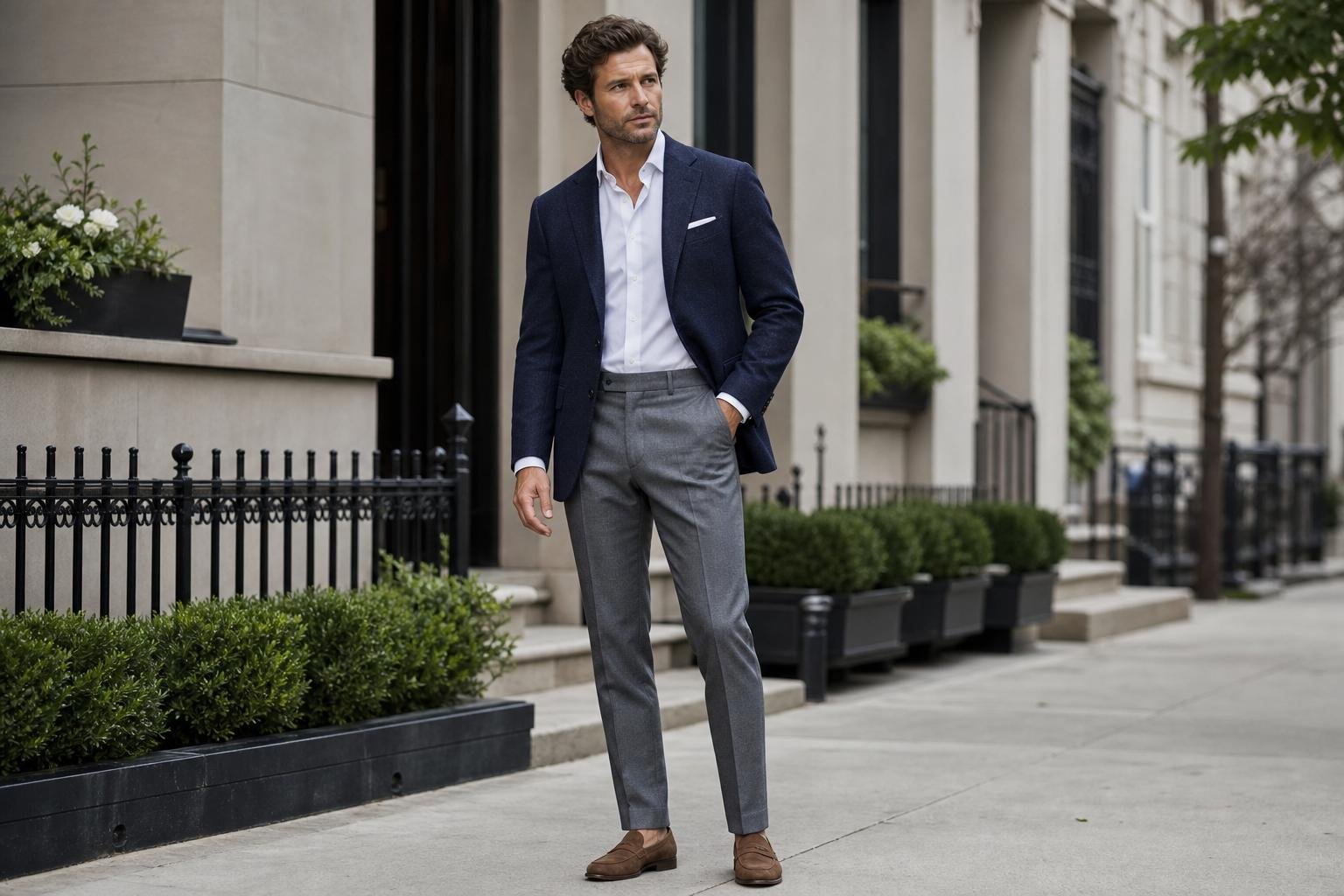
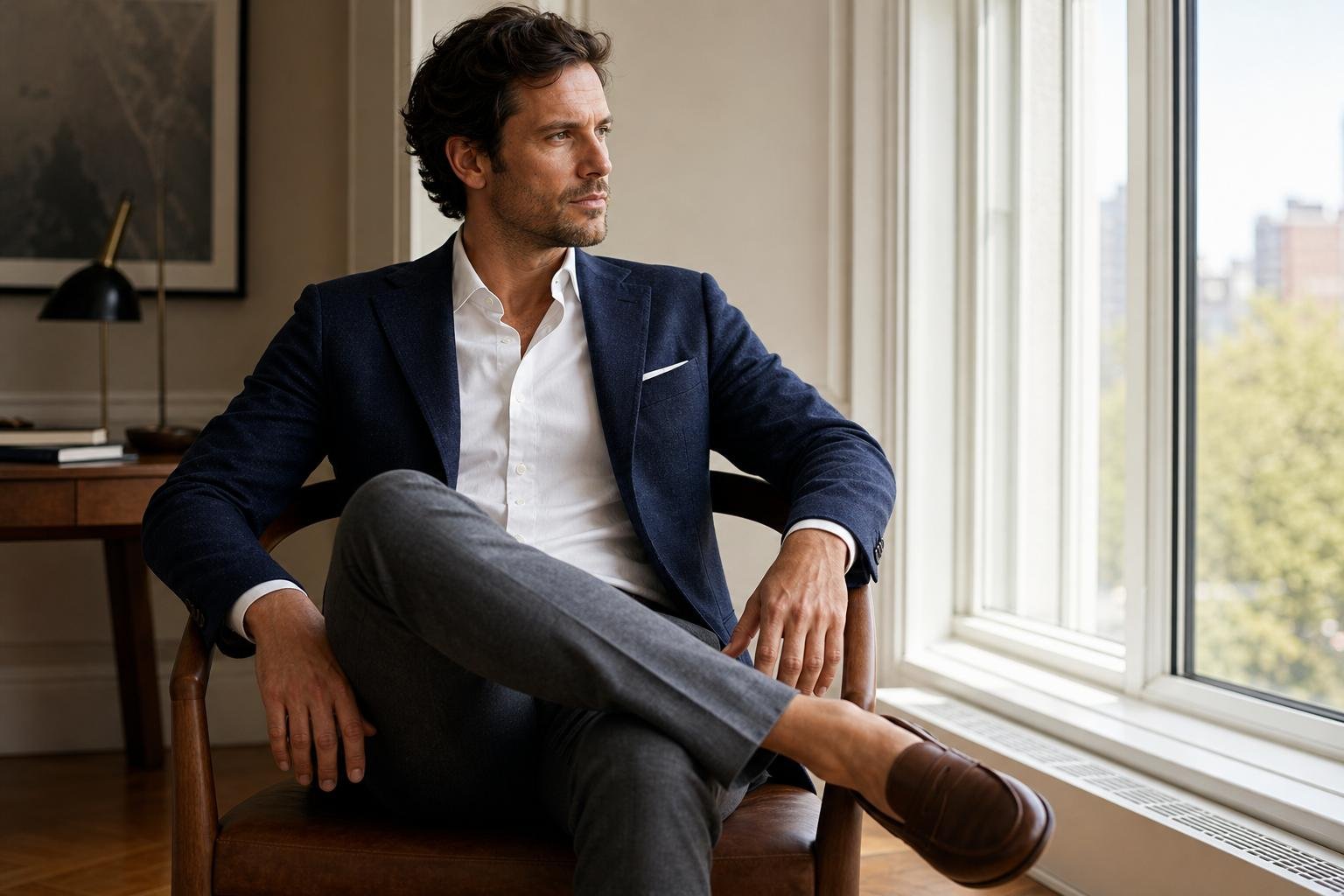
This is a dependable office-ready combination that feels considered without looking overly formal. A navy wool blazer provides enough structure for meetings, while medium-gray trousers keep the outfit softer than a matching suit. Add a crisp white poplin or Oxford shirt and brown leather derbies, loafers, or clean brogues.
For a less formal workplace, swap the dress shirt for a pale-blue Oxford cloth button-down. A textured navy blazer—such as hopsack or a subtle twill—also makes the outfit feel more relaxed than a smooth worsted wool version.
A light neutral blazer is especially useful in warm weather and daytime settings. Pair a tan, stone, or light beige blazer with a white, pale blue, or muted striped shirt worn open at the collar. Navy chinos, olive cotton trousers, or dark-wash jeans give the jacket enough contrast.
Keep the rest of the look simple. Brown suede loafers, leather sandals in an appropriate casual setting, or minimal white sneakers can all work depending on the trouser choice. Avoid overly shiny shoes; suede and matte leather better match the easy character of a light-colored jacket.
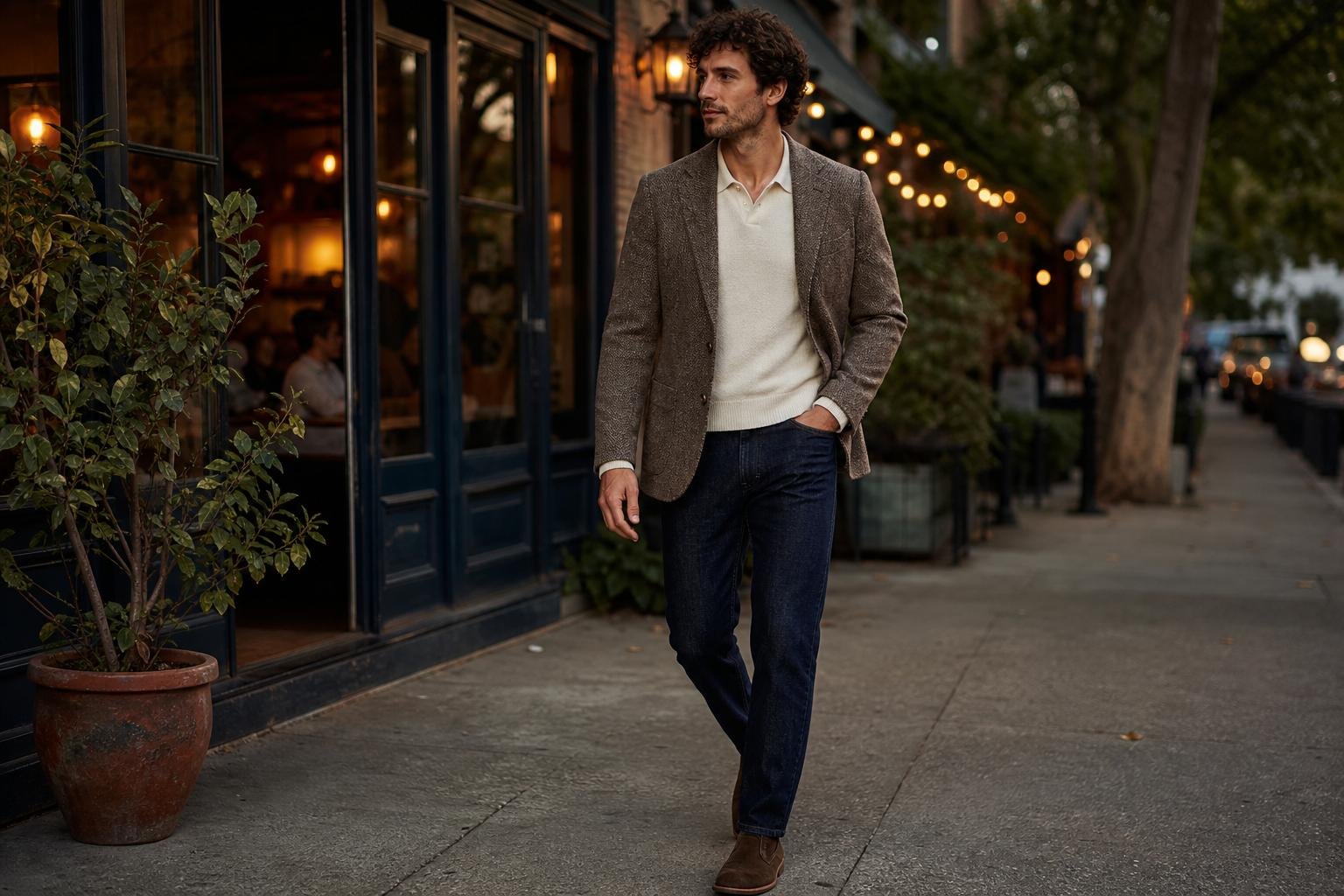
A blazer and jeans combination succeeds when both pieces meet in the middle. Choose dark indigo or black jeans with a straight or tapered leg, no dramatic distressing, and a clean hem. Then add a textured blazer in navy, brown, charcoal, or olive, such as tweed, brushed cotton, corduroy, or a wool blend.
Underneath, wear an Oxford shirt, fine-gauge knit polo, merino crewneck, or a plain T-shirt in white, gray, navy, or ecru. Suede chukka boots, penny loafers, and low-profile leather sneakers are all natural footwear choices. This is one of the most adaptable blazer outfit ideas men can use for casual dinners, creative offices, and weekend gatherings.
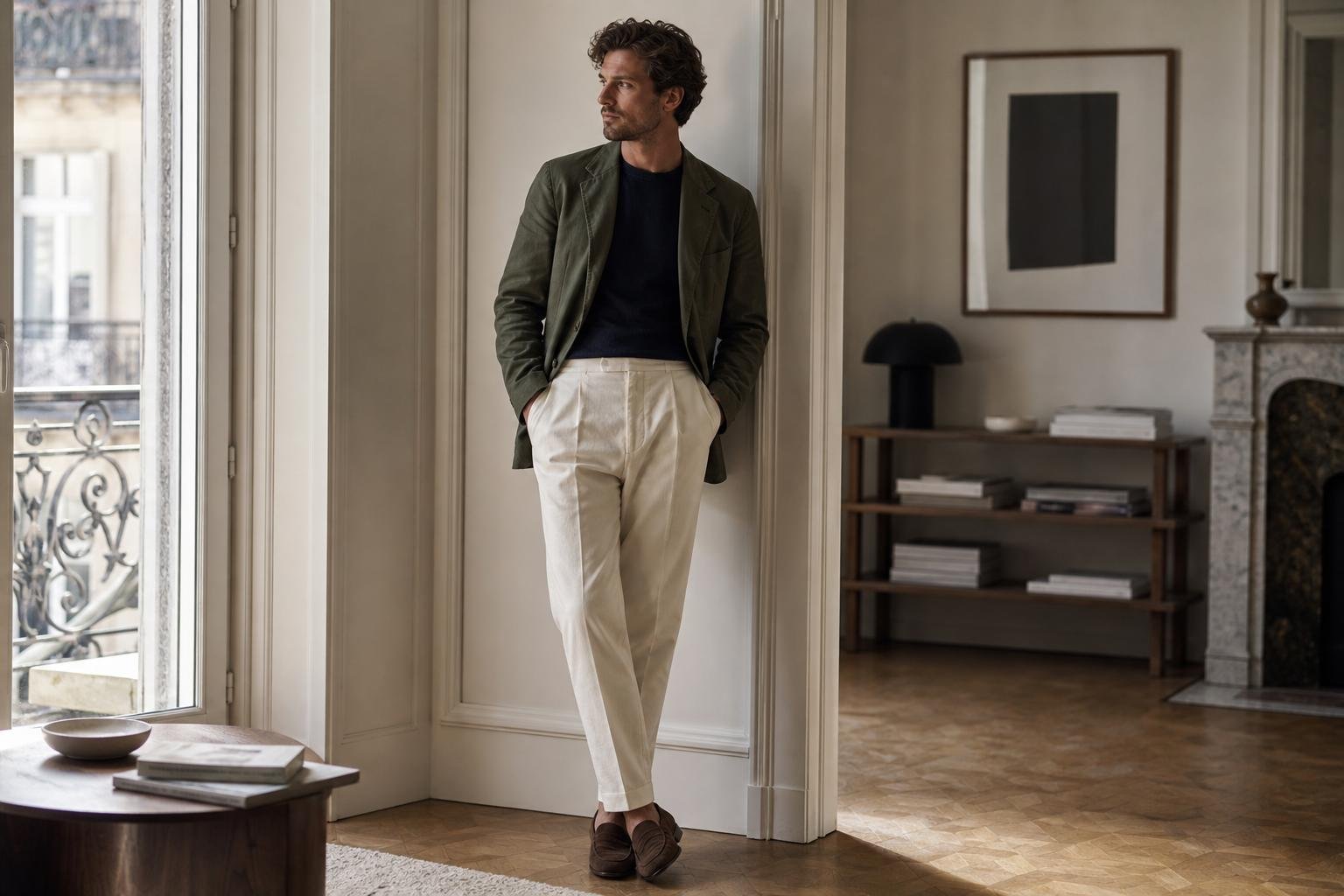
Olive is a versatile alternative to navy because it works with both cool and warm neutrals. An olive cotton, linen, or lightweight wool blazer looks especially strong with cream, off-white, or stone trousers. Add a chambray shirt, white tee, pale-blue shirt, or fine knit in navy.
Brown suede footwear helps ground the outfit, while dark brown leather adds a more polished finish. Keep the contrast gentle rather than combining olive with bright colors. The result is relaxed but still composed, making it a useful formula for spring and early fall.
For evening plans, charcoal and black can look sleek without requiring a full suit. Choose a charcoal blazer with visible texture or a softer construction, then pair it with black chinos or tailored black trousers. A black knit polo, charcoal crewneck, or white T-shirt keeps the palette focused.
Black leather Chelsea boots, sleek loafers, or understated black sneakers make sense here. The important detail is fabric contrast: a matte wool blazer with cotton trousers, for example, prevents the pieces from looking like a mismatched suit.
The shirt underneath a blazer changes the outfit’s tone immediately. A white or blue dress shirt is the most formal option, particularly with tailored trousers. An Oxford button-down is slightly more casual, while a knit polo offers an easy middle ground that still looks intentional.
T-shirts work best when they are plain, substantial, and well-fitted through the neck and shoulders. Choose crewnecks over deep V-necks, and avoid thin or stretched-out fabric. A merino crewneck, mock neck, or lightweight cardigan can also replace a shirt when you want a layered, cooler-weather look.
When wearing a casual top, let the blazer follow suit. Unstructured jackets with patch pockets, softer shoulders, and textured fabrics are more forgiving than sharply tailored business blazers. This is the difference between looking comfortably smart-casual and appearing as though you removed a suit jacket from a formal outfit.
Shoes can either unite the outfit or make it feel confused. As a general guide, the more tailored the trousers and shirt, the more refined the shoe should be.
Sneakers should be clean, simple, and low-profile rather than bulky running styles. A white leather pair is the easiest option, but off-white, gray, navy, or black sneakers can be equally useful when they echo another color in the outfit.
A versatile blazer wardrobe depends more on compatible colors than on owning many jackets. Navy works with gray, beige, olive, white, light blue, and dark denim. Brown and tan blazers pair naturally with cream, navy, faded blue, olive, and white. Charcoal works especially well with black, white, gray, and deep burgundy.
If you are new to mixing separates, limit the outfit to two or three main colors. For example, a navy blazer, white shirt, gray trousers, and brown shoes is cohesive because the colors are distinct but muted. Save brighter accents for a pocket square, sock detail, or knitwear rather than making them the foundation of the outfit.
The most common mistake is pairing a formal suit blazer with very casual pieces such as heavily distressed jeans, athletic sneakers, or graphic tees. The contrast can work in fashion-forward settings, but it is harder to pull off than a textured, casual blazer with similarly relaxed separates.
Also avoid treating every blazer like a suit jacket. Matching the trouser color too closely can look accidental unless the fabrics and tones clearly belong together. If you want the appearance of a suit, wear an actual matching suit. If you want separates, create visible contrast through color, texture, or both.
The best blazer outfits feel coherent rather than overly coordinated. Begin with a jacket that fits well, then choose trousers and shoes at a similar level of formality. Whether you prefer navy with gray trousers, a textured blazer with jeans, or olive with cream cotton pants, these blazer outfit ideas men can adapt make getting dressed feel more straightforward.