Physical Address
304 North Cardinal St.
Dorchester Center, MA 02124
Physical Address
304 North Cardinal St.
Dorchester Center, MA 02124
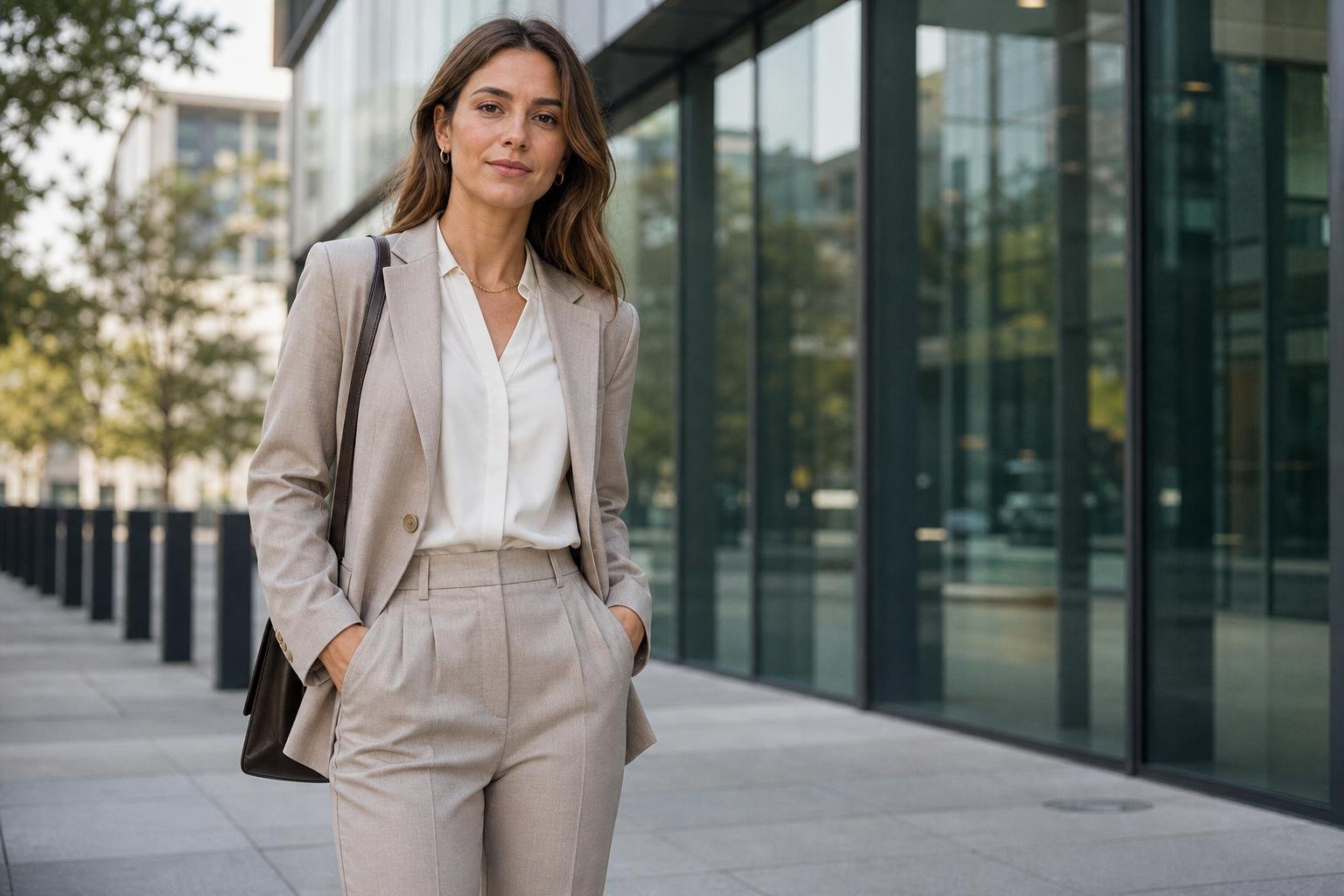
A polished interview look should reflect the role, the workplace, and your own professional style. Use these outfit formulas to build a confident, appropriate look with pieces you may already own.
A great interview outfit does more than meet a dress code: it helps you feel prepared, capable, and focused on the conversation ahead. The most useful interview outfit ideas women can draw from balance polish with comfort, so you are not distracted by a stiff jacket, pinching shoes, or an outfit that feels unlike you.
Your goal is not to dress like someone else. It is to choose a clean, well-fitting look that signals respect for the opportunity and suits the kind of workplace you hope to join.
Start by researching the company’s public-facing style. Its website, social media, employee photos, and industry can all offer clues. A law firm, financial institution, or executive role may call for traditional tailoring, while a design studio or startup may lean toward refined business casual.
When information is limited, it is generally safer to dress one level more polished than the everyday office uniform. That does not necessarily mean a full suit. A blazer with tailored trousers, a structured dress, or a knit top with polished separates often lands in the right place.
Avoid treating “professional” as a single uniform. A thoughtful outfit should feel appropriate to the setting while leaving room for your personality through color, texture, or a subtle accessory.
The strongest interview outfits begin with uncomplicated pieces in excellent condition. Prioritize opaque fabrics, clean hems, secure buttons, and silhouettes that let you sit, stand, and walk comfortably.
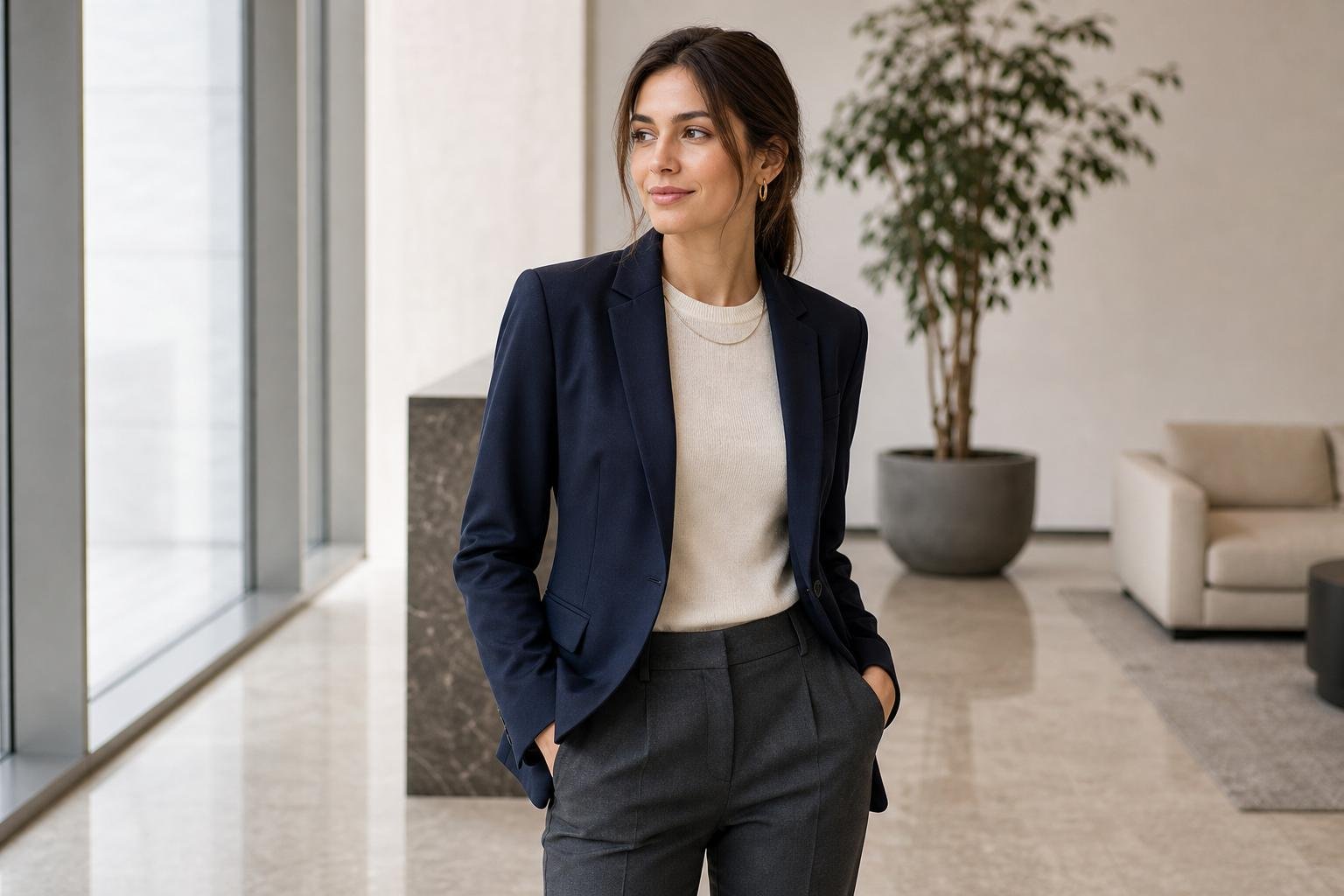
A blazer, tailored trousers, and a simple top remain one of the most adaptable combinations. Choose trousers with a smooth front or subtle pleat in navy, charcoal, black, taupe, or another neutral that coordinates easily. Add a matching blazer for a suit-like effect, or use a complementary blazer to make separate pieces feel intentional.
Underneath, wear a fine-gauge knit, woven shell, polished T-shirt, or button-front shirt. The neckline should sit securely when you lean forward. A tucked-in top creates a sharper line, while a neat half-tuck can work for a more relaxed office.
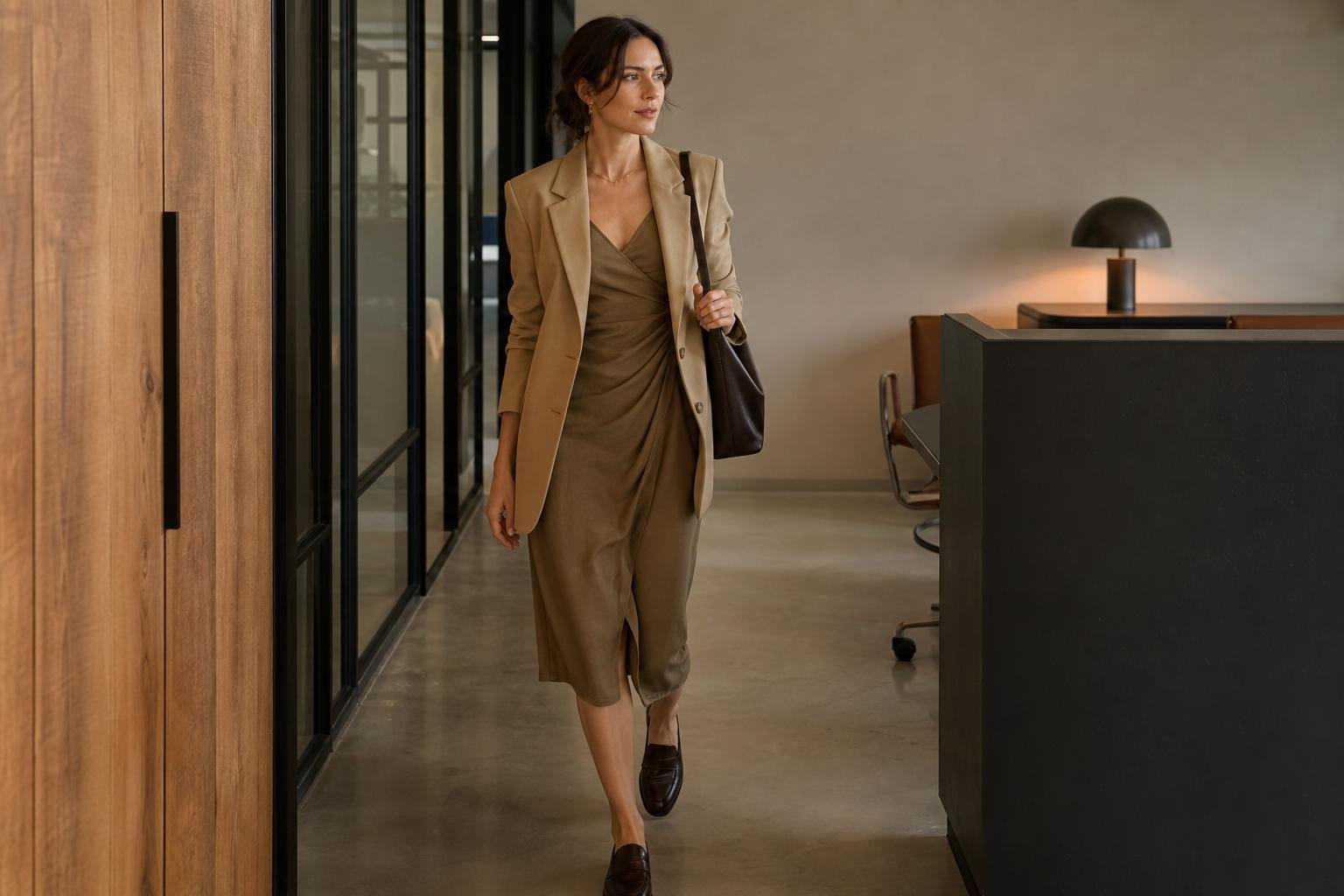
A tailored midi dress is an efficient one-piece option for many offices. Look for a sheath, shirt dress, wrap-style dress with a secure neckline, or softly structured knit dress that does not cling. A hem around the knee to mid-calf range is usually versatile, though the ideal length depends on your height and the workplace.
Layer a blazer, cardigan, or refined jacket over the dress if the setting is more formal or air-conditioned. Closed-toe pumps, loafers, flats, or sleek ankle boots can finish the outfit, depending on the season and company culture.
For a less formal workplace, combine ankle-length trousers or a midi skirt with a substantial knit, crisp blouse, or neat button-down. A cropped jacket, longline blazer, or polished cardigan can provide structure without making the outfit feel overly corporate.
These interview outfit ideas women can use for relaxed offices work best when every element is intentional. Dark, non-distressed denim may be acceptable in especially casual industries, but tailored trousers are the more dependable choice when you are uncertain.
Use the role and industry to decide how much tailoring you need. Interviewing for a client-facing, management, legal, or finance position usually warrants a suit or clearly tailored separates. For education, nonprofit, healthcare administration, or many corporate roles, a blazer-and-trouser combination is a reliable middle ground.
Creative fields can allow more individual style, but “creative” should not be confused with careless. Try a distinctive color, sculptural earring, printed blouse, or interesting shoe only after the foundation of the outfit feels professional. Keep the overall silhouette clean and the styling edited.
| Workplace setting | Reliable outfit direction | Finishing touch |
|---|---|---|
| Traditional corporate | Matching suit or blazer with tailored trousers | Closed-toe leather shoe |
| Business casual | Trousers or midi skirt with blouse and blazer | Structured tote or satchel |
| Creative office | Polished separates with one personal detail | Modern loafer or sleek boot |
| Remote interview | Solid-color top with a structured layer | Check the outfit on camera |
For video interviews, dress fully rather than only from the waist up. Solid or softly textured colors tend to read well on screen, while tiny checks, tight stripes, and highly reflective fabrics can be distracting. Test your top against your background and lighting before the call.
Fit is often more important than buying something new. Shoulder seams should sit close to your natural shoulder line, trouser hems should not pool heavily over your shoes, and a blazer should button without pulling across the chest or waist. If you already own a quality piece that is nearly right, a simple alteration can make it interview-ready.
Aim for balanced proportions. A longer blazer pairs neatly with straight or wide-leg trousers, while a fitted jacket can work well with a midi skirt or dress. If your trousers are wide, choose a top with enough structure to prevent the outfit from looking shapeless.
Comfort is also part of fit. Sit down in your complete outfit before interview day. Make sure a skirt does not ride up, a blouse does not gap, and a jacket allows you to reach for a bag or shake hands naturally.
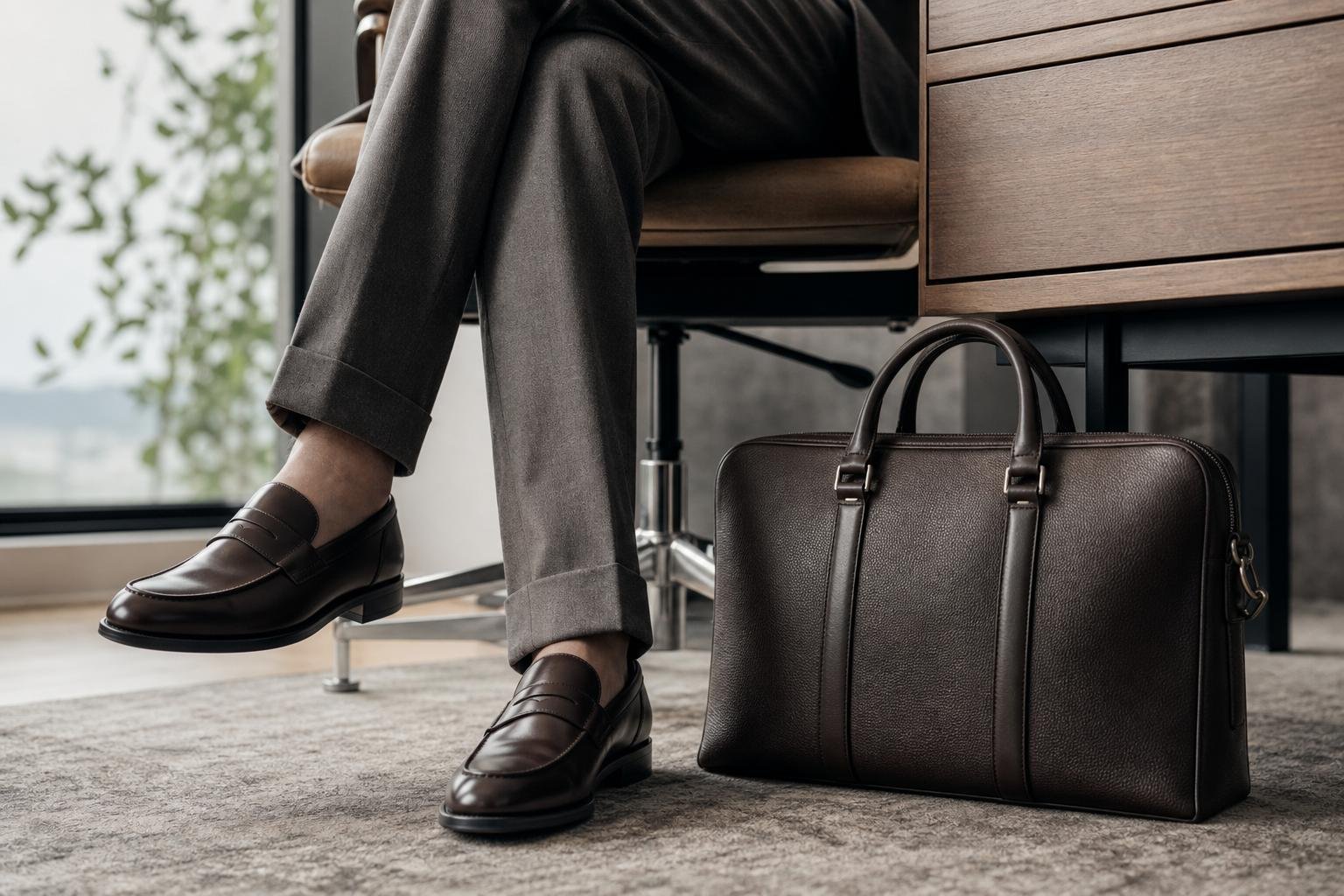
Shoes should be clean, secure, and easy to walk in. Leather loafers, pointed-toe flats, low block heels, classic pumps, and streamlined ankle boots are all useful options. You do not need high heels to look polished; a comfortable, well-maintained flat is more professional than a heel that changes your posture or pace.
Keep accessories simple and functional. A structured tote, briefcase-style bag, or refined shoulder bag should hold your résumé, notebook, identification, and essentials without looking overstuffed. Small hoops, studs, a watch, or one delicate necklace add finish without competing for attention.
If you wear fragrance, use a very light hand or skip it. The same restraint applies to makeup, nails, and hair: choose grooming that feels like a refined version of your usual style.
Certain pieces can make an otherwise solid outfit feel less prepared. Save visibly distressed denim, leggings worn as trousers, beach sandals, graphic slogans, wrinkled linen, and overly sheer tops for another occasion. Extremely short hems, plunging necklines, or clothing that needs frequent adjusting can also pull focus from what you are saying.
This does not mean your look must be bland or devoid of personality. A rich burgundy blouse, a soft blue suit, subtle print, or textured knit can be memorable in a professional way. The key is making one considered style choice rather than wearing several attention-grabbing elements at once.
Prepare your clothes the day before so the morning feels calmer. Steam or press each piece, check for lint and loose threads, and make sure your shoes are clean. Pack a small lint roller, stain-removal wipe, and any materials you need in your bag.
Before leaving, assess the outfit in natural light if possible. Check the back of your jacket, the length of your trousers, and whether your underlayers show through. Good interview outfit ideas women return to again and again are not about perfection—they are about looking composed enough to let your qualifications lead.
The right interview outfit should support your confidence, not become the main event. Choose a level of formality that respects the company, build around tailored and comfortable pieces, and finish with tidy grooming and practical accessories. When your clothing fits well and feels authentic, you can direct your energy where it belongs: making a clear, memorable case for yourself.