Physical Address
304 North Cardinal St.
Dorchester Center, MA 02124
Physical Address
304 North Cardinal St.
Dorchester Center, MA 02124

A well-fitting blazer should look clean at the shoulders, allow comfortable movement through the chest, and create a balanced silhouette. Use this guide to evaluate fit before buying or tailoring a jacket.
A blazer can be relaxed, sharply tailored, casual, or formal—but it should never look accidental. Understanding how should a blazer fit men helps you assess the parts that are hardest to alter later, especially the shoulders, chest, and overall balance. The right fit gives you room to move while maintaining a clean line from collar to hem.
Unlike a shirt, a blazer is built with structure. Its canvas, lining, shoulder construction, and lapels all affect how it sits on the body. Start with the fit fundamentals, then use a tailor for refinements such as sleeve length, waist suppression, and minor adjustments at the torso.
The shoulders are the most important place to get right. The shoulder seam should end close to the point where your natural shoulder ends. It should not extend noticeably onto your upper arm, nor should it sit too far inward and make the jacket look undersized.
A properly fitting shoulder looks smooth and follows your natural frame. Watch for dents below the shoulder seam, raised ridges near the sleeve head, or excess fabric hanging over the arm. These signs often indicate that the jacket is the wrong size or shape for your build.
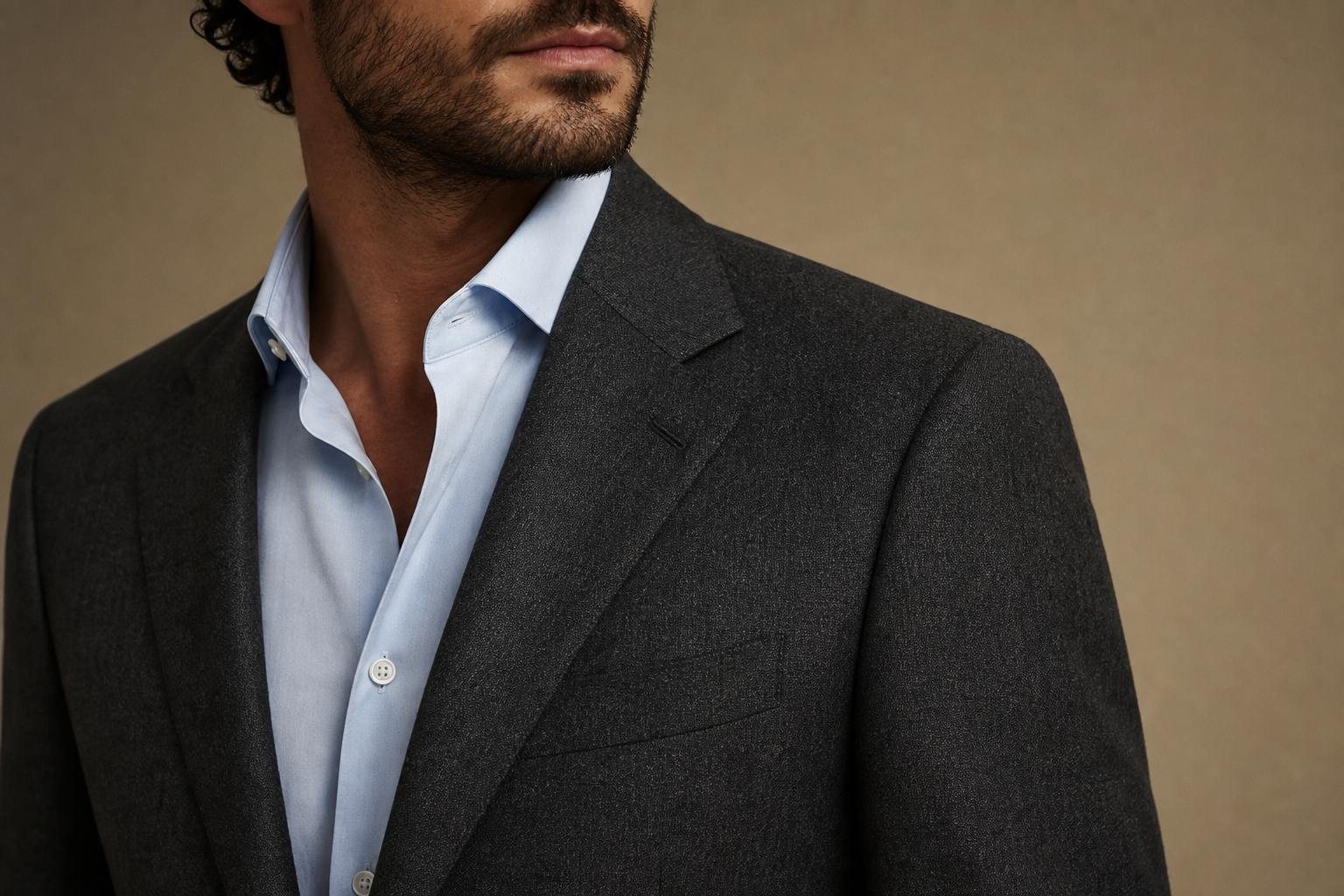
The collar should rest against the back of your shirt collar without a visible gap. A small amount of movement is normal when you lift your arms, but the blazer should return to a smooth position when standing naturally. Persistent collar roll or a gap at the neck can signal a shoulder or posture mismatch.
The chest should feel secure but not restrictive. Button the blazer’s main fastening button—typically the top button on a two-button jacket—and check whether the front closes cleanly. You should be able to slide a flat hand between your chest and the jacket without strain.
If the lapels pull apart, the button creates an X-shaped wrinkle, or the vents flare open while standing still, the blazer is too tight through the chest or waist. If there is a large amount of loose fabric around the torso, it is likely too large.
A blazer should gently follow the body’s shape rather than hang straight down like a box. This is often called waist suppression. The amount varies by style: a traditional blazer may have a straighter cut, while a contemporary tailored jacket may taper more noticeably from chest to waist.

When evaluating the waist, stand normally instead of holding in your stomach or pushing your shoulders back. A jacket that only looks right when you pose will not be comfortable or flattering in everyday wear.
Blazer length affects proportion as much as any other measurement. In a classic fit, the hem should generally cover your seat and fall around the base of the thumb when your arms hang naturally at your sides. This is a useful reference point, not an absolute rule.
Shorter blazers can work on casual or fashion-forward jackets, particularly when paired with higher-rise trousers. However, an overly short blazer can make the torso appear compressed and leave too much of the seat exposed. A jacket that is too long can overwhelm a shorter frame or look borrowed from a larger person.
Look at the jacket from the side as well as the front. The hem should appear level or very slightly curved, without pulling up at the front or dipping awkwardly at the back. Proper length creates a balanced division between your upper and lower body.

Blazer sleeves should end near the wrist bone, typically allowing about 1/4 to 1/2 inch (0.6 to 1.3 cm) of shirt cuff to show. The exact amount is a matter of preference, but a small visible cuff usually creates a polished transition between jacket and shirt.
Sleeves that cover the entire shirt cuff can make the arms look short and the jacket look oversized. Sleeves that stop too high may expose too much shirt and disrupt the proportions of the outfit. Since sleeve shortening is a common alteration, this is one area where a near-perfect off-the-rack fit is often acceptable.
Also check the sleeve pitch, or the angle at which the sleeve hangs from the shoulder. Your arms should fall naturally without diagonal pulling across the upper arm or chest. Sleeve pitch adjustments are possible but more complex than a simple shortening.
Measurements can help when shopping online or comparing brands, but they should support—not replace—a try-on. Different cuts, fabrics, and construction methods can make two jackets with the same labeled size fit very differently.
| Area | What to Check | Typical Fit Goal |
|---|---|---|
| Shoulders | Seam placement | Ends at the natural shoulder point |
| Chest | Room when buttoned | Flat hand fits comfortably inside |
| Sleeve length | Shirt cuff visibility | 1/4–1/2 inch (0.6–1.3 cm) showing |
| Jacket length | Hem placement | Roughly covers the seat |
| Waist | Front shape | Light taper without pulling |
For chest size, measure around the fullest part of your chest while wearing a thin shirt and keeping the tape level. Your blazer size often corresponds roughly to this chest measurement, such as a 40-inch chest (102 cm) aligning with a size 40 jacket. But the label alone does not determine fit: shoulder width, torso length, and jacket cut still matter.
When comparing a blazer you already own, lay it flat and measure across the chest from armpit to armpit, then double that number. Compare shoulder width, sleeve length, and back length with the retailer’s garment measurements whenever available.
A blazer should allow ordinary movement without feeling like armor. Try sitting down, reaching forward as if driving, lifting your arms partway, and crossing your arms lightly. Some pulling is expected because tailored clothing is not designed for athletic range of motion, but you should not feel pinched across the upper back or trapped at the chest.
Pay special attention to the armholes. Higher armholes can feel more secure and allow better arm movement because the body of the jacket stays in place. Low armholes may cause the entire blazer to lift when you raise your arms. This does not automatically make a jacket wrong, but it can affect comfort.
The same principle answers how should a blazer fit men with different body types: the jacket should accommodate your natural movement without excess fabric or tension. Avoid sizing up solely for mobility if the shoulders become too wide; a better cut or a small alteration may be the smarter solution.
Many useful blazer alterations are straightforward. A tailor can commonly shorten sleeves, take in the waist, adjust the jacket length slightly, or refine the seat and sides. These changes can turn a good jacket into one that looks custom.
Shoulders are much harder and more expensive to alter because they affect the sleeve head, collar, chest, and internal structure. Significant changes to the chest, armholes, or overall length can also be costly and may compromise the jacket’s proportions.
Buy for the fit of the shoulders, chest, and collar first. Accept that sleeves and waist are often adjustable. If a blazer is too tight to button, too broad in the shoulders, or visibly unbalanced through the collar, it is usually better to try another size or cut.
The most common mistake is choosing a blazer that is too large because it feels more comfortable at first. Extra room in the shoulders and chest often creates a drooping, shapeless appearance that tailoring cannot fully correct.
Another frequent issue is judging fit with the jacket unbuttoned. Always assess a blazer both open and buttoned. An open jacket can conceal tightness at the waist, pulling at the chest, and lapels that do not lie flat.
Finally, do not ignore trouser proportion. A fitted blazer paired with very low-rise or overly slim trousers can make the outfit feel unbalanced. A moderate-rise trouser that meets the blazer near its buttoning point generally creates a cleaner, longer-looking line.
When deciding how should a blazer fit men, prioritize the shoulder seam, collar, chest comfort, and jacket length. Those foundational elements determine whether the jacket looks intentional and whether alterations are worthwhile.
A good blazer should sit smoothly, button without strain, show a touch of shirt cuff, and create a balanced shape through the torso. Once those essentials are in place, small tailoring adjustments can provide the polished finish that makes a blazer feel truly personal.