Physical Address
304 North Cardinal St.
Dorchester Center, MA 02124
Physical Address
304 North Cardinal St.
Dorchester Center, MA 02124
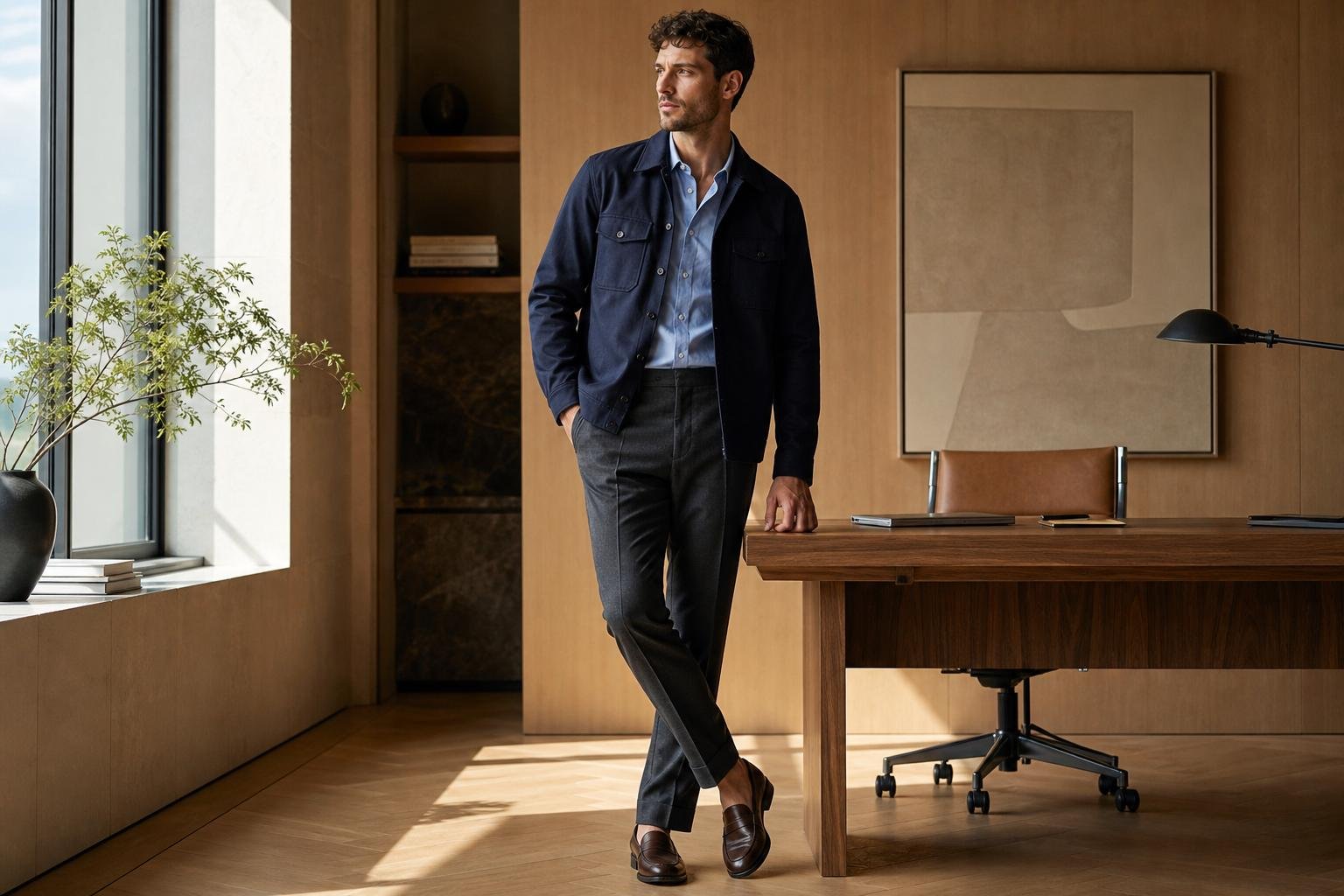
Build a reliable business casual wardrobe with comfortable outfit formulas that look intentional in the office, at meetings, and after work. Learn how to combine trousers, shirts, knitwear, layers, and shoes with ease.
Business casual should make getting dressed for work simpler, not leave you guessing whether jeans are too casual or a blazer is too formal. The most useful business casual outfit ideas for men rely on a few versatile pieces: tailored trousers, tidy shirts, comfortable layers, and polished shoes. Once those foundations are in place, small changes in color, texture, and fit can create plenty of distinct looks.
The goal is a middle ground between traditional tailoring and weekend clothing. Think relaxed but intentional: clothes that allow movement, look appropriate in professional settings, and still feel like your personal style.
Fit determines whether an outfit looks refined, regardless of how formal the individual pieces are. Trousers should sit comfortably at the waist and fall cleanly through the leg without pulling at the thighs or pooling heavily over the shoes. A tapered or straight leg is usually versatile, while extremely slim cuts can feel dated or restrictive.
Shirts should follow the shoulder line, close comfortably at the collar, and leave enough room to move your arms. If you wear an untucked shirt, choose one designed with a shorter hem; a long, curved shirttail can look unfinished outside trousers.
A useful test is to sit, stand, and reach naturally while wearing the outfit. Business casual clothing should not require constant adjusting. Comfortable proportions look more confident than overly tight clothes trying to appear sharp.
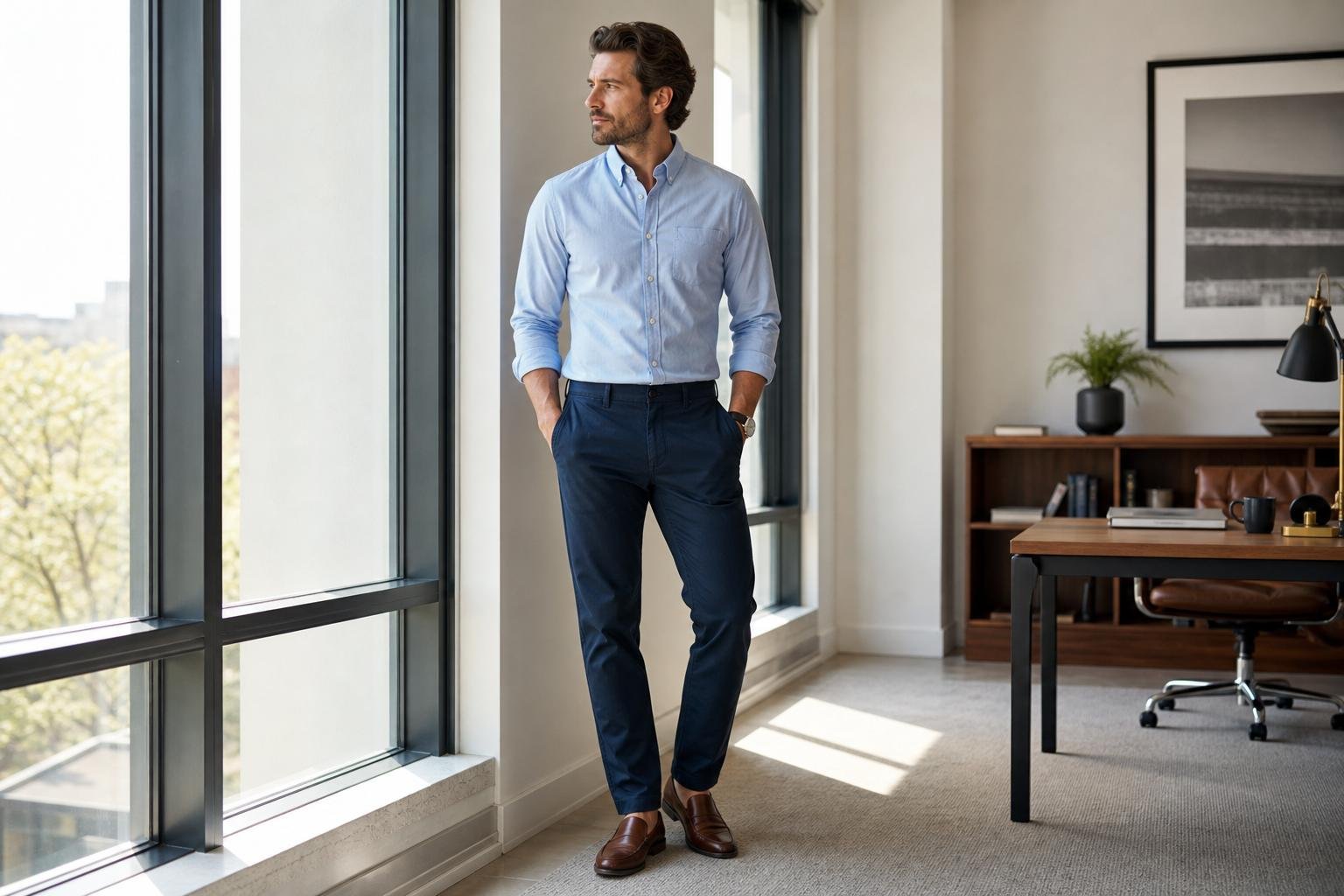
A small selection of trousers does much of the work in a business casual wardrobe. Navy chinos, charcoal wool-blend trousers, olive cotton pants, and medium-gray dress trousers are adaptable starting points. Their neutral colors pair easily with white, pale blue, cream, navy, and muted earth-tone tops.
Choose chino fabric with enough structure to hold its shape, rather than thin cotton that wrinkles quickly. For dressier workplaces, wool trousers or refined technical trousers offer a clean line while often providing stretch and easier movement.
| Trouser color | Easy top pairings | Overall effect |
|---|---|---|
| Navy | White, light blue, gray, cream | Classic and adaptable |
| Charcoal | White, pale blue, burgundy | Slightly more formal |
| Olive | White, navy, chambray, tan | Relaxed but polished |
| Stone or khaki | Blue, navy, brown, forest green | Warm-weather friendly |
Rather than assembling every outfit from scratch, use repeatable combinations. These formulas can be adjusted for your office dress code, climate, and preferred level of formality.
A white or light-blue Oxford cloth button-down with navy or olive chinos is one of the most dependable men’s office outfits. The fabric has enough texture to feel relaxed, while the collar keeps the look structured. Brown leather loafers, derbies, or clean leather sneakers can finish the outfit depending on your workplace.
For cooler mornings, add a fine-gauge crewneck sweater in navy, gray, or dark green. Let the shirt collar sit neatly beneath the knit, and keep the trouser break minimal for a contemporary silhouette.
A knit polo is a useful alternative when a button-down feels too formal or warm. Select one with a structured collar, a smooth knit, and a close-but-comfortable fit. Pair it with tailored gray trousers or dark chinos for a clean balance of casual and professional.
An unstructured overshirt in cotton twill, brushed cotton, or lightweight wool makes a practical outer layer. It is less formal than a blazer but more intentional than a hoodie or casual jacket. Keep the colors grounded: navy, charcoal, olive, tobacco, or deep brown are especially easy to wear.
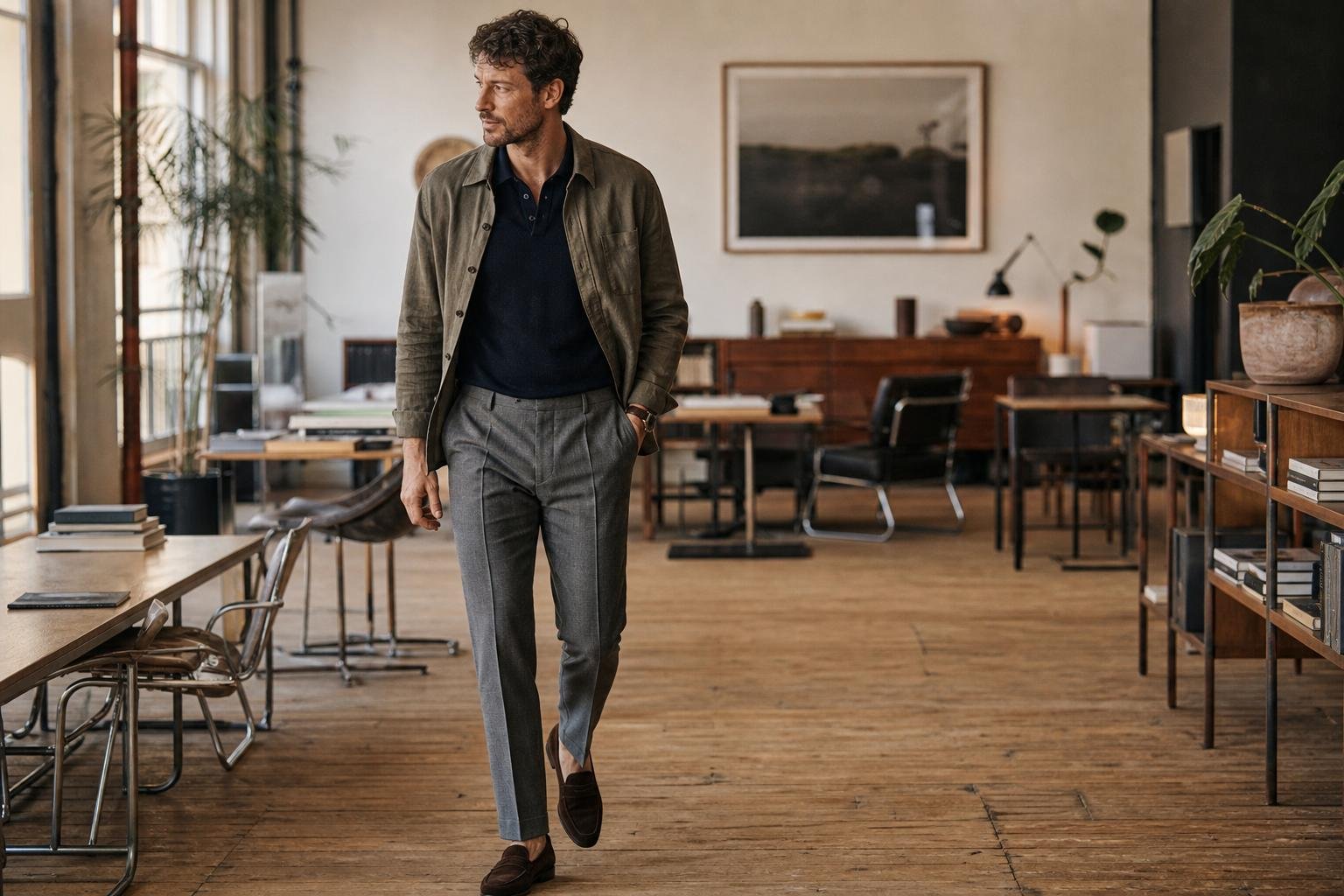
For offices with a more polished standard, combine a thin merino crewneck or V-neck with a button-down shirt and wool trousers. Gray trousers with a pale-blue shirt and navy sweater are especially reliable. The layered collar adds definition, while the sweater keeps the outfit approachable.
Avoid bulky knits if you are wearing them over a shirt in a professional setting. Fine-gauge merino, cotton-silk blends, and lightweight lambswool sit more cleanly under a jacket or coat and make temperature changes easier to manage.
A blazer can work in business casual settings when the rest of the outfit stays relaxed. Choose an unstructured blazer with softer shoulders in cotton, wool, linen-wool, or a textured knit. Wear it with a high-quality plain T-shirt, tailored trousers, and leather loafers or minimal sneakers.
The T-shirt should be opaque, free from graphics, and fitted through the shoulders. White, cream, navy, charcoal, and muted olive are easy choices. This outfit works best in creative offices, client lunches, and occasions when you want the shape of tailoring without a suit-and-tie effect.
In workplaces where denim is accepted, dark indigo or black jeans can be part of a business casual uniform. Choose a clean pair without fading, rips, heavy whiskering, or overly distressed details. A straight or tailored-tapered fit will look more polished than a very skinny or overly loose cut.
Wear dark denim with a button-down shirt, merino sweater, cardigan, or overshirt. Leather boots and loafers generally make jeans feel more office-ready than athletic sneakers. This is one of the more adaptable business casual outfit ideas for men because it can shift from a casual office day to dinner with a simple change of layer.
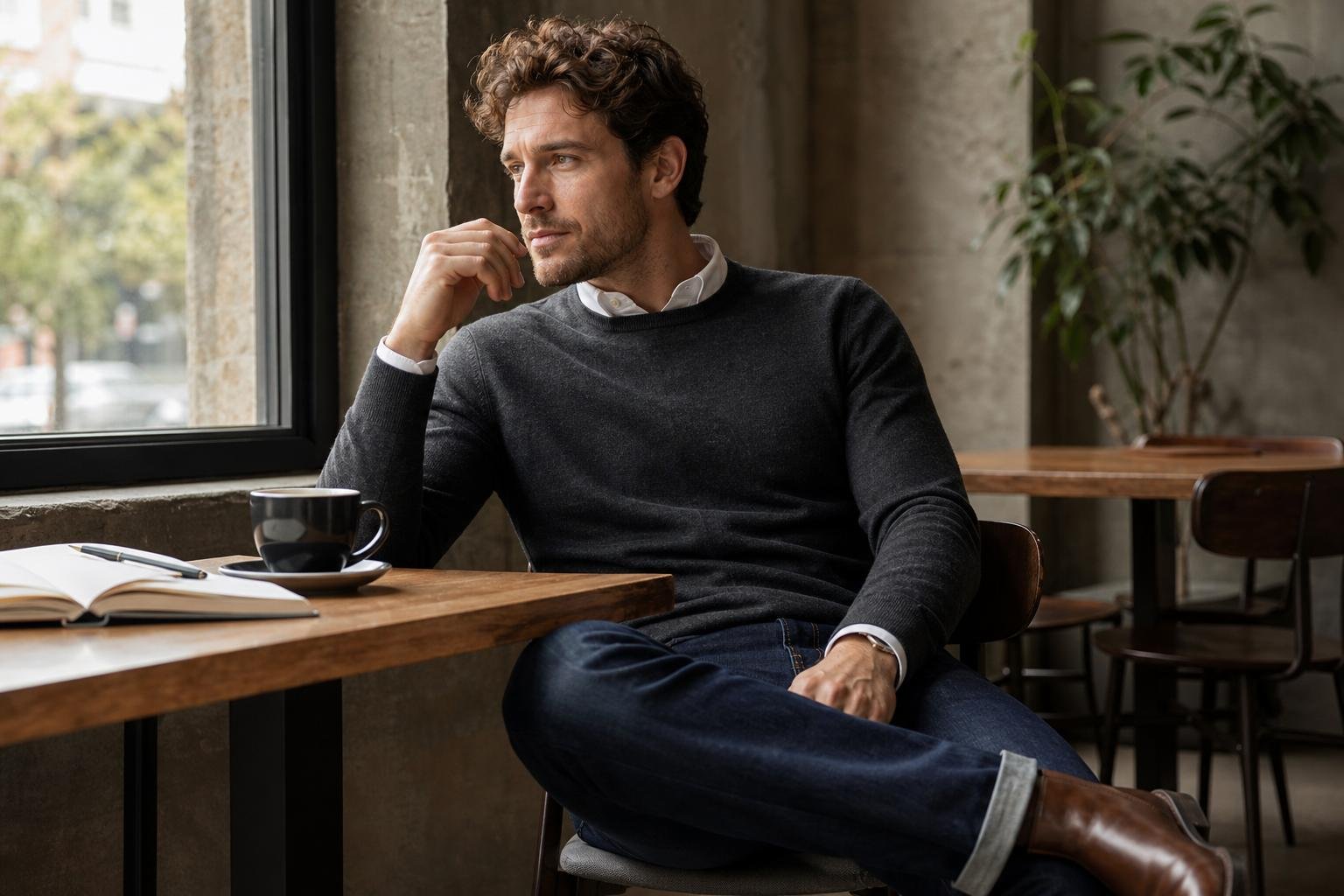
Shoes often decide whether an outfit reads as professional. Brown leather loafers are a versatile choice for chinos, wool trousers, and dark denim. Suede loafers or chukka boots add texture without feeling overly formal, especially in brown, dark tan, or deep taupe.
Derby shoes work well when your workplace leans traditional. They are slightly less formal than Oxfords but more structured than most casual footwear. Clean, low-profile leather sneakers can also be appropriate in relaxed offices, provided they are simple, well maintained, and free from prominent athletic details.
Match the shoe’s visual weight to the trouser. Chunkier boots pair naturally with denim and heavier chinos, while sleek loafers look better with tapered trousers and lightweight fabrics.
Business casual does not need to mean a closet full of plain black and gray. The easiest approach is to build around neutrals, then introduce one muted color or textured fabric. For example, pair charcoal trousers with a pale-blue shirt and dark-green sweater, or wear navy chinos with a cream polo and brown suede loafers.
Texture also makes simple outfits more interesting. Oxford cloth, brushed twill, merino knitwear, suede, hopsack wool, and subtle checks add depth without requiring bold colors. Keep patterns restrained when wearing several layers. If your shirt is striped, choose solid trousers and a solid sweater or jacket.
A reliable rule is to use two or three colors in one outfit, plus neutral shoes and accessories. This keeps the look coordinated without appearing overly matched.
The strongest business casual outfit ideas for men are usually simple because they avoid distracting details. Start by steering clear of items that create an obvious mismatch in formality.
A practical rotation might include two pairs of chinos, two pairs of tailored trousers, three or four shirts, two knit layers, one overshirt or soft blazer, and two pairs of polished shoes. These pieces can produce different combinations without requiring a large wardrobe.
Prioritize breathable fabrics if you commute, work in changing temperatures, or spend long days seated. Cotton, merino wool, linen blends, and fabrics with modest stretch tend to be more comfortable than stiff, heavy materials. A garment that feels good through a full day is more likely to become a dependable repeat.
The best business casual wardrobe is built from comfortable, well-fitting pieces that can be combined without much effort. Use business casual outfit ideas for men as flexible formulas rather than strict rules: begin with tailored trousers, add a polished shirt or knit, choose an intentional layer, and finish with shoes that suit the setting. With a few reliable colors and fabrics, dressing professionally can feel straightforward and personal.