Physical Address
304 North Cardinal St.
Dorchester Center, MA 02124
Physical Address
304 North Cardinal St.
Dorchester Center, MA 02124
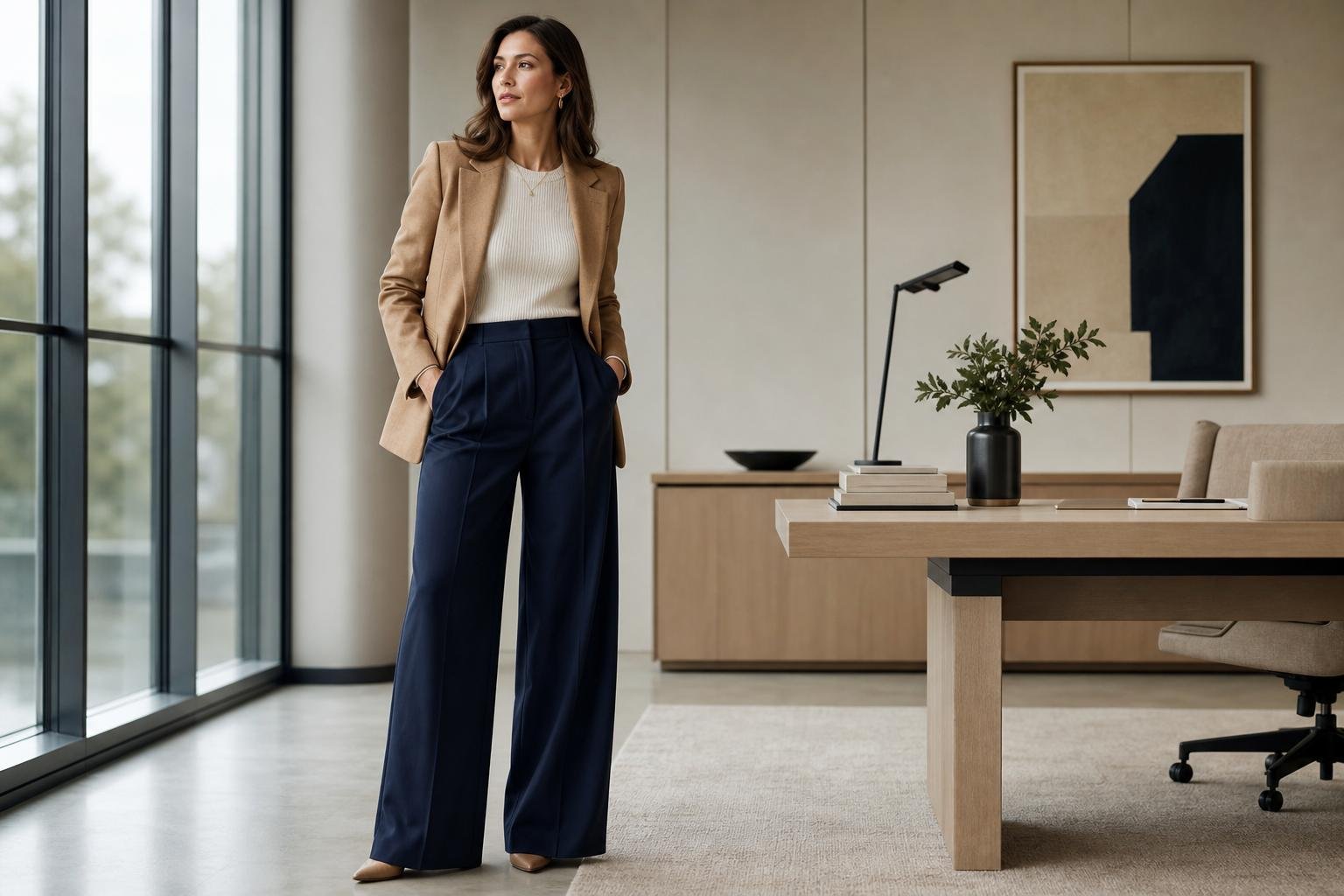
Build a flexible work wardrobe with polished outfit formulas that balance comfort, professionalism, and personal style. These combinations make getting dressed for the office simpler.
Getting dressed for work is easier when you have a few reliable formulas rather than a closet full of isolated pieces. The strongest business casual outfit ideas for women combine tailored structure with approachable layers, polished shoes, and enough comfort to carry through a full day.
Business casual can vary by office, but the goal is generally the same: look intentional without feeling overdressed. Start with clean lines, fabrics that hold their shape, and a color palette that lets pieces mix easily.
Business casual sits between formal suiting and relaxed weekend clothing. A blazer is useful but not always required; denim may work in some offices, while leggings, distressed finishes, athletic shoes, and overly sheer pieces usually do not. When in doubt, choose one tailored item—such as trousers, a blazer, a button-down, or a structured skirt—to anchor the look.
Fit makes a major difference. A simple knit and straight-leg pants can look refined when the shoulders fit neatly, hems are appropriate for your shoes, and the fabric is free of wrinkles. Conversely, even expensive pieces can read too casual when they are overly slouchy or worn out.
For a first day, client meeting, or office with an unclear dress code, it is usually safer to lean slightly more polished. You can always remove a blazer or swap dress shoes for loafers once you understand the workplace norm.
The best work outfits rely on adaptable combinations, not one-time styling tricks. Use these formulas as a starting point, then adjust the colors, silhouettes, and layers to suit your office and personal style.
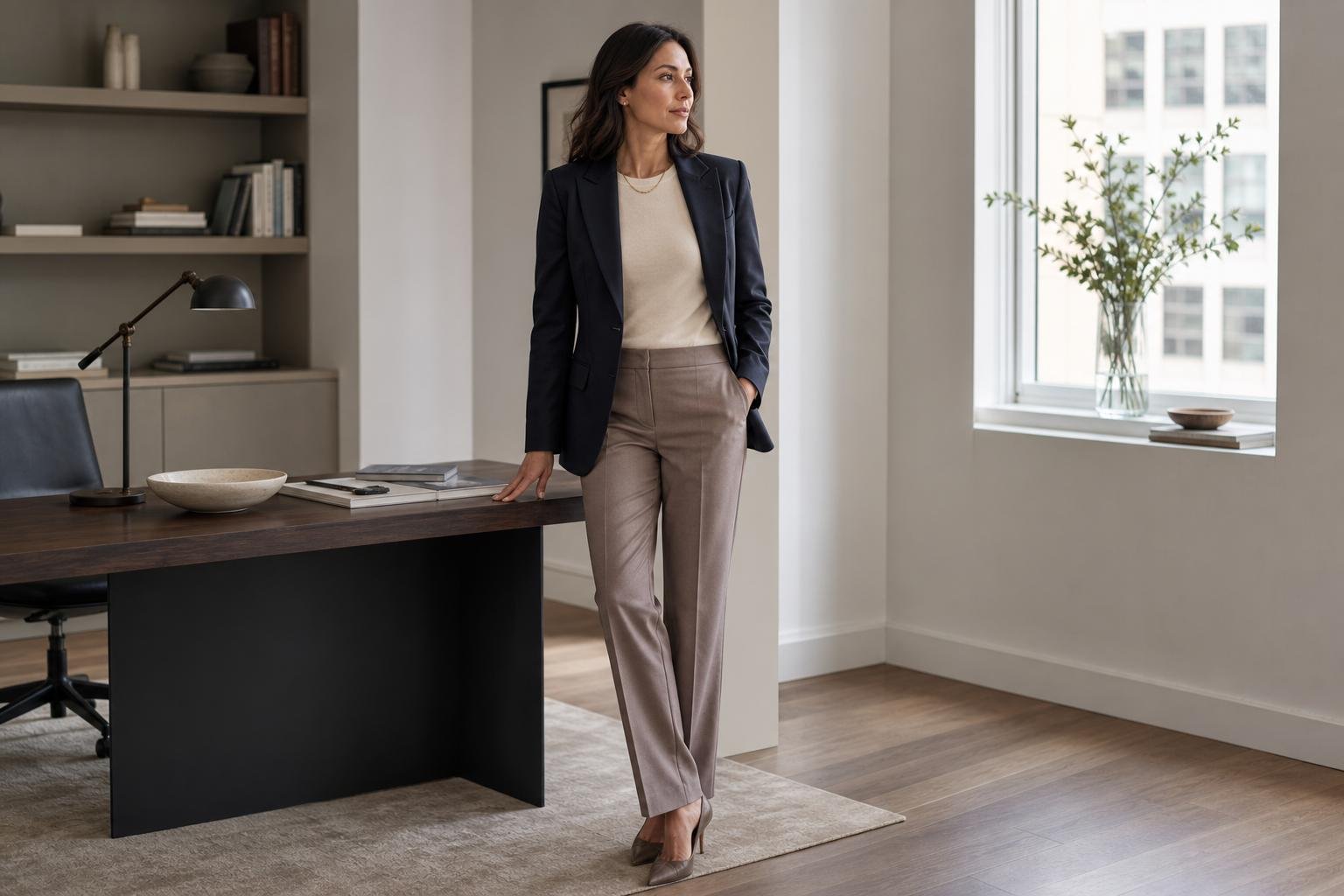
This is a dependable formula for days that call for a little extra authority. Try a navy, charcoal, black, camel, or soft gray blazer over a fine-gauge crewneck, shell, or ribbed knit. Pair it with straight-leg, slim ankle, or wide-leg trousers in a complementary neutral.
For an easy proportion balance, keep an oversized blazer slightly relaxed but choose trousers with a defined waist and a clean drape. Pointed flats, loafers, low block heels, or polished ankle boots complete the look. A leather tote or structured shoulder bag adds useful shape.
A crisp cotton poplin shirt brings structure to a flowing midi skirt, while a silk-like blouse softens a pencil or column skirt. Tuck the shirt fully for a traditional look, or use a neat partial tuck with a high-waisted skirt if that feels more natural.
Choose hemlines around the knee or longer for broad office versatility. Pleated, A-line, and slip-style midi skirts work well with loafers and sleek boots, while a fitted knit skirt can be balanced with a roomier shirt or cardigan. Keep the top layer clean and simple so the silhouette does not feel fussy.
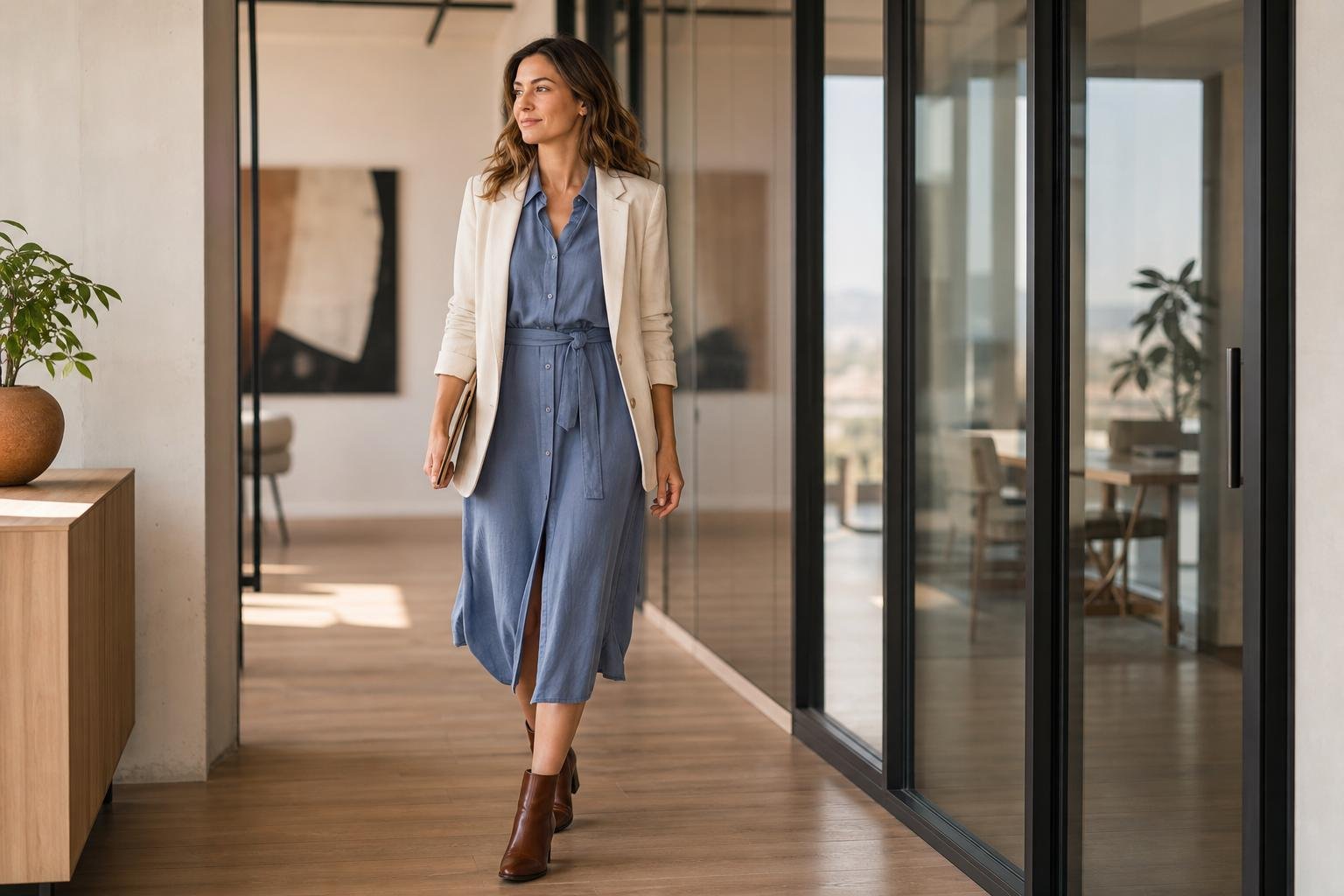
A midi shirt dress, knit dress, wrap-style dress, or tailored sheath offers a nearly complete outfit in one piece. The key is adding a third layer when the setting calls for more polish: a blazer, fine cardigan, cropped jacket, or longline vest can make the dress feel workplace ready.
Look for opaque fabrics, secure necklines, and a fit that lets you sit and move comfortably. A belt can define the waist on a looser dress, but it is optional. Add flats for an everyday office outfit or low heels for presentations and meetings.
Wide-leg trousers pair especially well with fitted or lightly tucked knitwear. A slim mock neck, short-sleeve sweater, or fine cardigan buttoned as a top creates definition at the waist and prevents the look from becoming too voluminous.
Pay attention to the hem. Full-length trousers should nearly skim the top of your shoe without pooling on the floor, while cropped wide-leg pants work well with loafers, slingbacks, or ankle boots. This formula feels modern in monochrome shades such as cream, navy, chocolate brown, or charcoal.
If your workplace permits jeans, choose dark, solid-wash denim with no rips, fading, or frayed hems. Straight-leg and trouser-style jeans are particularly easy to dress up. Combine them with a tucked blouse, tailored cardigan, or blazer, then finish with loafers or pointed-toe flats.
The distinction is in the supporting pieces. A polished belt, structured bag, and refined shoe make denim feel deliberate, while a graphic tee and running shoes push the outfit toward off-duty territory. Save very relaxed jeans for offices that clearly embrace casual dress.
A small group of mixable staples gives you more options than a collection of highly specific statement pieces. For business casual outfit ideas for women that feel effortless, focus first on the items you can wear in multiple combinations.
| Wardrobe piece | What to look for | Easy pairing |
|---|---|---|
| Tailored trousers | Smooth drape and comfortable waistband | Knit top and blazer |
| Versatile blazer | Neutral color and clean shoulder fit | Dress, jeans, or skirt |
| Fine-gauge knit | Lightweight, non-clingy fabric | Midi skirt or wide-leg pants |
| Button-down shirt | Crisp collar and opaque fabric | Trousers or pencil skirt |
| Polished flats or loafers | Supportive sole and sleek finish | Nearly every work outfit |
Neutral colors make outfit building simpler, but they do not have to mean only black and beige. Deep green, burgundy, muted blue, chocolate, and soft pink can function like neutrals when they coordinate with the rest of your wardrobe. A printed blouse or patterned skirt can add personality if the surrounding pieces remain streamlined.
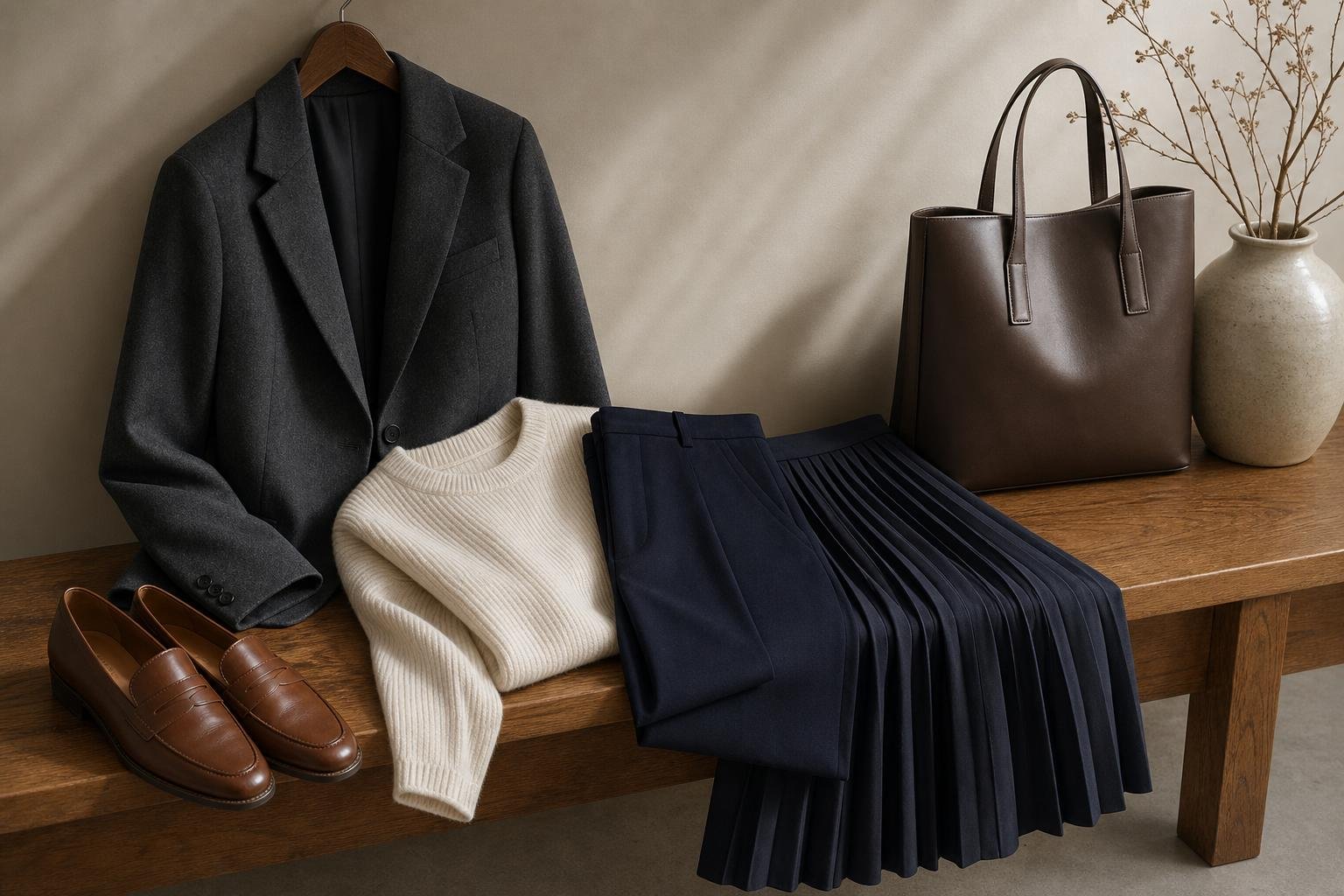
Accessories should support the outfit rather than compete with it. Small hoops, a simple watch, a delicate pendant, or a modest stack of rings can add polish without becoming distracting. For bags, structured totes, satchels, and medium-size shoulder bags tend to look more professional than casual backpacks or oversized slouchy styles.
Shoes should be appropriate for your commute and workday, not just the mirror. Loafers, ballet flats, pointed-toe flats, low block heels, ankle boots, and clean leather sneakers can all work depending on your office. Keep shoes in good condition; scuffs and worn heel tips can make an otherwise polished look feel unfinished.
A final check before leaving can prevent common styling issues: smooth wrinkles, check that underlayers are not visible, make sure hems sit correctly, and consider whether your outfit has a clear focal point. Often, that is all it takes to turn basic separates into a considered look.
Different workplaces set different boundaries. Creative offices may welcome wider silhouettes, color, and fashion-forward footwear, while corporate environments may favor traditional trousers, closed-toe shoes, and more conservative hemlines. Observe what leaders and client-facing colleagues wear, especially on meeting days.
If your office runs cold, keep a blazer, cardigan, or lightweight jacket at your desk. If you commute on foot or by transit, carry your office shoes and wear supportive walking shoes en route. These practical adjustments preserve your style without sacrificing comfort.
The most useful business casual outfit ideas for women are built around repeatable silhouettes: tailored pants with knits, skirts with button-downs, polished dresses with layers, and dark denim for relaxed offices. Once you know the level of formality your workplace expects, a few well-fitting staples can create a work wardrobe that looks composed every day.