Physical Address
304 North Cardinal St.
Dorchester Center, MA 02124
Physical Address
304 North Cardinal St.
Dorchester Center, MA 02124
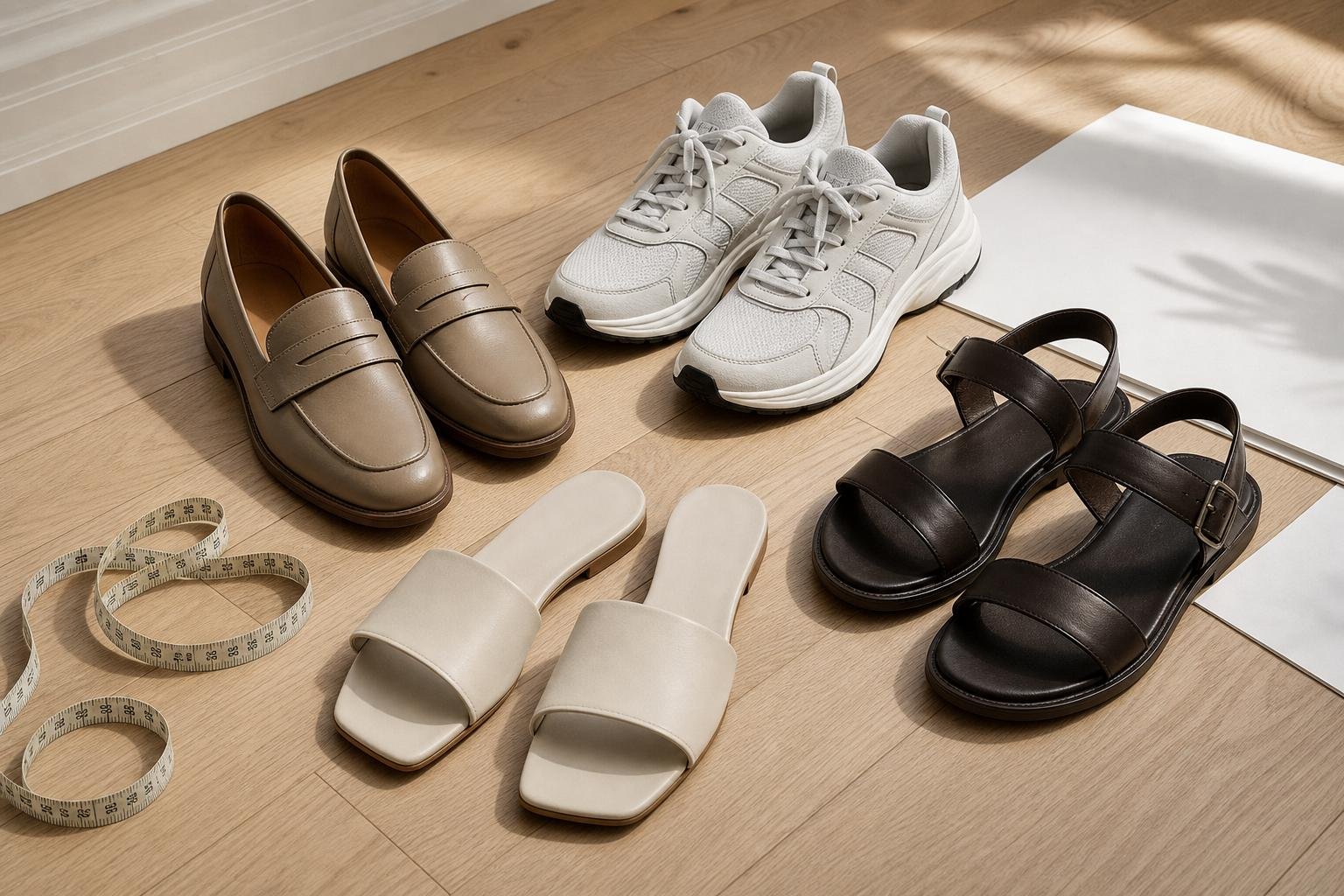
A reliable shoe size starts with accurate foot measurements, but length is only part of the equation. Learn how to measure your feet and assess width, shape, and fit before you buy.
Finding a comfortable pair of shoes begins before you select a style: it starts with knowing your feet. This shoe size guide explains how to measure foot length and width at home, interpret the results, and check whether a shoe truly fits once it is on.
Shoe sizing can vary by brand, style, materials, and country of origin. Treat the size printed on your usual pair as a starting point—not a guarantee—and use measurements plus a practical fit check to make a more informed choice.
Measure your feet at the end of the day, when they are typically at their largest. Wear the type of socks or hosiery you expect to wear with the shoes. If you are measuring for running shoes, hiking boots, or winter boots, use the thicker socks you would normally choose for those activities.
You will need a sheet of paper larger than your foot, a pen or pencil, a ruler or tape measure, and a flat floor next to a wall.
Place the paper flat on a hard floor with one short edge against a wall. Stand with your heel gently touching the wall and your weight distributed naturally over both feet. Ask someone else to trace around your foot if possible. If you are doing it alone, sit carefully and keep the pen as upright as you can; angling the pen inward can make the outline too small.
Repeat on the other foot. Many people have one foot that is slightly longer or wider than the other, so measuring both matters.
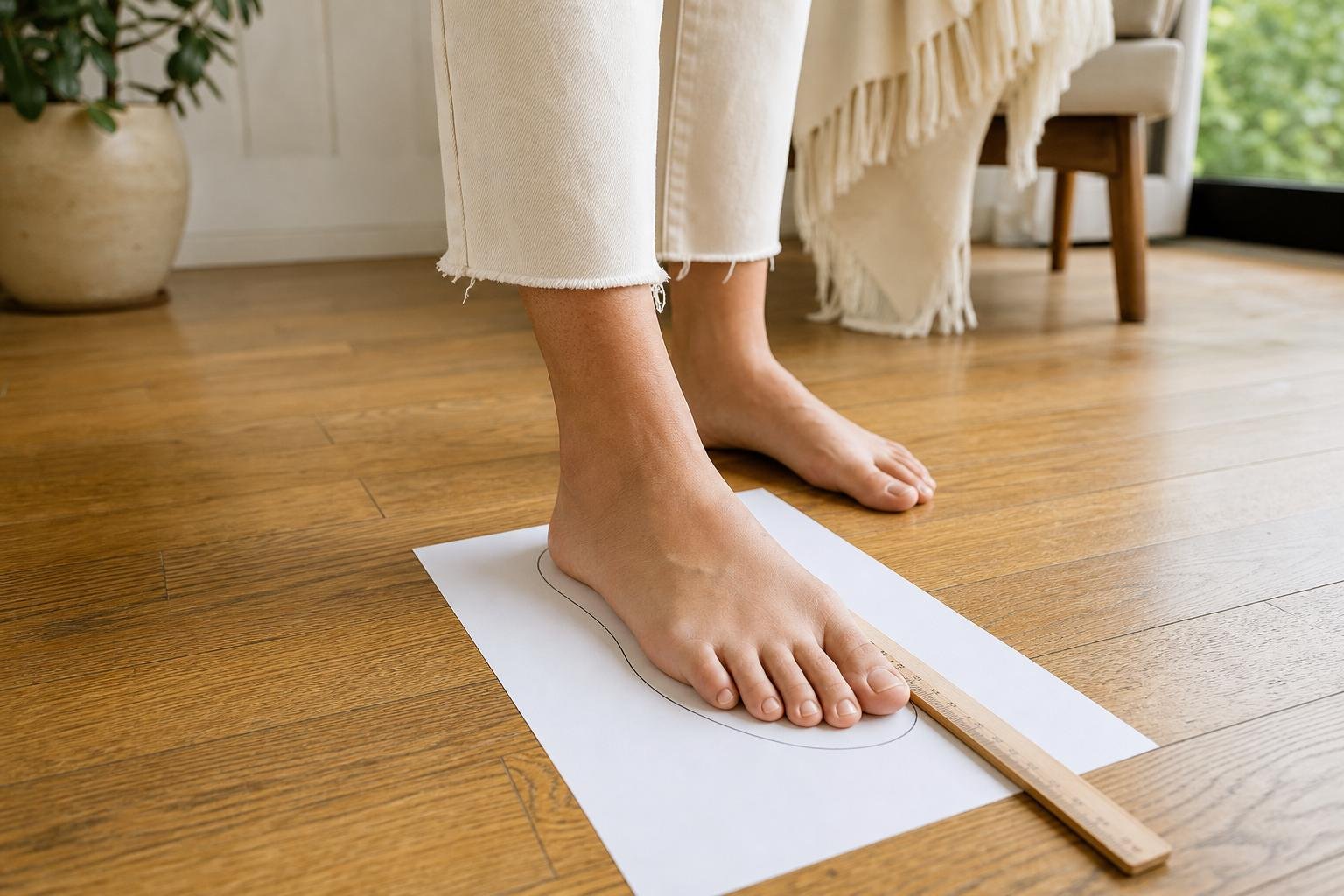
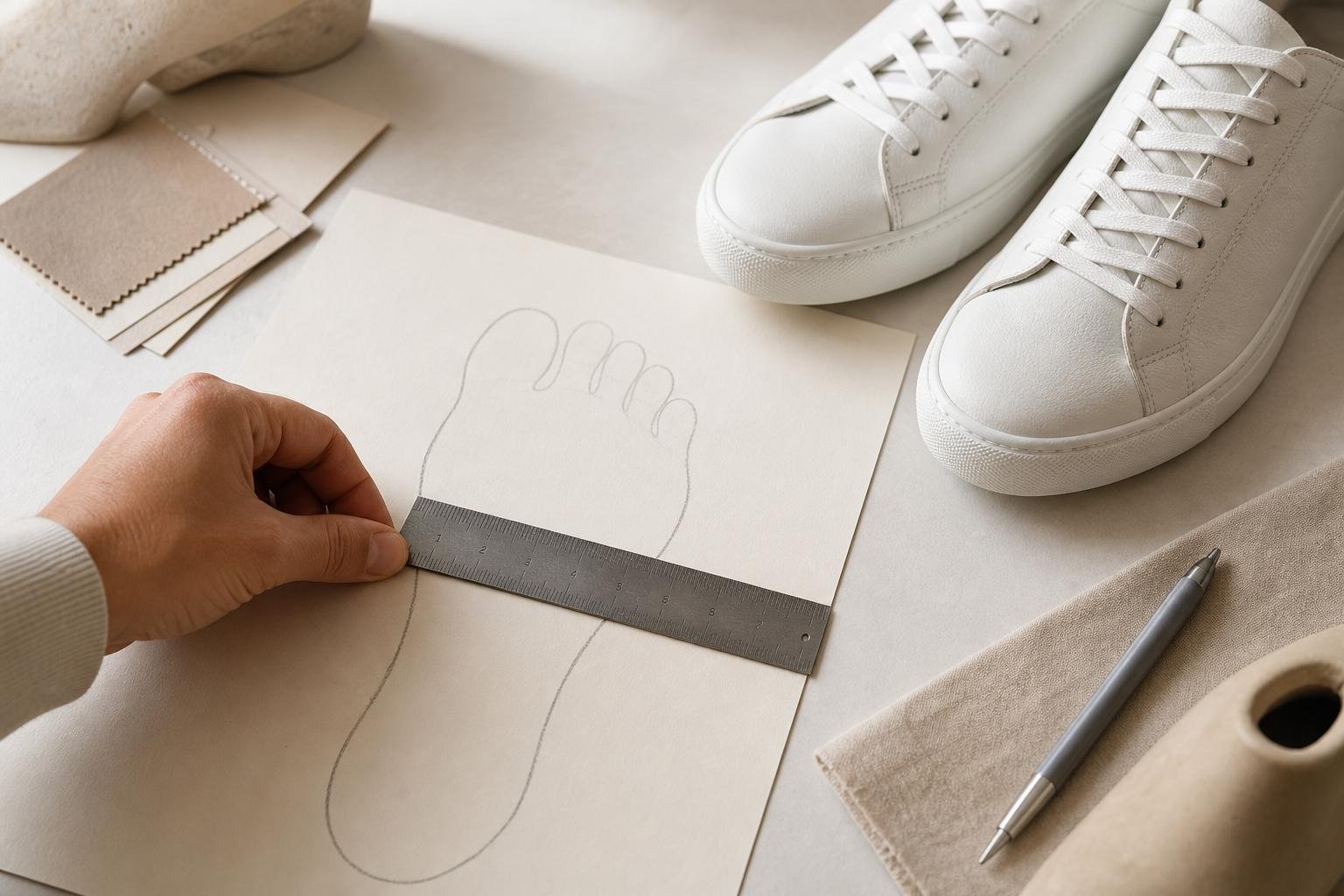
On each outline, measure from the heel to the longest toe. The longest toe is not always the big toe; for some people, the second toe extends farther. Record the measurement in inches first, then centimeters.
Use the larger of your two foot lengths when comparing your result with a brand’s size chart. If your measurement falls between listed sizes, the right choice depends on the shoe type, the brand’s guidance, your foot width, and the amount of toe room the style needs.
Measure the widest part of each traced outline, usually across the ball of the foot. Again, use the larger measurement. Width can be just as important as length, particularly in structured loafers, boots, pointed-toe shoes, and athletic footwear.
A length measurement may identify a likely numerical size, but it cannot tell you whether a narrow, regular, wide, or extra-wide option will be most comfortable. Check the retailer’s or manufacturer’s sizing information whenever width choices are available.
There is no universal standard that makes every US shoe size identical. A women’s size 8 in one label may fit differently from a women’s size 8 in another, and unisex, men’s, and children’s scales are separate systems. For the most dependable result, compare your foot measurement to the chart for the specific shoe you are considering.
Do not rely solely on a generic conversion chart when ordering from an unfamiliar brand. International labels may list US, UK, and European sizes together, but the corresponding fit can still vary with the last—the foot-shaped form used to make a shoe.
| What to compare | Why it matters | Practical approach |
|---|---|---|
| Foot length | Establishes your likely size range | Match your longer foot to the brand chart |
| Foot width | Affects pressure and stability | Look for narrow, wide, or extra-wide options |
| Toe shape | Changes usable interior space | Allow more room in pointed or tapered styles |
| Intended socks | Changes overall volume | Measure and try on with typical socks |
Most shoes should feel secure without pinching, rubbing, or forcing your toes into a compressed position. The exact amount of room varies by category, but a few universal checks can help.
In closed-toe everyday shoes, you generally want a small amount of space between your longest toe and the end of the shoe—often about a thumb’s width, or roughly 3/8 to 1/2 inch (1 to 1.3 centimeters). That space helps account for normal foot movement and swelling.
For running shoes, walking shoes, and hiking boots, adequate toe clearance is especially important. Your foot moves forward during descents and repeated impact, so a cramped toe box can lead to discomfort, blackened toenails, or blisters.
Open-toe sandals are different. Your toes should sit on the footbed without hanging over the front edge, and your heel should not extend beyond the back edge.
The shoe should lie smoothly across the ball of your foot without bulging at the sides or creating numbness. If the upper stretches visibly, the shoe may be too narrow even if the length seems right. A wider size—not simply a longer one—may solve the problem.
Pay attention to the instep, the top arch of your foot. A shoe that feels tight across the top may lack enough volume for your foot shape. Laces can offer some adjustment, while slip-ons, pumps, and some boots provide less flexibility.
Your heel should feel held in place with only minimal movement as you walk. A small amount of motion can be normal in new shoes, particularly with stiff leather, but persistent slipping often signals a fit issue. Before sizing down, try adjusting the laces, using a thinner or thicker sock as appropriate, or testing a heel grip. If the shoe is also tight elsewhere, it may simply be the wrong shape.
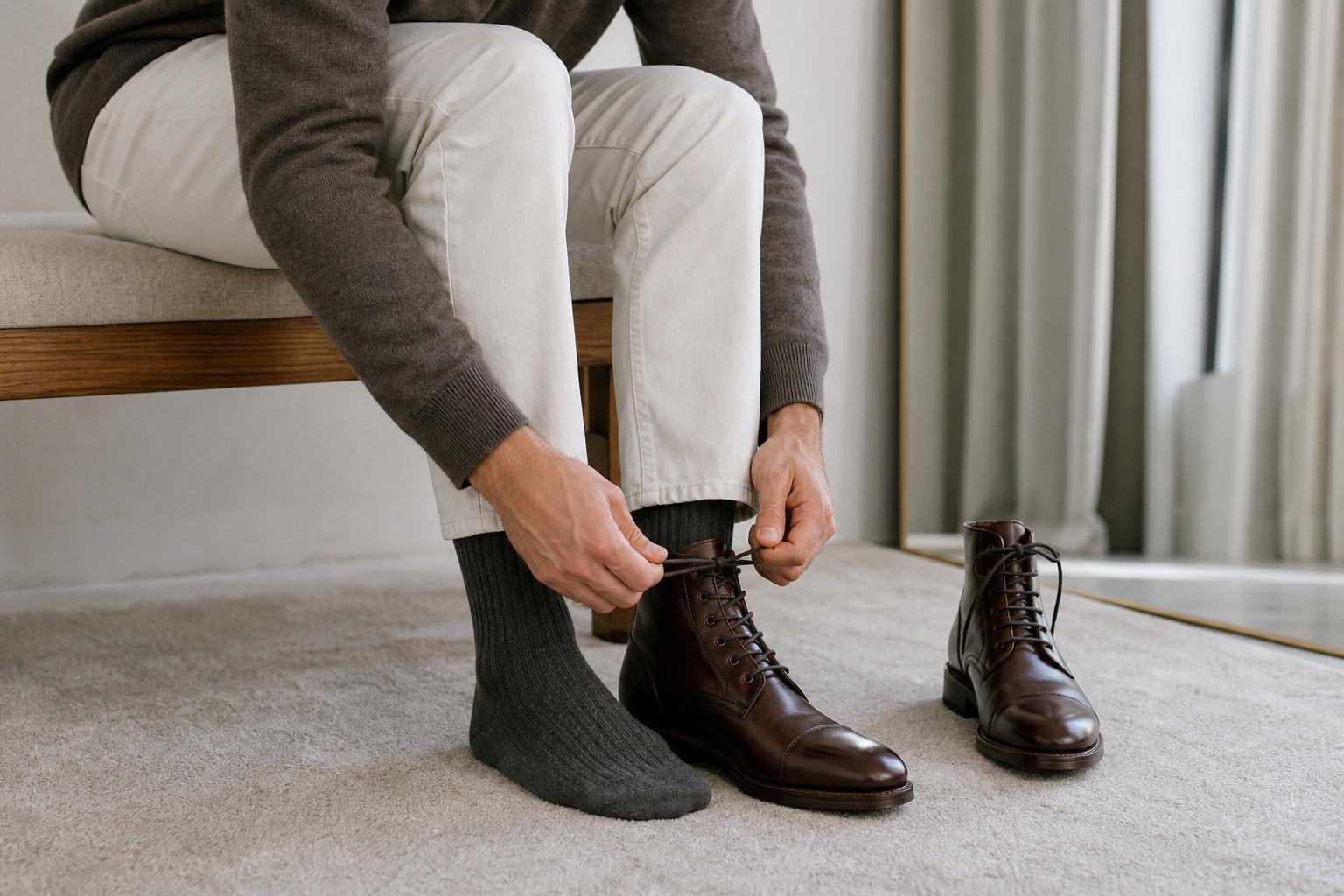
A shoe’s purpose changes how it should fit. Consider the construction and how you will use it rather than applying one rule to every pair.
Athletic shoes should allow toe movement without letting the foot slide around. Try them on with activity-appropriate socks and walk or jog lightly indoors if possible. The heel should stay stable, the midfoot should feel supported, and the toe box should not contact your toes during movement.
For a running shoe, do not assume your casual sneaker size will be correct. Running often calls for extra toe room, while a performance-focused shoe may have a more close-fitting upper.
Boots need enough room for socks, particularly in colder weather, but should not allow major heel lift. Lace-up boots can accommodate a range of instep shapes, while pull-on styles should feel secure through the heel and ankle. Test both feet while standing and walking, since stiff soles can make a boot feel different in motion.
Structured dress shoes may soften slightly with wear, especially if made of leather, but they should not require a painful break-in period. Shoes can relax in width to a degree; they rarely become meaningfully longer. Never buy a too-short pair expecting it to stretch.
With heels, your foot should not slide forward so far that the toes are forced against the front. The heel cup should be stable, and the shoe should feel balanced when you stand. If you are between sizes, assess both the length and the way the upper holds your foot.
Sandals should align with the natural outline of your foot. Straps should be snug enough to stabilize the foot without digging in. With backless mules and slides, a secure fit helps prevent gripping with the toes as you walk, which can cause fatigue.
Do not judge fit only while seated. Walk on a clean indoor surface and notice what happens after several minutes. A new shoe may feel firm, but it should not cause immediate pain.
Common signs a shoe is too small include:
A shoe may be too large if your heel repeatedly lifts, your foot slides forward, the shoe creases heavily across the vamp, or you need to curl your toes to keep it on. Insoles and heel grips can fine-tune a nearly right fit, but they cannot reliably correct a shoe that is substantially too big or too small.
Often, sizing up is the safer choice for closed-toe shoes when your longer foot falls between sizes, especially for athletic shoes and boots. Check the brand chart and make sure the larger size does not create heel slip or excessive width.
No. US men’s and women’s sizing use different scales, and fit can also differ in width and shape. When shopping unisex footwear, use the brand’s conversion chart and compare the listed foot-length measurement.
A shoe that is only slightly snug in width may become more comfortable through normal wear, depending on its materials and construction. However, shoes that are too short, cause pain, or compress your toes should be exchanged for a better size or width.
They can. Factors including swelling, weight changes, pregnancy, injury, and changes in arch support can affect foot length, width, or volume. Re-measure when it has been a while since your last fitting or when familiar sizes no longer feel comfortable.
The best shoe size is the one that matches your longer, wider foot and feels comfortable in motion—not necessarily the number you wear most often. Measure both feet, consult the specific brand’s chart, and evaluate toe space, width, heel security, and intended socks. Those small checks can make buying shoes online or in store far more reliable.