Physical Address
304 North Cardinal St.
Dorchester Center, MA 02124
Physical Address
304 North Cardinal St.
Dorchester Center, MA 02124
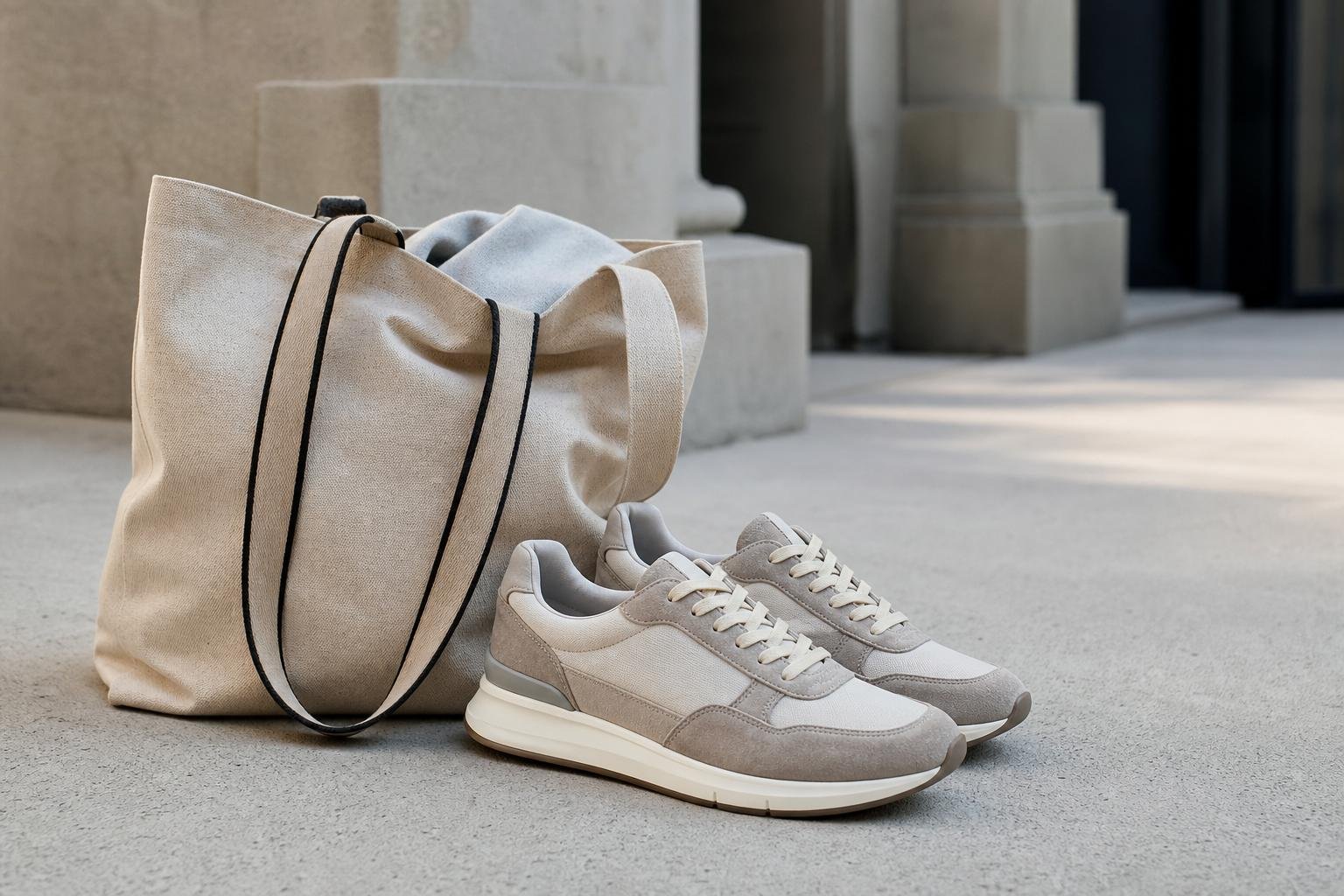
A comfortable walking shoe should support your stride without feeling stiff, heavy, or overly complicated. Use this guide to identify the right fit, features, and silhouette for your routine.
The best shoes for walking do more than feel soft when you first try them on. They need to fit securely at the heel, leave enough room for toes to move, cushion repeated impact, and flex in the right places for a natural stride.
That does not automatically mean choosing the thickest sole or the most technical-looking sneaker. The right pair depends on where, how long, and how often you walk—whether that means commuting on sidewalks, traveling through airports, taking neighborhood loops, or spending long days on your feet. Start with fit and function, then choose a style that works with the rest of your wardrobe.
Walking is a repetitive, low-impact movement, but a poorly fitted shoe can still lead to rubbing, pressure, or tired feet. Look for a pair that feels comfortable immediately, with no expectation that it needs a painful break-in period.
A useful walking shoe balances cushioning with stability. Excessively soft foam can feel pleasant for a short try-on, yet may leave some walkers feeling less supported over a full day. Conversely, a rigid shoe with little cushioning can make pavement feel unforgiving. The goal is a stable platform with enough underfoot protection for your usual surfaces.
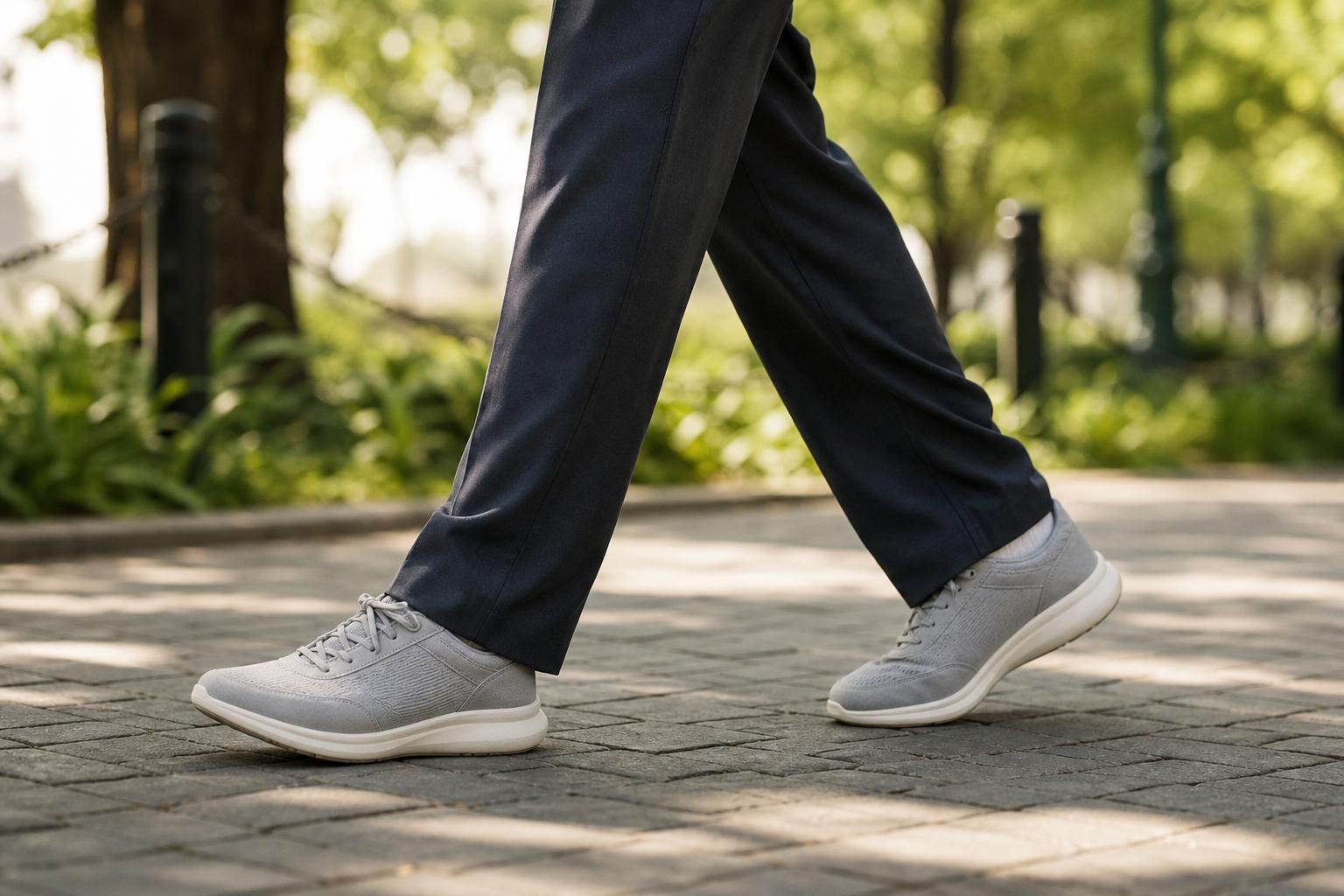
Your heel should sit firmly in place without slipping as you walk. Some movement can signal that the shoe is too large, too wide through the heel, or laced too loosely. A padded collar may add comfort, but fit matters more than padding alone.
At the front, leave about a thumb’s width—roughly 0.5 inch (1.3 centimeters)—between your longest toe and the end of the shoe. Your longest toe is not always your big toe. The toe box should allow your toes to spread naturally rather than pinch together, especially if your feet tend to swell later in the day.
Cushioning absorbs shock and can make long walks feel easier, particularly on concrete or other hard urban surfaces. Lightweight foam midsoles are common in walking-friendly sneakers, while some casual shoes use cushioned footbeds or removable insoles.
More cushioning is not necessarily better. If you prefer a grounded feel, walk mostly on even paths, or find high soles unstable, moderate cushioning may be a better match. Consider where you will wear the pair most often rather than shopping solely by sole thickness.
A walking shoe should bend near the ball of the foot, where your stride naturally rolls forward. It should not fold easily in the middle. A shoe that is too flexible through the arch can feel unsupportive, while one that is overly rigid may make walking feel awkward.
Before buying, gently bend the shoe with both hands. The forefoot should flex, but the heel and midfoot should retain their shape. This quick check cannot replace trying the shoes on, but it helps identify a balanced construction.
The best category for you often comes down to mileage, terrain, and dress code. One person may want a breathable sneaker for daily fitness walks; another may need a polished option for a commute or vacation.
| Walking need | Smart shoe choice | Features to prioritize |
|---|---|---|
| Daily errands and commuting | Cushioned lifestyle sneaker | Grippy outsole, stable heel, easy styling |
| Long city days or travel | Walking or running-inspired sneaker | Lightweight build, breathable upper, roomy toe box |
| Fitness walking | Dedicated walking shoe | Flexible forefoot, structured midfoot, durable outsole |
| Casual office settings | Supportive leather sneaker or loafer | Cushioned insole, secure fit, low stable heel |
| Wet or uneven paths | Trail-inspired walking shoe | Textured traction, protected toe, secure lacing |
A supportive sneaker is often the most versatile choice for day-to-day walking. Look for a sole that feels substantial without being difficult to move in, plus a low-profile shape that works with jeans, trousers, leggings, and casual dresses.
Leather or suede sneakers can look refined, but mesh and knit uppers are usually more breathable. If your feet run warm or you walk in humid conditions, airflow may matter more than a fashion-forward finish.
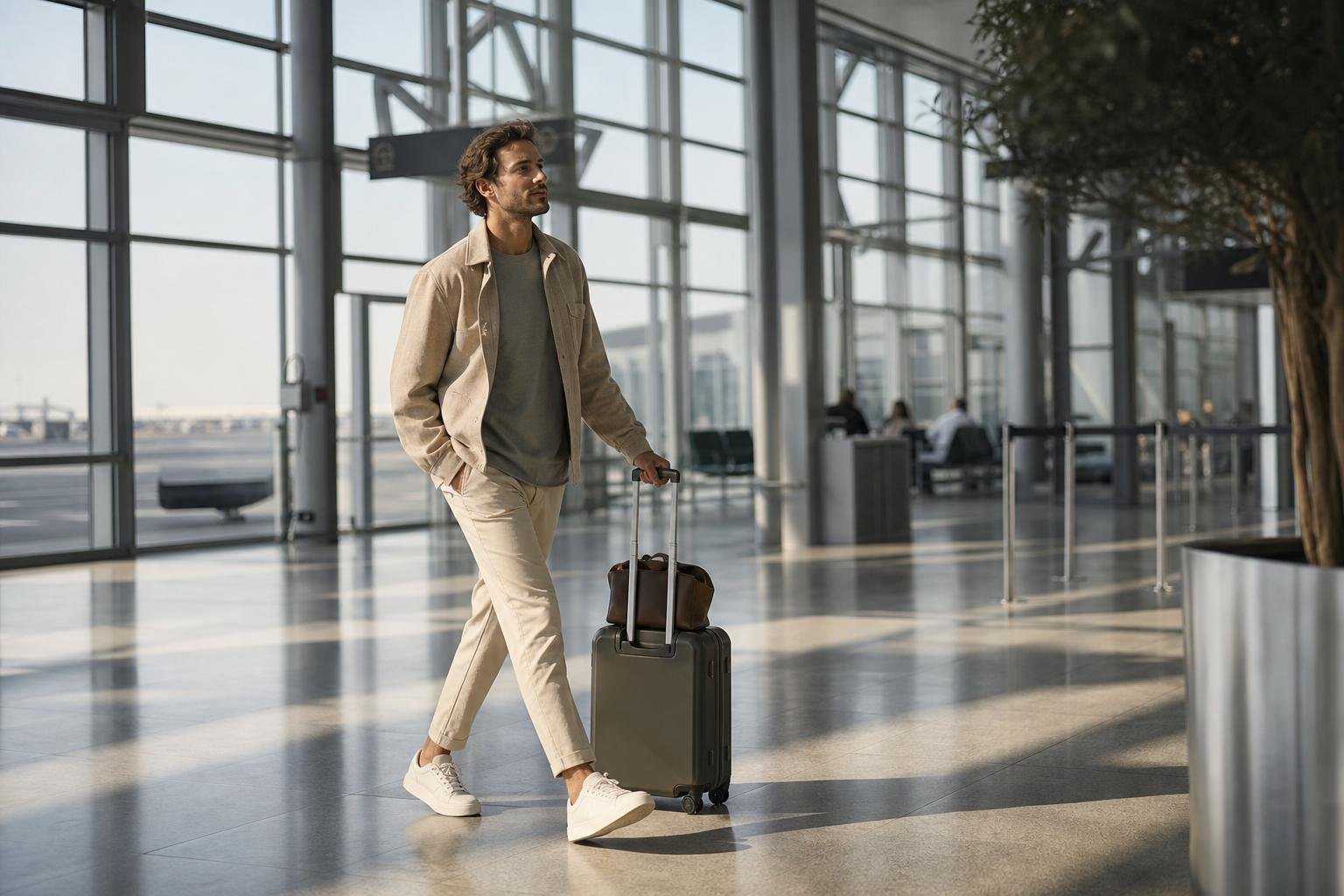
If walking is a primary form of exercise, a shoe designed for consistent mileage is worth considering. These styles typically prioritize a flexible forefoot, structured upper, and cushioning designed for repeated steps.
Try on several options rather than assuming one type of support works for everyone. Some walkers prefer a neutral shoe with a straightforward platform, while others feel better in a model with added guidance through the midfoot. Comfort and a natural stride should guide the choice; a shoe should not feel as though it is forcing your foot into an unfamiliar position.
Walking comfort is not limited to athletic footwear. A well-made leather sneaker, a supportive loafer, or a low-profile lace-up can suit a more polished wardrobe. Focus on the same essentials: a stable sole, enough toe space, a secure heel, and cushioning that does not flatten immediately.
Avoid treating a thin, flat fashion sole as an all-day walking shoe simply because it is easy to pack. It may work for a short outing, but repeated pavement walking usually calls for more protection and grip.
Fit is the most important part of buying comfortable walking shoes. Even an excellent construction will not compensate for a shoe that is too short, narrow, loose, or shallow.
Shop later in the day if possible, when feet may be slightly fuller. Wear the socks you expect to use for walking, especially if you alternate between thin everyday socks and thicker athletic styles. Try both shoes, lace them as you normally would, and walk on a firm surface.
Pay attention to these signals:
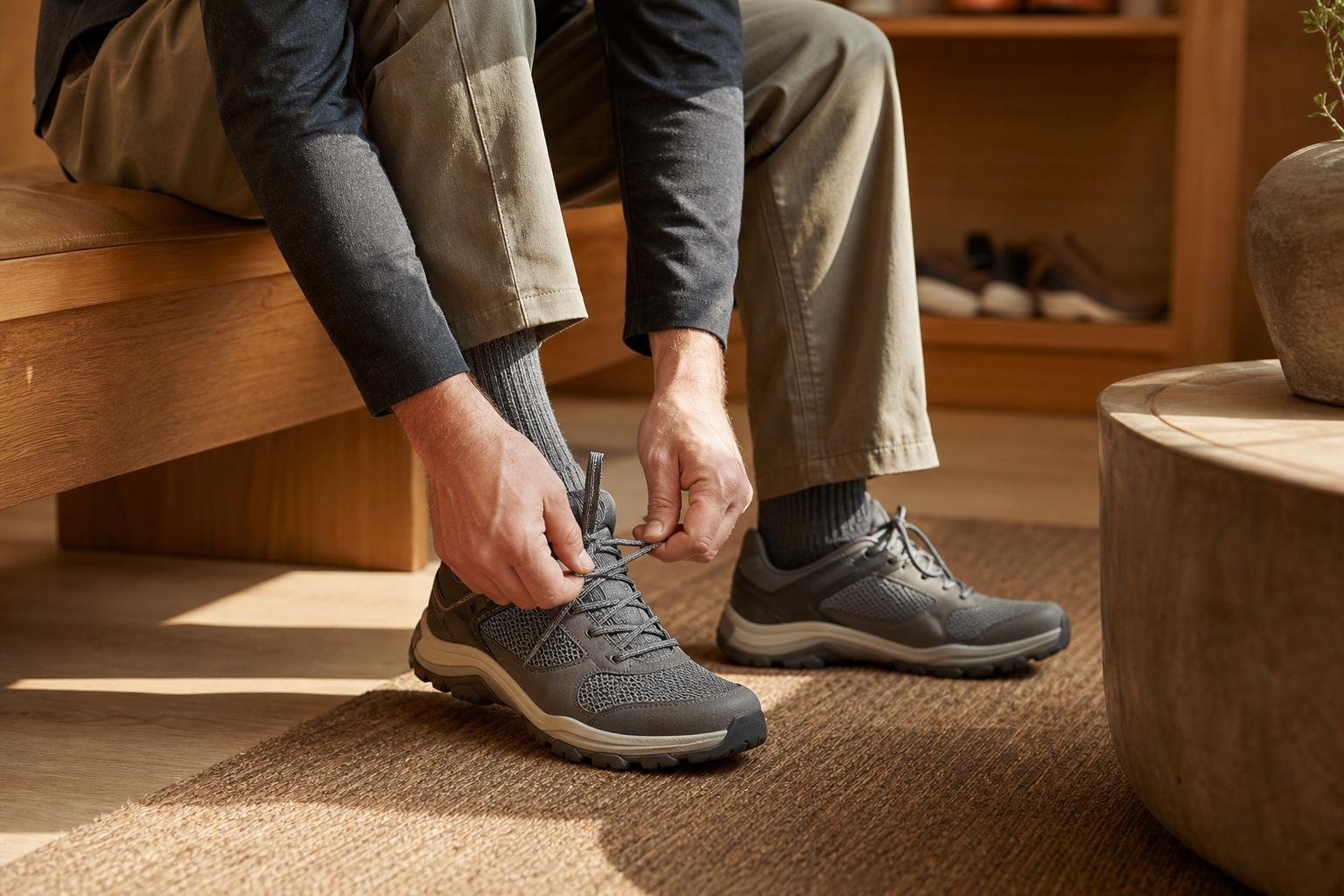
Width is just as important as length. A shoe that feels tight at the sides is not likely to stretch enough to become a reliable walking pair. If available, try a different width before going up a full size, since extra length can create heel slip.
Small design choices can make a meaningful difference over a long day. A removable insole gives you the option to use an orthotic or a replacement footbed, while a padded tongue can reduce pressure from laces. A gusseted tongue, attached along the sides, can help keep it centered.
Outsole traction matters too. Smooth soles are less reassuring on wet sidewalks, glossy floors, or packed dirt. Look for visible rubber coverage and a tread pattern appropriate for your environment. Deep, aggressive lugs are useful for trails but may be unnecessary for routine city walking.
Laces offer more adjustment than slip-on designs, particularly when your feet fluctuate in volume. That said, slip-ons can work well when they have a secure upper and a heel that does not lift. Always walk several steps before deciding; standing still will not reveal how the shoe behaves in motion.
A walking shoe does not need to be a specialty purchase, but a few common shortcuts can result in discomfort.
First, do not buy based only on appearance or a single quick step in front of a mirror. Walk around long enough to notice toe pressure, heel movement, or arch discomfort. Second, do not size down to make a sneaker look sleeker. A streamlined profile is not worth cramped toes.
Also be careful about saving a favorite pair long past its useful life. When cushioning feels compressed, the outsole is worn smooth, or the shoe no longer feels stable, it may be time to replace it. Wear patterns vary widely depending on body weight, walking surface, gait, and frequency of use, so pay attention to condition rather than relying on a fixed timeline.
No. They should feel secure but comfortable from the start. Materials may soften slightly with wear, but tightness, toe pressure, numbness, or rubbing are signs to try another size, width, or style.
They can be. Many running shoes have cushioning and flexibility that suit walking well. Choose based on your comfort, stability needs, and the type of walking you do rather than the activity printed on the label.
Not for every person. Some people prefer noticeable arch support, while others are most comfortable in a more neutral shoe. The best choice is one that supports your foot comfortably without creating pressure or pain.
Some flat shoes are suitable for all-day wear if they have a supportive footbed, a stable sole, and enough cushioning. Very thin, unsupportive soles are less likely to feel comfortable on hard surfaces for extended periods.
The best shoes for walking should make your day easier, not demand attention with every step. Prioritize a secure fit, sufficient toe room, a stable base, and cushioning that suits your usual distance and terrain. Once those fundamentals are in place, choose the sneaker, casual shoe, or walking style that fits naturally into your everyday wardrobe.