Physical Address
304 North Cardinal St.
Dorchester Center, MA 02124
Physical Address
304 North Cardinal St.
Dorchester Center, MA 02124
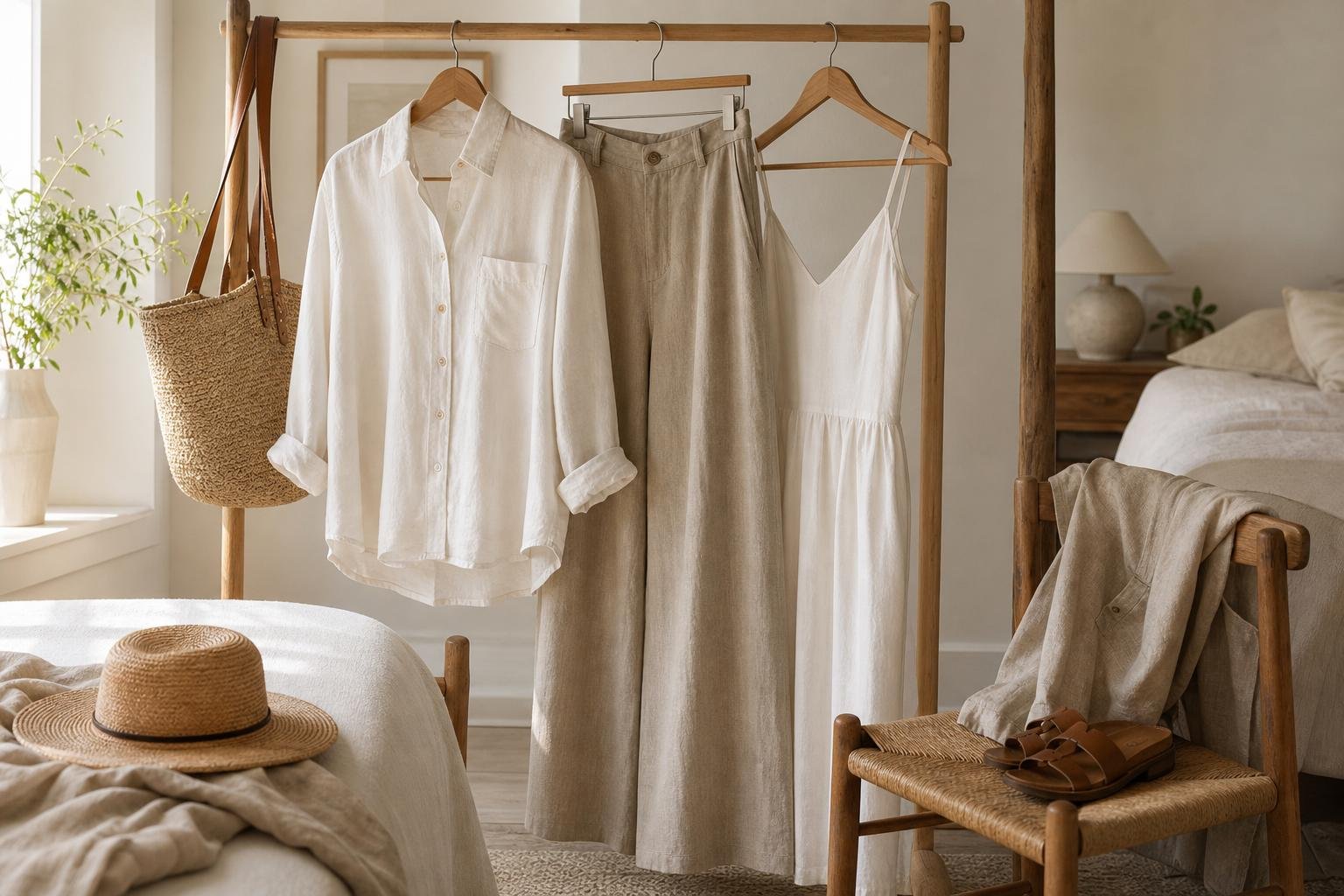
Linen gets softer with thoughtful laundering, but high heat and harsh products can shorten its life. Follow these practical steps to keep linen clothing clean, comfortable, and beautifully relaxed.
Linen has an appealingly lived-in character: breathable, lightly textured, and softer with wear. It is also stronger than it looks, especially when cared for with moderate temperatures and gentle handling. The essential rule for how to wash linen is simple: follow the garment’s care label first, then avoid excessive heat, harsh chemicals, and over-drying.
Whether you are laundering a crisp linen button-down, relaxed trousers, a dress, or bedding, the right routine helps preserve the fibers’ strength while encouraging the softness that makes linen worth reaching for every warm-weather season.
Not all linen garments need the same treatment. A simple garment made from 100 percent woven linen is often machine washable, while tailored jackets, lined dresses, embellished pieces, and items labeled “dry clean only” need more caution. Linen may also be blended with cotton, rayon, silk, or synthetic fibers, which can change the recommended wash and dry settings.
Check for three details before doing laundry:
For washable pieces, turn garments inside out before washing. This minimizes surface abrasion and helps protect color, particularly on darker linen or printed styles.
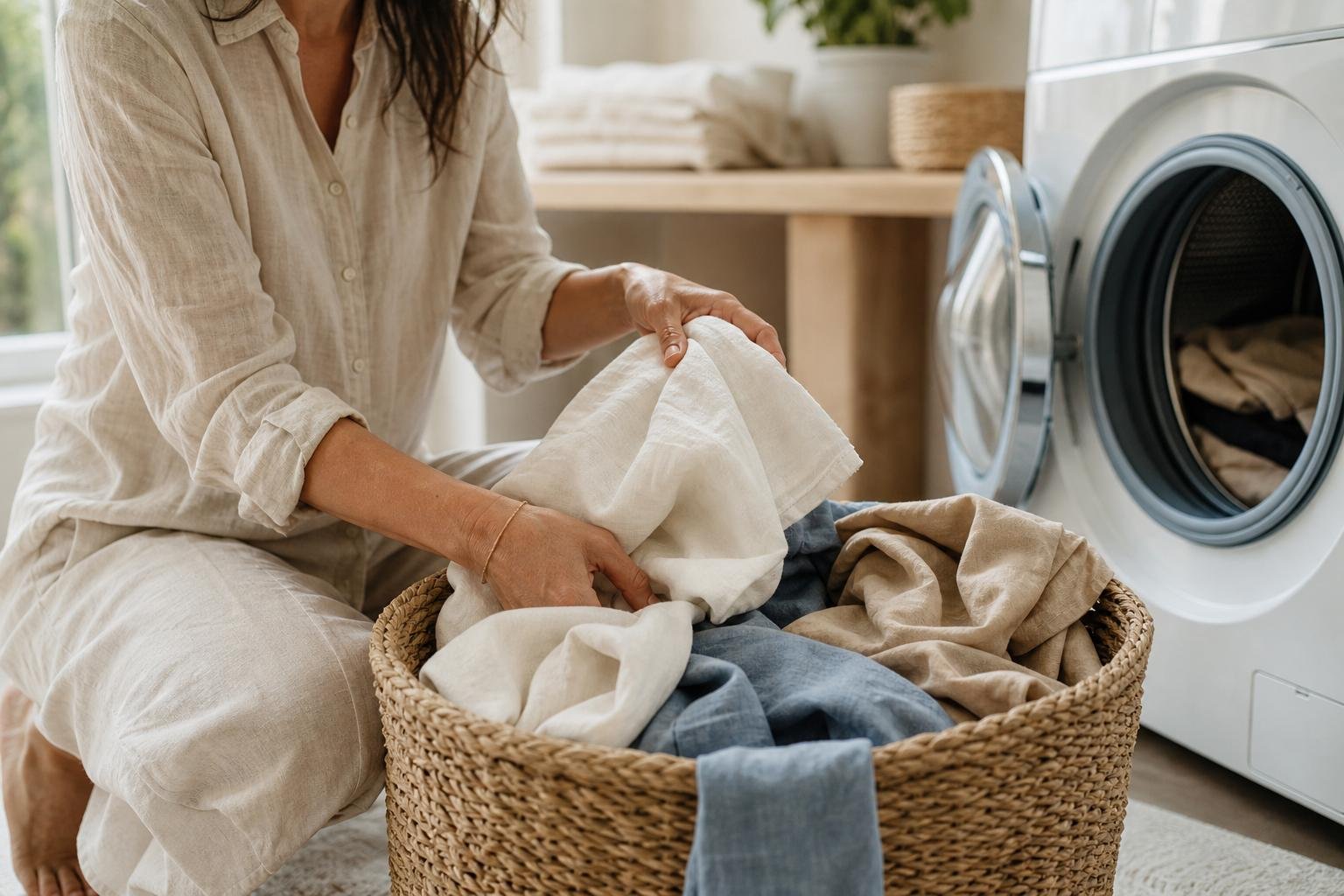
Most everyday linen clothes can be machine washed. Use a gentle or delicate cycle with cool or lukewarm water. Hot water is not necessary for routine cleaning, and repeated exposure to high heat can contribute to shrinkage, fading, and a rougher hand feel.
Wash linen with similarly lightweight items and like colors. Avoid packing the machine tightly: linen benefits from room to circulate through the water, and an overloaded drum creates more friction and wrinkling.
Use a gentle liquid or powder detergent without bleach. A standard amount is enough; using too much detergent can leave residue in the fibers, making linen feel stiff rather than soft.
Skip chlorine bleach, which can weaken natural fibers and cause yellowing over time. If you need to brighten white or pale linen, choose an oxygen-based bleach only if both the garment label and product directions allow it. Test any treatment on an inconspicuous area when possible.
Fabric softener is generally unnecessary. Linen naturally softens over repeated washing and wearing. Traditional softeners can coat fibers, reducing linen’s absorbency and potentially leaving buildup behind.
A gentle cycle is a reliable choice for linen shirts, dresses, skirts, and lightweight trousers. A normal cycle may be appropriate for sturdier items such as linen sheets or towels if the care label permits it.
Cool water is especially useful for colored linen because it helps limit dye loss. Lukewarm water can be helpful for white linen or more heavily soiled garments. Reserve warm temperatures for labels that specifically permit them, and avoid hot water unless the item’s instructions clearly call for it.
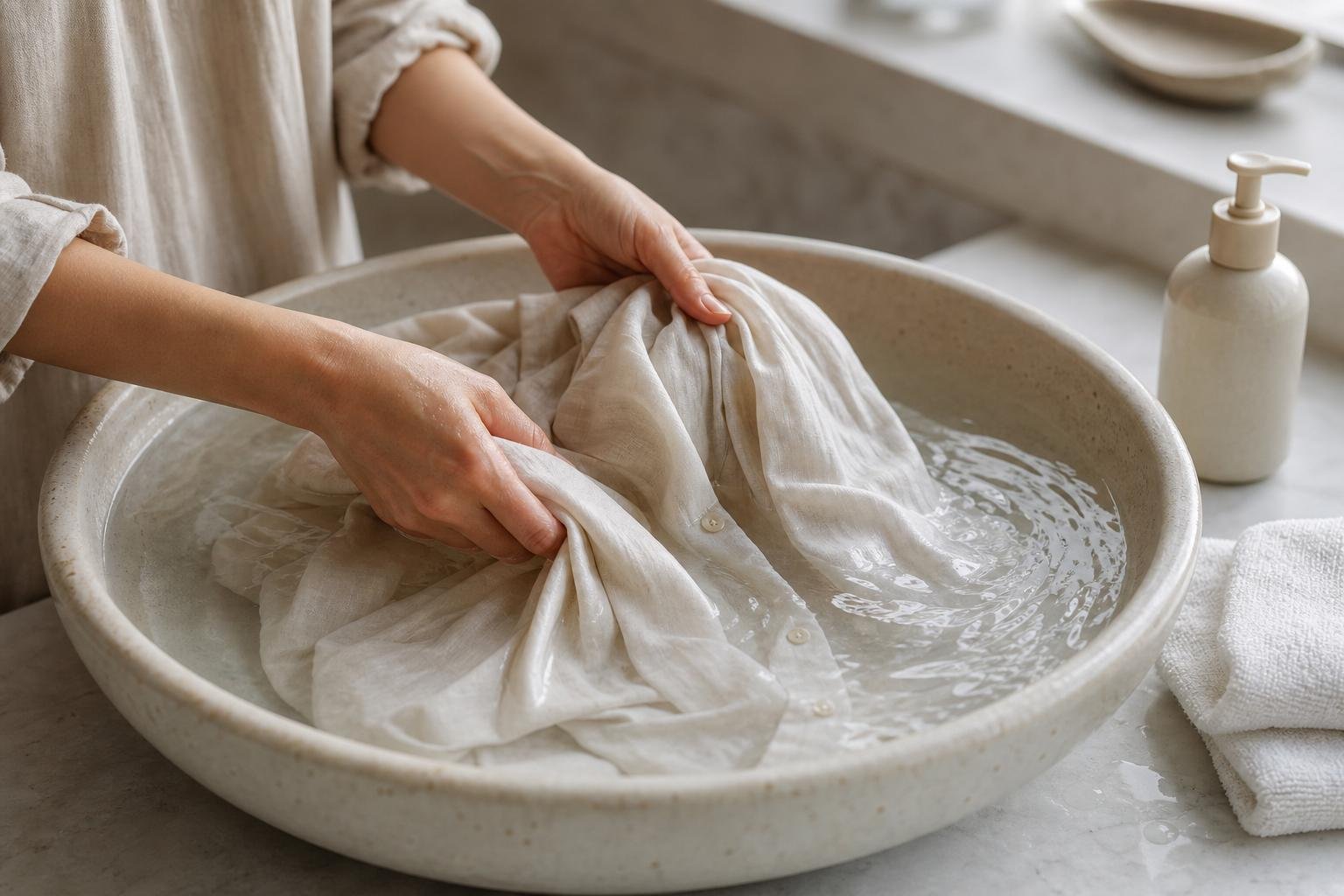
Hand-washing is a smart option for fine linen, open weaves, vintage garments, items with delicate details, or pieces that have lost some structural integrity with age.
Fill a clean basin with cool or lukewarm water and add a small amount of mild detergent. Submerge the garment and gently move it through the water. Let it soak briefly if needed, but do not scrub aggressively, twist the fabric, or leave it submerged for an extended period.
Rinse with clean water until detergent is gone. To remove excess moisture, press the garment gently against the side of the basin or lay it flat inside a clean towel and roll the towel up. Do not wring linen, which can distort seams and create stubborn creases.
Prompt treatment gives you the best chance of removing a stain without resorting to aggressive washing. Blot fresh spills rather than rubbing them deeper into the weave. Then apply a small amount of mild detergent or an appropriate fabric-safe stain treatment to the affected area.
Let the treatment sit for the period directed on its label, then wash the garment according to its care instructions. Check the stain before drying. Heat from a dryer or iron can set discoloration, making it harder to remove later.
For oil-based stains, a small amount of dish soap may help break down grease, but use it sparingly and rinse thoroughly. For wine, coffee, or food stains, cool water and a gentle stain treatment are safer starting points than strong bleach. When in doubt—especially with colored, vintage, or dry-clean-only linen—consult a professional cleaner.
The drying stage has a major effect on how linen looks and feels. Air-drying is the lowest-risk method, particularly for garments prone to shrinking or losing shape. Lay knits and loosely woven pieces flat on a clean towel or drying rack; hang woven shirts, dresses, and trousers on sturdy hangers, smoothing seams and plackets as you go.
Keep colored linen away from prolonged direct sunlight, which can fade dyes. White linen can tolerate some sun exposure, but avoid leaving any garment outdoors long enough to become stiff and overly dry.
A tumble dryer can be useful when the care label allows it. Choose low heat and remove linen while it is still slightly damp. This reduces the risk of over-drying and makes wrinkles easier to release. Give the garment a light shake, reshape it by hand, then hang or lay it flat to finish drying.
| Drying method | Best for | Key consideration |
|---|---|---|
| Air-dry on hanger | Shirts, dresses, woven trousers | Smooth seams to reduce wrinkles |
| Dry flat | Knits, loose weaves, delicate pieces | Helps prevent stretching |
| Tumble dry on low | Label-approved everyday linen | Remove while slightly damp |
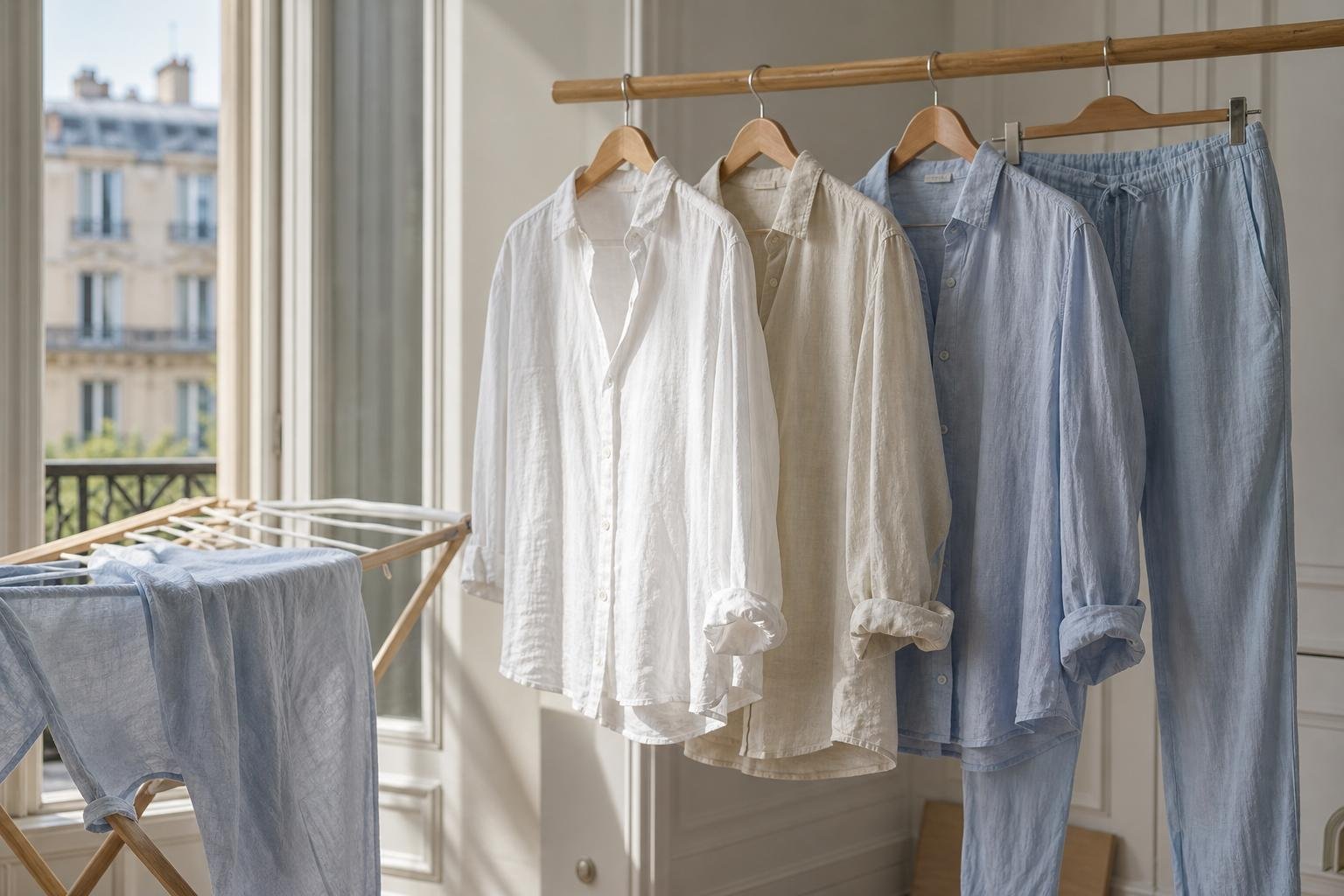
Linen wrinkles easily, and that is part of its natural appeal. If you prefer a polished finish, iron linen while it is still slightly damp. Use a medium to high heat setting appropriate for linen, and check the garment label before starting.
For darker colors, prints, embroidery, or garments with a visible texture, iron inside out to help prevent shine. A pressing cloth provides another layer of protection for delicate details. Steam can loosen creases effectively, whether from a steam iron or a garment steamer.
If you prefer linen’s relaxed look, skip the iron. Smooth the garment with your hands after washing, hang it neatly, and let its natural texture do the styling.
Linen does not need washing after every brief wear unless it is visibly soiled or has absorbed perspiration. Over-laundering adds unnecessary wear, especially to lightweight garments. Air a linen blazer, overshirt, or wide-leg trouser between wears, and spot-clean small marks as soon as you notice them.
Store clean, fully dry linen in a cool, dry place. Avoid sealed plastic bags for long-term storage, as natural fibers benefit from airflow. Fold knit linen to prevent stretching; hang woven pieces on broad, smooth hangers if closet space allows.
Linen can shrink, particularly when it is exposed to hot water or high dryer heat. Follow the care label, use cool or lukewarm water, and air-dry or tumble dry on low to limit shrinkage. Pre-washed linen may be more stable, but it still benefits from gentle laundering.
Yes, provided you wash it with similar colors and lightweight fabrics. Avoid washing linen with heavy jeans, towels, or items with rough hardware, which can increase abrasion and snagging.
Stiffness can come from detergent residue, mineral-heavy water, or drying the garment too thoroughly. Use the correct amount of detergent, make sure linen is fully rinsed, and remove it from the dryer while slightly damp. Linen should soften naturally with regular, careful washing.
Linen rewards a low-fuss, low-heat approach. Wash washable pieces in cool or lukewarm water with mild detergent, avoid chlorine bleach and unnecessary fabric softener, and dry with restraint. With each gentle wash, linen typically becomes more supple while retaining the breezy texture that makes it a wardrobe staple.