Physical Address
304 North Cardinal St.
Dorchester Center, MA 02124
Physical Address
304 North Cardinal St.
Dorchester Center, MA 02124

Comfortable walking shoes should support your stride without sacrificing your everyday style. Use this guide to compare cushioning, fit, durability, and versatile shoe types.
A shoe can look polished on the way out the door and still feel punishing by midafternoon. The best shoes for walking all day balance cushioning, stability, flexibility, and a fit that leaves enough room for natural foot movement. The right choice also depends on where you walk, how long you are on your feet, and whether your outfit needs to lean casual, professional, or dressy.
Rather than shopping by appearance alone, start with how a shoe supports your daily routine. A commuter walking on concrete needs something different from a person who spends a shift standing indoors or explores a city on vacation.
Comfort is not one feature. It is the way several details work together over hours of movement.
A supportive shoe should have a stable base that does not feel wobbly underfoot. The heel counter—the structured section around the back of the heel—should hold your foot in place without digging in. A secure heel reduces slipping, which can contribute to blisters and toe gripping.
Cushioning matters, but more is not always better. Very soft foam can feel pleasant at first yet unstable for some walkers, especially on uneven sidewalks. Look for cushioning that rebounds gently while still letting you feel steady. A modestly flexible forefoot is also useful because it allows the shoe to bend where your foot naturally bends.
Pay attention to the toe box. Your toes should be able to spread slightly when you stand and walk. Shoes that taper sharply at the front may look sleek, but they can create pressure over a long day. A rounded or almond-shaped toe often offers a more practical compromise between comfort and a refined silhouette.
The outsole is another overlooked factor. Rubber or textured soles generally offer more dependable grip than smooth leather-like soles, particularly on wet pavement, slick floors, or stairs. Durable outsole material can also extend the wearable life of a frequently used pair.
Try shoes on later in the day when feet may be a little fuller from normal activity. Wear the sock thickness you expect to use with the shoes. If you plan to wear them with thin trouser socks, testing in thick athletic socks can give a misleading impression of fit.
There should be roughly a thumb’s width—about 1/2 inch (1.3 cm)—between your longest toe and the front of the shoe. Your longest toe is not always your big toe. Walk around indoors and note whether the heel lifts, the arch presses uncomfortably, or the upper pinches across the ball of the foot.
Do not assume a stiff, painful shoe simply needs more break-in time. Some materials will soften, but a shoe that feels too narrow, rubs sharply, or slips noticeably from the start is unlikely to become an all-day favorite.
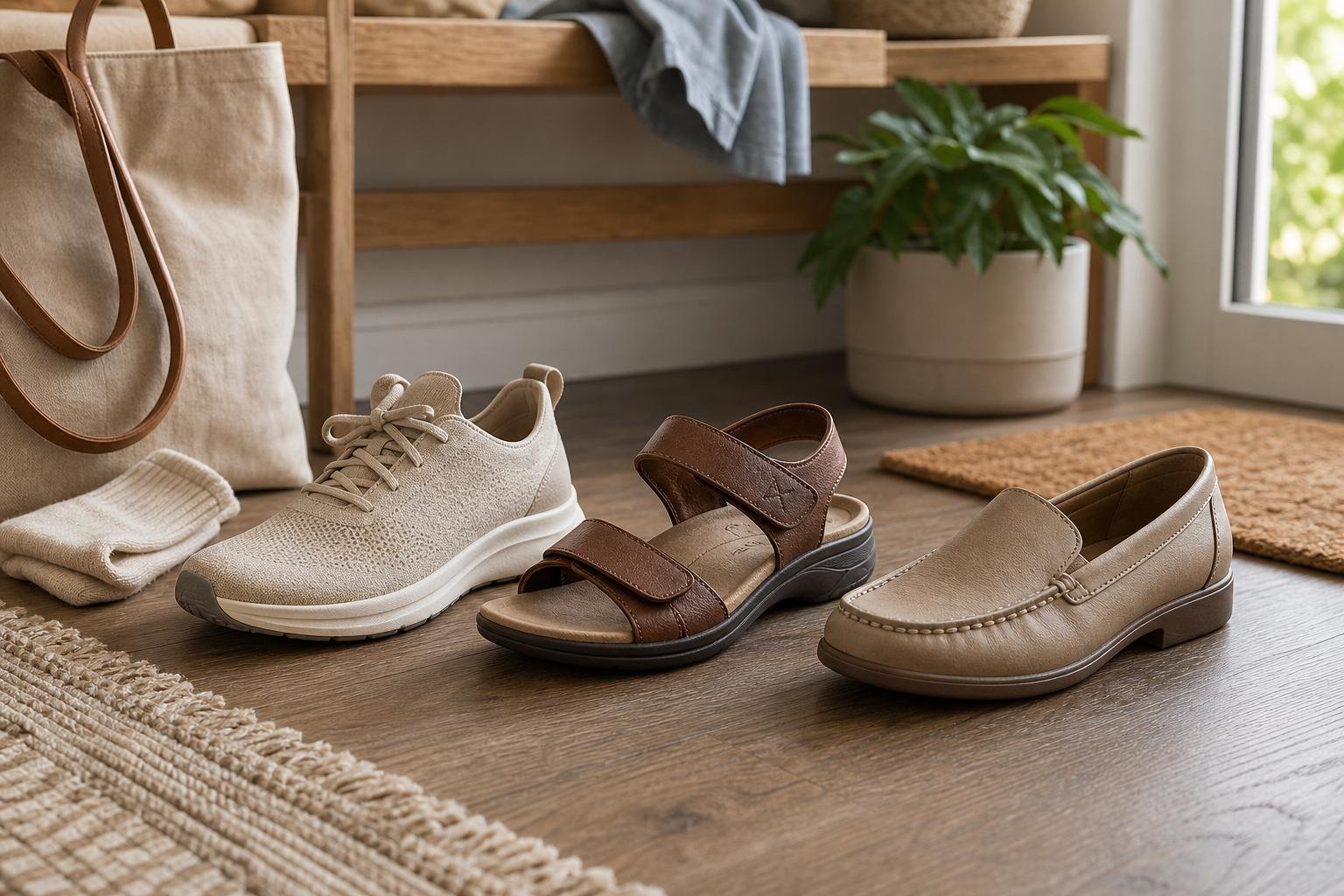
The most useful walking shoe is one you will actually wear often. These categories can help narrow the search while leaving room for personal style and dress codes.
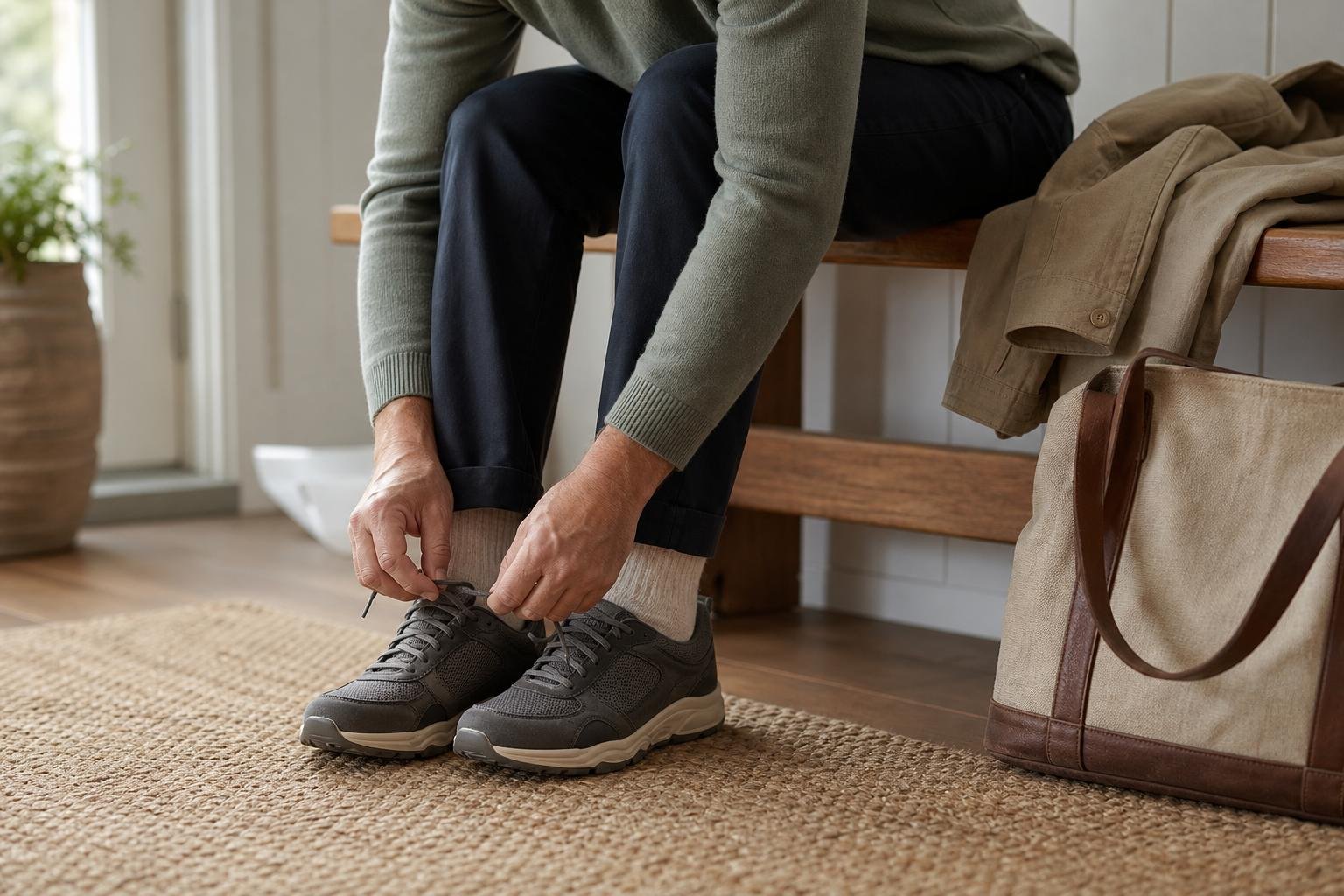
A well-made sneaker is often the simplest choice for long days on foot. Look for a cushioned midsole, a stable heel area, breathable upper material, and a grippy outsole. A low-profile sneaker in leather or a clean synthetic finish can work with straight-leg jeans, relaxed trousers, casual dresses, and matching sets.
For a more athletic look, choose a running-inspired sneaker with a secure lace-up closure. Laces allow you to adjust the fit through the midfoot, which can be helpful if one foot is slightly larger or your feet tend to swell during the day.
Keep white or light-colored sneakers looking intentional by wiping off surface dirt promptly with a soft damp cloth. Let them air-dry away from direct heat, which can affect adhesives and materials.
Warm-weather footwear can be comfortable for long distances when it includes adjustable straps, a supportive footbed, and a secure heel strap. Slides and flat sandals are easy to wear, but they often require the toes to grip the shoe with every step. That can become tiring over time.
Choose sandals with straps across the forefoot and around the ankle or heel. A slightly contoured footbed may feel more secure than a completely flat sole. Pair them with linen pants, cotton poplin skirts, shorts, or breezy midi dresses for easy summer outfits.
Avoid relying on a new pair of sandals for a full-day outing without first wearing them for shorter walks. Straps can rub in places that are not obvious when you are only standing still.
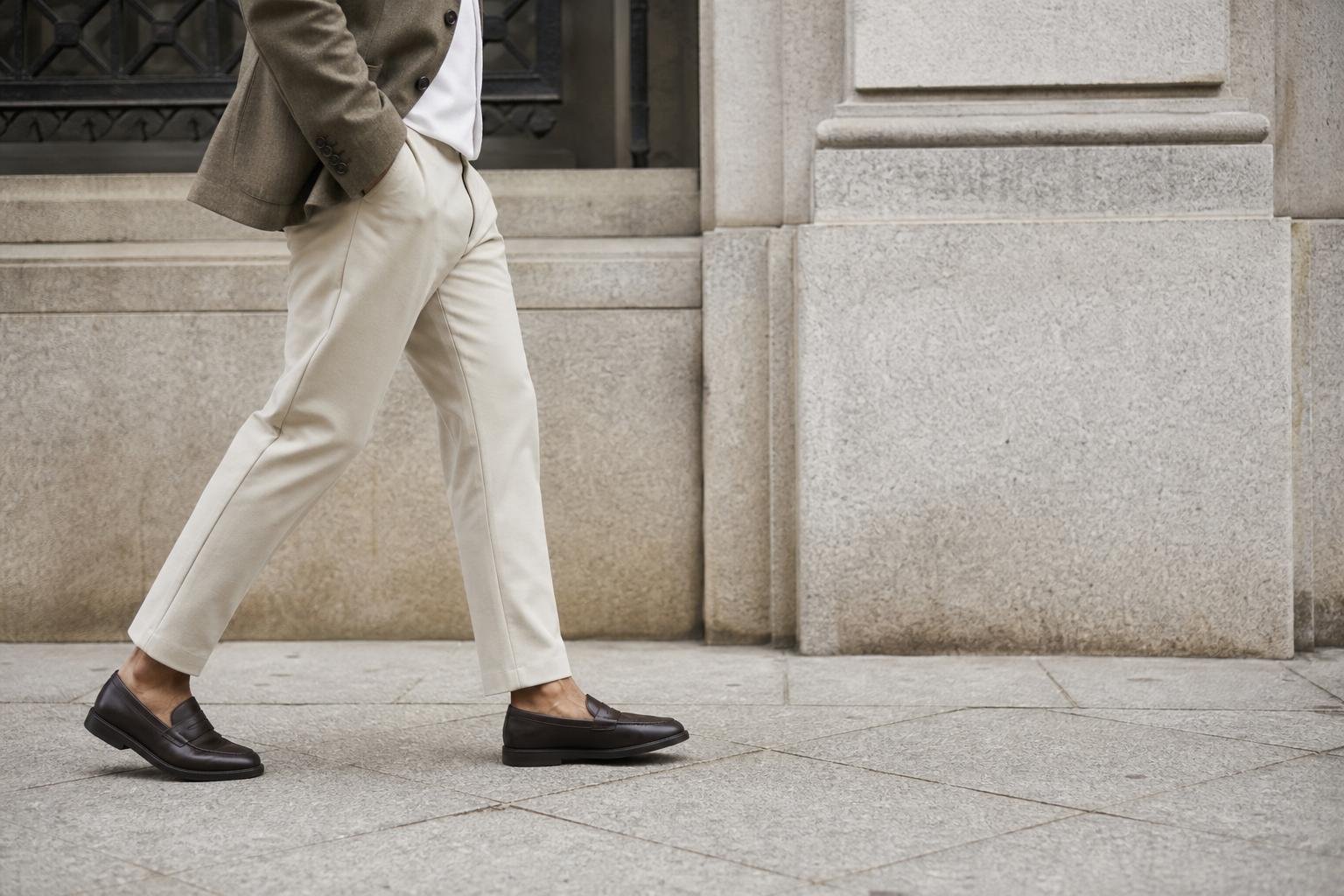
Loafers can be a strong option for workplaces and occasions where sneakers feel too casual. The most walkable versions have a flexible sole, a cushioned insole, a roomy toe shape, and enough structure to stay on the foot without gripping.
A low vamp can make a loafer feel more streamlined, but it should not cut into the top of your foot. If the shoe is leather, expect some gradual softening but not a dramatic change in length or width. Consider thin no-show socks or hosiery if friction is a concern, especially during the break-in period.
For flats, prioritize styles with a strap, higher vamp, or more substantial upper. Extremely thin ballet-style flats can be elegant, but minimal soles and loose heel fit may not suit a full day of pavement walking.
Ankle boots can work well in cooler weather when the heel is low and broad, the sole has traction, and the shaft does not rub at the ankle. A block heel around 1 to 2 inches (2.5 to 5 cm) can provide a bit of elevation while remaining more stable than a narrow heel.
Choose boots with a side zipper or laces for easier entry and a more adjustable fit. They pair naturally with denim, midi skirts, opaque tights, and tailored trousers. If you are wearing boots for an extended commute, make sure there is enough room for socks without crowding your toes.
When comparing options, focus on construction and fit before color. A useful in-store or at-home checklist includes:
If you are between sizes, length alone should not determine the decision. The better option is usually the one that gives your toes adequate space while holding the heel securely. A shoe professional can also help assess width needs, which vary more than many shoppers realize.
Break in a new pair gradually. Start with a short errand or a few hours at home, then increase wear time. If a particular area begins to rub, stop and address it before it becomes a blister. Moisture-wicking socks, blister bandages, and a properly adjusted lacing pattern can help, but they should not be used to force an ill-fitting shoe into working.
Comfortable shoes do not require an overly casual outfit. The key is choosing proportions that make the footwear look deliberate.
With sneakers, straight-leg jeans, ankle-length trousers, and midi dresses create an easy visual balance. A cropped hem that shows a little ankle can keep a bulkier sneaker from feeling heavy. For a streamlined office-casual outfit, try minimalist sneakers or loafers with tailored pants and a relaxed button-down shirt.
With walking sandals, use natural fabrics and uncomplicated shapes. A woven tote, lightweight overshirt, or small crossbody bag keeps the outfit practical without competing with the footwear.
With loafers or boots, add a structured layer such as a blazer, trench-style coat, or knit jacket. These pieces can make low, supportive shoes feel appropriate for more polished settings.
No. They should feel secure but not tight. Some uppers may soften with wear, but your toes should have room from the start and no area should cause sharp rubbing or numbness.
Some are, but a completely flat, thin-soled shoe may not provide enough cushioning or stability for long periods on hard surfaces. Look for a supportive footbed, secure fit, and durable outsole.
Replace them when the outsole is worn unevenly, cushioning feels compressed, the upper no longer holds your foot securely, or the shoes begin causing discomfort that was not present before. The timeline depends on how often and where you wear them.
Insoles can improve cushioning or support for some people, especially when a shoe has a removable footbed. They also take up space, so make sure the shoe still fits comfortably once the insole is added.
The best all-day walking shoes feel stable, fit comfortably from the beginning, and suit the way you dress and move through your day. Prioritize a secure heel, room for your toes, reliable traction, and cushioning that supports rather than overwhelms your stride. A versatile sneaker, structured sandal, cushioned loafer, or low-heeled boot can all earn a place in a practical footwear rotation when the fit is right.