Physical Address
304 North Cardinal St.
Dorchester Center, MA 02124
Physical Address
304 North Cardinal St.
Dorchester Center, MA 02124

Curtain bangs are versatile, but their shape depends on your hair texture, cut, and styling routine. Use these simple techniques to create a soft, face-framing finish at home.
Curtain bangs have a soft, parted shape that opens around the forehead and tapers into longer face-framing pieces. They can make a simple ponytail, loose waves, or polished blowout feel more intentional without requiring a dramatically short fringe.
Learning how to style curtain bangs comes down to three things: directing the roots away from the face, adding a gentle bend through the lengths, and letting the finish suit your natural texture. The goal is movement, not a stiff curl or a perfectly symmetrical part.
Curtain bangs are usually easiest to style when they are freshly washed or at least lightly dampened at the roots. Bangs pick up oil, makeup, and moisture from the forehead quickly, so it is often practical to wash just this front section between full wash days.
Use a small amount of lightweight mousse, blow-dry spray, or styling cream if your hair needs hold. Apply it mainly at the roots and mid-lengths. Heavy oils, rich creams, and too much dry shampoo can cause bangs to separate into thin pieces rather than fall in a soft curtain shape.
Before using heat, comb the fringe into its natural center or slightly off-center part. A precise middle part is not required. In fact, a subtly imperfect part often looks more relaxed and helps the bangs blend with the rest of the haircut.
If you have a cowlick at the hairline, work against it while the hair is wet. Blow-dry the fringe first in one direction, then the other, before shaping it away from your face. This resets the root pattern and makes the final style easier to control.
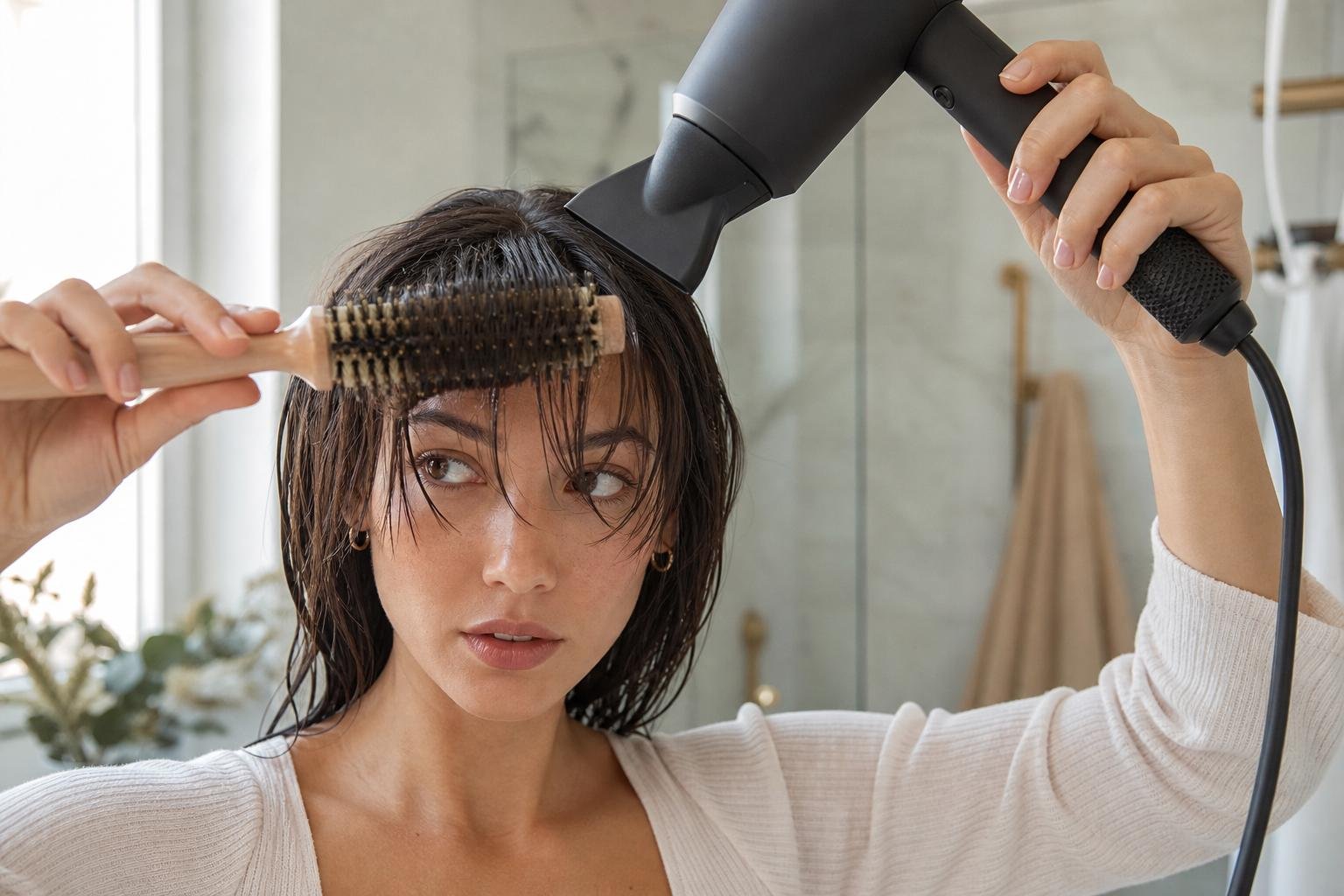
A blow-dryer and round brush are the most reliable tools for creating the classic airy curtain-bang shape. Choose a small or medium round brush rather than a large barrel; a brush around 1 to 1.5 inches (2.5 to 3.8 centimeters) gives most bang lengths enough bend without creating a tight curl.
Separate the bangs from the rest of your hair. Starting on one side, lift that section across the face in the opposite direction of where it will eventually sit. Point the dryer nozzle downward along the hair shaft while pulling the brush upward and forward.
This overdirection creates root lift and prevents the fringe from lying flat against the forehead. Once the section is mostly dry, roll it backward and away from the face for a soft sweep.
Repeat on the other side, then allow both pieces to cool before separating them with your fingers. Cooling helps the hair retain its shape, so avoid brushing the fringe out immediately.
If your bangs look too rounded, the brush may be too small or the ends may have been rolled too tightly. Re-wet the ends slightly, then dry them while pulling downward with a paddle brush or your fingers. Keep the root lift, but relax the last inch or two of the hair.
For a polished finish, direct the longest outer pieces into the layers around your cheekbones. Curtain bangs should usually flow into the rest of the haircut rather than look like two disconnected sections.
Your natural texture affects which tools and products will give you the most lasting shape. The basic outward direction stays the same, but the amount of tension and smoothing should change.
Straight hair can lose volume quickly, especially at the roots. Begin with a light volumizing mousse or root-lifting spray, then blow-dry the bangs while overdirecting them from side to side.
A round brush is useful here, but do not overwork the ends. Fine hair can develop a visible bend too easily. Once dry, use a small amount of flexible-hold hairspray on your fingertips and lightly press it near the roots rather than coating the entire fringe.
If your bangs separate during the day, comb them together, mist the roots with a little water, and reshape them with a dryer for a minute or two.
Thicker hair often has enough natural volume but may need more smoothing to avoid a bulky or overly rounded result. Work in two layers if your bangs are dense: clip the top portion up, dry the underneath first, then style the top layer over it.
A smoothing cream or heat-protectant spray can help reduce puffiness. Use moderate tension with a round brush and focus the dryer nozzle downward to encourage shine and a smoother surface.
Avoid applying waxy pomades close to the roots. They can make thick bangs clump together and remove the light, separated movement that gives curtain bangs their signature shape.

Wavy curtain bangs can look especially effortless when their natural texture is allowed to remain visible. Rather than trying to make every strand smooth, apply a lightweight curl cream or mousse to damp bangs and scrunch gently.
Use a diffuser on low or medium heat, cupping each side upward and away from the face. If the roots need more lift, use a small round brush only at the base, then diffuse the rest.
When fully dry, separate any overly defined sections with clean fingers. A tiny amount of lightweight oil applied to the ends can add definition, but keep it away from the forehead area.
For curly and coily textures, curtain bangs can be shaped with either natural definition or a smoother blowout, depending on your preferred finish. Natural-texture styling typically works best when the bangs are cut with shrinkage in mind, so avoid stretching them too much during everyday styling if you want to preserve the intended length.
Apply leave-in conditioner and a curl-defining product to damp bangs. Create the part with your fingers, then twist, finger-coil, or gently rake each side away from the face. Diffuse until dry, taking care not to disturb the curl pattern too often.
For a stretched look, work in small sections with a blow-dryer and concentrator nozzle, using low to moderate heat. Keep the hair moving away from the face and finish with a light serum on the ends for softness.
A round brush gives the most natural result, but hot tools are helpful when you are styling dry bangs or need a quick reset before leaving the house.
A flat iron can create a subtle curtain shape when used carefully. Take a narrow section, clamp near the root, turn the iron slightly away from the face, and glide through the ends. The movement should be gentle; a full rotation can create a curled, retro effect rather than a soft face frame.
A small curling iron or curling wand can also work. Wrap each side away from the face for only a few seconds, then let the curl cool. Brush through it with a wide-tooth comb or your fingers until it becomes a loose sweep.
Always use heat protectant on dry hair before restyling. If your bangs only need more lift, a dryer and brush are usually less damaging than repeatedly using a high-heat iron.
Curtain bangs are designed to be visible, so consider them when planning the rest of your hair. With loose hair, they can blend into layered lengths and soften the front of a blowout. With a low bun or ponytail, leave the bangs and a few longer pieces out around the temples for a balanced finish.
For workouts, skincare, or makeup application, hold the bangs back with soft, crease-resistant clips or a fabric headband. Let them cool completely after styling before clipping them away, or they may lose their shape.
On humid days, carry a small comb and use your hands instead of repeatedly brushing the bangs. Excessive brushing can flatten the roots and encourage frizz. If needed, reshape only the front pieces with a quick blast of cool or low heat.

Curtain bangs generally need more frequent attention than the rest of a haircut because their length changes the way they frame the face. When they begin to fall into your eyes or lose their connection to the surrounding layers, a professional trim can restore the intended shape.
Avoid cutting them when they are wet, especially if your hair shrinks as it dries. It is also easy to remove too much length from the shortest center pieces, which can make the fringe harder to part and style.
At home, focus on maintenance rather than major reshaping. Wash the bangs as needed, use lightweight products, and dry the roots in the direction you want them to sit. Consistency matters more than a complicated routine.
They can, particularly on wavy, curly, or coily hair. For straight hair, air-drying may leave the roots flat or allow a cowlick to take over, so a brief blow-dry at the roots often gives a more reliable shape.
A center split is part of the look, but an overly wide gap can happen when the bangs are oily, too dry, or styled without enough root direction. Lightly dampen the roots, blow-dry side to side, then guide each section outward.
The main direction should be away from the face. You can overdirect each side across the face while blow-drying to build volume, but the finished bend should sweep outward.
Yes. Use a flat iron for a light outward bend, a small roller for root lift, or a blow-dryer and your fingers for a relaxed finish. A round brush simply offers the most control over volume and curve.
The most dependable curtain-bang routine is simple: start with damp roots, dry the hair from side to side to reset the part, then guide each section outward and let it cool. Adjust the products and level of smoothing for your texture, but keep the finish light and movable.
With a little root lift and a soft bend through the ends, curtain bangs can frame the face naturally and work with nearly any everyday hairstyle.